+91 7297051181
Trademark for Food Brands and FMCG Businesses:
trademark
Introduction
The food and FMCG (Fast-Moving Consumer Goods) industry is one of the fastest-growing sectors in India. From snacks and beverages to packaged foods, spices, dairy products, and household essentials, thousands of new brands enter the market every year.
In such a competitive industry, your brand name and logo are just as important as the quality of your products. Customers often choose products they recognize and trust. If someone copies your brand name or logo, it can affect your sales and damage your reputation.
This is why trademark registration is essential. It protects your brand and gives you the exclusive legal right to use your business name and logo.
In this blog, you'll learn why trademarks are important for food and FMCG businesses, the registration process, required documents, and the benefits of protecting your brand.
What is a Trademark?
A trademark is a legal protection for a unique name, logo, symbol, slogan, or label that identifies your products or services.
For food and FMCG businesses, a trademark can protect:
- Brand name
- Product name
- Company logo
- Tagline or slogan
- Product labels
- Packaging (where eligible)
- Signature symbols
A registered trademark helps customers identify your products and prevents others from using a similar brand.
Why Do Food Brands Need a Trademark?
Food products are sold in supermarkets, local shops, online stores, and e-commerce platforms. A unique brand helps customers find your products easily.
Without trademark registration:
- Someone else may copy your brand name.
- Customers may confuse your products with another brand.
- You may face legal disputes.
- You could lose the reputation you've built.
Registering your trademark early protects your business from these risks.
Benefits of Trademark Registration
1. Protects Your Brand Name
Your brand name is your identity.Trademark registration gives you exclusive rights to use it for the registered goods or services.
2. Prevents Brand Copying
If your products become popular, competitors may try to use a similar name or logo.A registered trademark allows you to take legal action against unauthorized use.
3. Builds Customer Trust
Customers trust brands they recognize.A registered trademark adds credibility and helps create a professional image.
4. Supports Business Growth
Trademark protection makes it easier to:
- Launch new products
- Expand into new markets
- Sell across India
- Export products
- Grow your distribution network
5. Creates a Valuable Business Asset
A trademark is an intellectual property (IP) asset. As your brand grows, its value also increases.
6. Helps in Marketing
A unique trademark makes your products easier to promote through:
- Social media
- Online marketplaces
- Advertisements
- Packaging
- Retail stores
Customers are more likely to remember a protected brand.
What Can You Trademark?
Food and FMCG businesses can register:
- Brand name
- Product name
- Logo
- Tagline
- Product label
- Packaging (where eligible)
- Beverage brand
- Snack brand
- Spice brand
- Dairy brand
Who Can Apply?
The following can apply for trademark registration:
- Individual entrepreneurs
- Sole proprietors
- Partnership firms
- LLPs
- Private Limited Companies
- Startups
- Food manufacturers
- FMCG companies
Which Trademark Class Applies?
The correct trademark class depends on your products.
Some common classes include:
- Class 29 – Dairy products, meat, edible oils, processed foods.
- Class 30 – Tea, coffee, spices, biscuits, snacks, flour, bakery products, confectionery.
- Class 31 – Fresh fruits, vegetables, grains, and agricultural products.
- Class 32 – Soft drinks, fruit juices, mineral water, energy drinks, and non-alcoholic beverages.
If your business sells products in different categories, you may need to register in more than one trademark class.
Documents Required
Generally, you'll need:
- Identity proof
- Address proof
- Brand name
- Logo (if registering a logo)
- Business registration certificate (if applicable)
- Power of Attorney (if filing through a trademark agent or attorney)
Trademark Registration Process
Step 1: Choose a Unique Brand Name
Select a name that is:
- Unique
- Easy to remember
- Different from existing brands
Step 2: Conduct a Trademark Search
Check whether a similar trademark already exists.
This helps reduce the chances of objections.
Step 3: Select the Correct Trademark Class
Choose the trademark class based on your products.
Step 4: File the Application
Submit the application with:
- Applicant details
- Brand name or logo
- Required documents
- Government fee
Step 5: Examination
The Trademark Registry examines your application.
Step 6: Publication
If accepted, the trademark is published in the Trade Marks Journal for public opposition, if any.
Step 7: Registration
If no opposition is filed, or any opposition is resolved successfully, your trademark is registered and a registration certificate is issued.
Common Mistakes to Avoid
Avoid these common mistakes:
- Choosing a name similar to another brand.
- Skipping the trademark search.
- Filing under the wrong trademark class.
- Delaying trademark registration.
- Ignoring examination reports or opposition notices.
What Happens If You Don't Register Your Trademark?
Without trademark registration:
- Someone else may register a similar brand.
- Customers may become confused.
- You may lose your market identity.
- Rebranding can be expensive.
- Your business reputation may suffer.
Conclusion
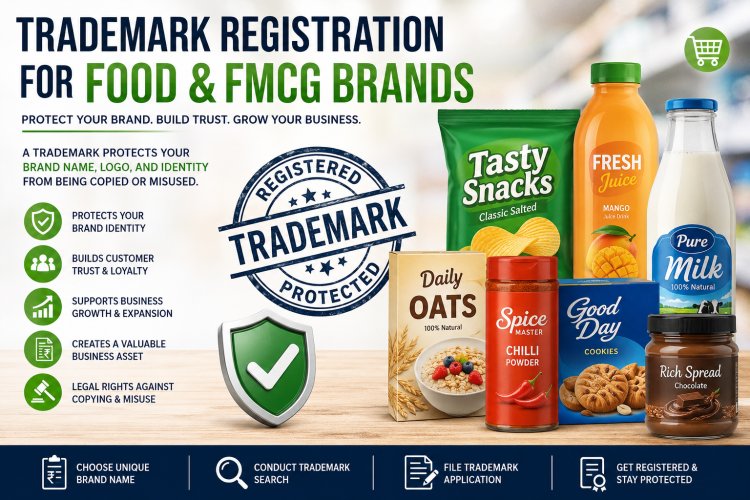
A strong brand is one of the biggest strengths of any food or FMCG business. Trademark registration protects your brand name, logo, and identity from misuse while helping customers recognize and trust your products.
Whether you sell packaged foods, snacks, beverages, spices, dairy products, or other FMCG items, registering your trademark early is a smart business decision. It protects your reputation, supports business growth, and gives you exclusive rights over your brand.
Don't wait until someone copies your brand—secure your trademark early and build your business with confidence.
https://youtu.be/Ww8sClRquRs?si=9Xlz8-u4OjIK_cMg