+91 7297051181
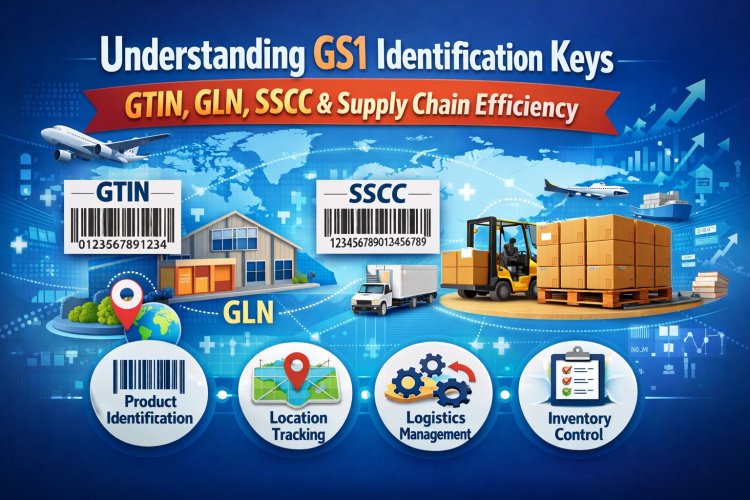
Understanding GS1 Identification Keys: GTIN, GLN, SSCC & Supply Chain Efficiency
Explore the role of GS1 identification keys—including GTIN, GLN, SSCC, GRAI, and GIAI—in enhancing supply chain efficiency. Learn how standardized identification improves traceability, reduces errors, and fosters trust across global trade and logistics.
Introduction
In today's interconnected world, efficient data exchange within the supply chain is paramount for businesses to thrive. At the core of this efficiency lies GS1, a global organization that unites industry leaders, governments, and regulators to develop standardized solutions aimed at improving how data is shared across various sectors. With 116-member organizations, including GS1 India, spread over approximately 150 countries, GS1 works tirelessly to create the common language of business. This blog will delve into one of the fundamental pillars of GS1 standards: Identification. Understanding how GS1 identification keys operate is essential for recognizing their importance across different industries.
What Does 'Identify' Mean in Context?
The term 'IDENTIFY' encompasses the essential function of recognizing an entity, be it a person, place, or product. Human beings typically recognize each other through names, appearances, or unique identifiers like the Aadhaar number in India. For products, however, recognition occurs through GS1 ID keys. Each GS1 ID key serves a unique purpose in identifying Stock Keeping Units (SKUs) or individual items. By standardizing unique identification across borders, GS1 addresses the chaos stemming from varied identification methods that have existed historically.
In this way, GS1 has established itself as the world's most extensive and universally accepted system of supply chain standards, fostering an interoperable market. The uniformity brought about by GS1 identification keys provides significant advantages in terms of secure, accurate, and real-time data flow across supply chain processes.
The Importance of GS1 Identification Keys
The adoption of GS1 ID keys enables businesses to gain enhanced visibility of their products throughout the supply chain. This visibility directly translates into increased operational efficiency, fostering trust and reliability among all stakeholders involved. Additionally, standardized identification supports the seamless supply of goods with minimal restrictions, simplifying logistics and inventory management.
GS1 India plays a critical role here, as it is the sole organization authorized to provide GS1 identification keys for unique identification. Under GS1, the country code '890' is specifically assigned to GS1 India, making it imperative that businesses engage with this organization for their identification needs.
Contact our barcode experts at +91 729705118 and +91 8949793519.
Types of GS1 Identification Keys
GS1 has developed a comprehensive set of 12 identification keys, each with its functional role and unique composition. Below, we explore some of the most significant GS1 identification keys used within the supply chain:
1. Global Trade Item Number (GTIN): The GTIN is a vital identification key for trade items. Each retail item must have a GTIN applied for unique identification in the marketplace. This unique identifier comprises a company's Global Company Prefix (GCP) and can vary in format, 13-digit, 12-digit, or 8-digit, based on specific company preferences. It can also be encoded into either one-dimensional or two-dimensional barcodes.
2. Global Location Number (GLN): The GLN is a 13-digit unique identification number used to identify locations. It serves multiple purposes:
- Party/Legal Entity: This refers to an entity capable of entering into a business-related transaction, be it a business organization, government body, or non-profit organization.
- Physical Location: This identifies a tangible location with a valid address, such as a store or manufacturing facility.
- Function: A specific department within an organization, like sales or marketing.
- Digital Location: Addresses for electronic communication.
3. Serial Shipping Container Code (SSCC): Used for shipping containers, the SSCC is an 18-digit unique number that identifies logistic units, which may consist of multiple items packaged for transport.
4. Global Returnable Asset Identifier (GRAI): This unique number typically consists of 13 digits, expandable to 29 digits, and is primarily applied to returnable assets or reusable transport items. GRAI includes an indicator digit and an optional alphanumeric serial number to track returnable assets throughout the supply chain.
5. Global Individual Asset Identifier (GIAI): Unlike GRAI, the GIAI is used for individual fixed assets, such as vehicles or equipment. This identifier can be composed of up to 30 digits and serves a similar purpose, providing unique identification for tracking and management.
Contact our barcode experts at +91 729705118 and +91 8949793519.
Benefits of Implementing GS1 Identification Keys
The implementation of GS1 identification keys provides numerous benefits for businesses across industries:
- Enhanced Traceability: With unique identification, companies can precisely track products and assets throughout the supply chain, leading to better inventory management and quicker response to recalls if necessary.
- Improved Efficiency: Standardized identification minimizes errors and discrepancies in processing orders, shipping, and receiving goods. This efficiency can lead to cost savings and optimized supply chain performance.
- Increased Trust: Having a reliable system for identification fosters trust among stakeholders. Accurate identification means that all parties are on the same page, leading to fewer disputes and better collaboration.
- Global Trade Facilitation: GS1 standards, including identification keys, help facilitate smoother trade across borders. As businesses engage in international commerce, standardized identification helps ensure compliance with various regulations and simplifies logistics.
Conclusion
The GS1 identification keys are not just numbers; they are essential components that bolster the efficiency, trust, and reliability of global supply chains. As businesses continue to navigate the complexities of a rapidly developing marketplace, the reliance on standardized methods of identification will become increasingly important. By adopting GS1 standards, companies across various sectors can unlock unparalleled benefits, streamline their operations, and foster collaborative relationships within the supply chain.
Contact our barcode experts at +91 729705118 and +91 8949793519.