+91 7297051181
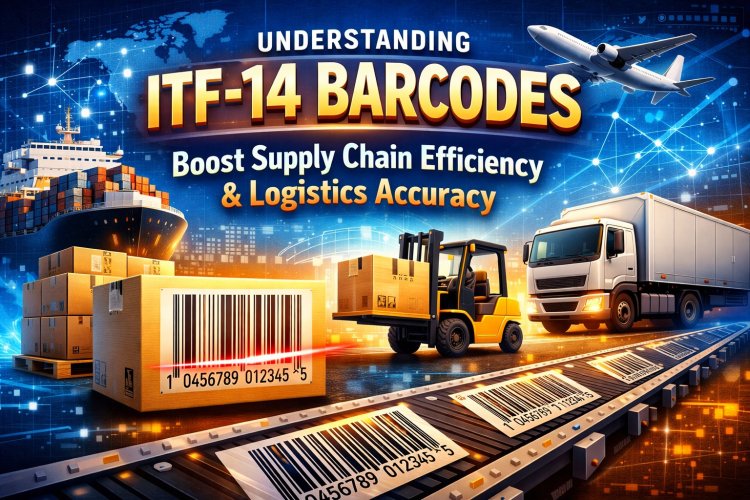
Understanding ITF-14 Barcodes: Boost Supply Chain Efficiency & Logistics Accuracy
Learn how ITF-14 barcodes enhance supply chain management by enabling accurate tracking of cartons and pallets. Explore their structure, GS1 standards, and benefits for inventory visibility, logistics efficiency, and cost-effective bulk handling.
Introduction
In the complex world of logistics and supply chain management, efficiency and accuracy are paramount. One critical tool that companies use to facilitate these attributes is the ITF-14 barcode. This one-dimensional barcode serves a specific but vital role in tracking packaging units throughout the supply chain. If you're involved in logistics or distribution, understanding the ITF-14 barcode and its implications can help streamline operations and enhance product identification.
What is an ITF-14 Barcode?
The ITF-14 barcode, developed by GS1, is specifically designed for higher-level packaging. Unlike the more commonly known barcodes such as EAN (European Article Number) or UPC (Universal Product Code), which are utilized at the point of sale for individual items, the ITF-14 barcode is used to track products in bulk. This can be anything from pallets of goods to cartons filled with smaller packages.
The ITF-14 barcode encodes a 14-digit GTIN (Global Trade Item Number), which uniquely identifies each product grouping. The barcode can be printed on a label or directly onto corrugated packaging, making it versatile for various logistics needs. Its design and structure provide a clear framework for businesses to manage their inventory effectively and ensure product availability from warehouse to retailer.
Contact our barcode experts at +91 729705118 and +91 8949793519.
The Structure of an ITF-14 Barcode
At first glance, the ITF-14 might remind you of other barcodes due to its one-dimensional format. However, its unique features set it apart. Here are some characteristics:
- Thick Black Borders: One of the defining features of the ITF-14 barcode is its thick black borders, known as bearer bars. These borders not only distinguish the ITF-14 from other barcodes but also enhance its readability and durability, making it ideal for handling in various environments.
- 14-Digit GTIN: The barcode encodes a 14-digit GTIN. It includes several components that provide detailed information about the product.
- Application on Outer Packaging: ITF-14 barcodes are typically found on the external packaging, such as a shipping carton or pallet, rather than on individual retail items.
Breakdown of the GTIN in an ITF-14 Barcode
The structure of the GTIN encoded within the ITF-14 barcode is as follows:
1. Indicator Digit: This is the first digit of the GTIN and can range from 0 to 9. It is used to create different GTIN-14s for various groupings of the same product. For instance, a '0' indicates a GTIN-14 for a pallet of a homogenous product, while a '9' denotes a heterogeneous series.
2. Country Code: Assigned by GS1 Global, the country code indicates where the organization issuing the GTIN is located. In India, for example, the country code is '890'.
3. Company Code: This unique identification number is assigned to companies registered with GS1. It helps in distinguishing one organization from another within the market.
4. Product Code: This part of the GTIN supplements the country and company codes, facilitating the unique identification of specific products or SKUs developed by the company.
5. Check Digit: The last digit of the GTIN is mathematically calculated to ensure the accuracy of the other digits. This method, known as the Luhn algorithm (or Modulo 10), validates the barcode's composition.
Contact our barcode experts at +91 729705118 and +91 8949793519.
The Role of GS1 India
GS1 plays a pivotal role in standardizing the implementation and usage of barcodes in India. It has established standards specifically for the ITF-14 barcode, limiting its application to logistics-related processes. This ensures that businesses adhere to consistent practices for product identification, ultimately enhancing supply chain operations.
By partnering with GS1, organizations gain access to the resources and knowledge needed to effectively utilize barcodes for inventory management and tracking. The promotion of best practices helps to minimize errors and improve efficiency at all levels of operation.
To know more about this, please follow the below link.
Benefits of ITF-14 Barcodes in Supply Chain Management
Implementing ITF-14 barcodes in supply chain processes offers several key benefits:
1. Improved Supply Chain Visibility: Utilizing the ITF-14 barcode allows businesses to enhance visibility throughout the supply chain. By labeling higher-level packaging, stakeholders can easily trace or track shipments. This capability fosters transparency, ultimately strengthening trust and collaboration among partners in the supply chain.
2. Facilitated Bulk Shipment Handling: The ITF-14 barcode provides a rapid and unique identification system for bulk shipments. This simplicity allows for efficient management during the receiving process and ensures products can be located quickly and accurately in warehouses.
3. Enhanced Inventory Management: With ITF-14 barcodes, inventory management becomes less complex. Scanning barcodes instead of manually inputting data reduces the risk of human error, leading to more accurate inventory counts and improved stock accuracy.
4. Streamlined Logistics Operations: As logistics operations grow more intricate, the ITF-14 barcode streamlines the tracking process. Quick scans at various checkpoints eliminate delays caused by documentation mistakes, enhancing overall operational efficiency.
5. Cost-Effective Solution: By implementing ITF-14 barcodes, organizations can save time and reduce costs associated with labor and manual tracking methods. The upfront investment in barcode technologies is often outweighed by the long-term savings in efficiency and accuracy.
6. Adaptable for Future Growth: As businesses expand or introduce new product lines, the ITF-14 barcode system can easily accommodate changes. The scalability of this system allows companies to adapt their tracking and management processes without needing to overhaul existing systems.
Contact our barcode experts at +91 729705118 and +91 8949793519.
Conclusion
The ITF-14 barcode is an essential tool in modern supply chain management. By providing enhanced visibility, efficiency, and accuracy, this type of barcode supports businesses in their logistics operations. Organizations that leverage ITF-14 barcodes not only streamline their processes but also build stronger relationships with suppliers, distributors, and retailers.
Contact our barcode experts at +91 729705118 and +91 8949793519.