+91 7297051181
Understanding the Importance of GS1 Standards in Barcode Generation
Discover why GS1 standards are essential for barcode generation. Learn how GS1-compliant barcodes enable unique product identification, improve inventory management, support global trade, and enhance supply chain transparency.
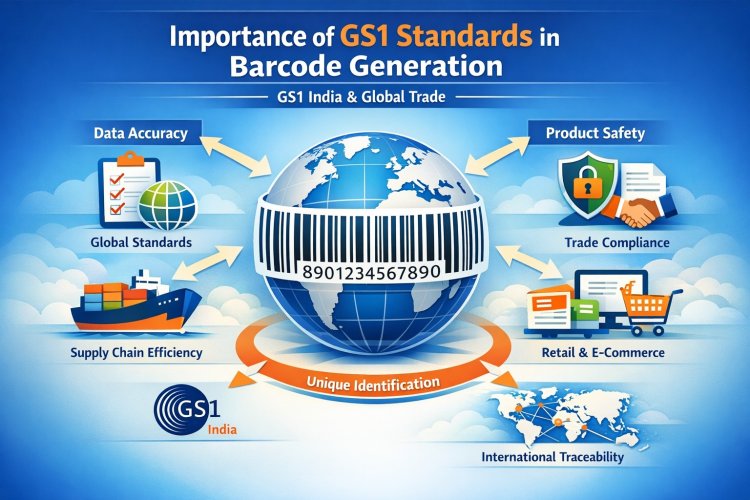
Introduction
In today’s globalized marketplace, standardization has become a critical component for businesses looking to optimize their supply chains and enhance efficiency. Established in 1996, GS1 India has emerged as a pivotal player in this context, helping businesses implement a standardized and structured approach to product supply. This initiative has transformed how Indian manufacturers operate, allowing them to export products worldwide while effectively tracking their shipments. The adoption of GS1 standards, particularly in barcode generation, is essential for the unique identification of products, ensuring transparency and interoperability in the supply chain. In this blog, we will delve into the critical need for GS1 standards, outline the benefits of adopting such standards, describe the barcode generation process, and examine how GS1 standards are shaping modern trade.
What Are GS1 Standards?
GS1 is an international not-for-profit organization that oversees GS1 India and 115 other member organizations worldwide. It defines GS1 standards as a comprehensive set of rules and guidelines that enable businesses to "uniquely identify," "accurately capture," and "automatically share" information about products, assets, locations, and more. These standards are pivotal in enhancing business process efficiency, providing an automated structure for product identification, and enabling international data sharing.
The development of GS1 standards is influenced by several factors, including broad acceptability, high applicability across varied business scenarios, and adherence by all parties involved. Importantly, these standards provide mutual benefits to both manufacturers and consumers, encompassing every element of the supply chain. The three foundational pillars of GS1 standards are:
1. Identify (GS1 Standards for Identification): These standards facilitate the identification of real-world entities such as retail products, cartons, locations, and documents. They create a medium through which people can access reliable information about products. Central to this is the use of GS1 Identification Keys, which ensures that each product has a unique identifier that allows for accurate information flow.
2. Capture (GS1 Standards for Barcodes and EPC/RFID): GS1 standards also encompass the automatic capturing of data, linking physical products and assets with electronic information. Technologies like barcodes and Radio Frequency Identification (RFID) serve as data carriers, allowing for easy information access. The standards guarantee that RFID tags and barcodes are universally readable, facilitating seamless data exchange.
3. Share (GS1 Standards for Data Exchange): These standards support the sharing of captured information among trading partners, consumers, and other businesses. They are foundational for enabling electronic business transactions and enhancing visibility across the supply chain.
The structured framework of GS1 barcodes allows companies and countries to enjoy streamlined operations, making the flow of accurate information possible.
The Purpose of GS1 Standards
The implementation of GS1 standards in barcode generation serves a multitude of purposes, fundamentally establishing a common language for businesses. Here's why GS1 standards are indispensable:
1. Global Interoperability: At the heart of GS1 standards is their ability to facilitate interoperability, the capability of systems to share and utilize information seamlessly. By providing a standardized method for data exchange, GS1 standards help businesses effectively communicate and collaborate, enhancing operational efficiency.
2. Unique Identification: GS1 barcodes assign unique identifiers to products in the market. Each product variant receives a distinct Global Trade Item Number (GTIN), differentiating it from all other products. This unique identification fosters trust among trading partners by providing detailed and accurate information about each product.
3. Building Greater Confidence: Businesses that base their products and services on established standards enjoy greater confidence in their outputs. By adhering to GS1 standards, companies can enhance their reputation, build trust with consumers, and establish credibility within the marketplace.
4. Cost-effective Solutions: Organizational efficiency improves significantly when businesses adopt a standardized approach to product supply. Reduced operational costs and implementation efforts result from not having to create customized solutions for each partner. This standardization allows for straightforward electronic data exchange, streamlining communication across the board.
5. Mutually Beneficial Solutions: The benefits of GS1 standards extend to all parties involved, including those indirectly linked through mediators. With GS1 barcodes, all entities can scan and access information effortlessly, creating a collaborative business environment that enhances logistics and distribution.
Contact our barcode experts at +91 729705118 and +91 8949793519.
To know more about this, please follow the below link.
<iframe width="560" height="315" src="https://www.youtube.com/embed/LeGgoLfgqS8?si=G83Wk_Hu0XjWtiAO" title="YouTube video player" frameborder="0" allow="accelerometer; autoplay; clipboard-write; encrypted-media; gyroscope; picture-in-picture; web-share" referrerpolicy="strict-origin-when-cross-origin" allowfullscreen></iframe>
Benefits of GS1 Standards in Modern Trade
As trade becomes increasingly complex due to globalization and technological advances, the importance of GS1 standards in barcode generation has never been more pronounced. Businesses that implement these standards can unlock numerous benefits that facilitate growth and operational efficiency:
- Enhanced Supply Chain Transparency: GS1 standards promote transparency throughout the supply chain, allowing for better tracking and tracing of products. This visibility can help mitigate the risks of counterfeit goods and ensure product authenticity, ultimately protecting both consumers and businesses.
- Improved Inventory Management: The ability to uniquely identify and capture data regarding products fosters better inventory management. Businesses can track stock levels in real time, reducing the likelihood of overstocking or stockouts and enabling more responsive supply chain operations.
- Facilitated International Trade: In a global marketplace, adherence to GS1 standards simplifies international trade by ensuring compatibility across various systems. This compatibility allows businesses to engage with partners from different regions without facing obstacles related to differing identification and data-sharing practices.
- Customer Satisfaction and Loyalty: Accurate product information derived from GS1 standards enhances customer experience. Consumers benefit from consistently reliable information, which builds greater trust and loyalty towards brands that uphold these standards.
Conclusion
The implementation of GS1 standards for barcode generation is pivotal in creating a more efficient, transparent, and interoperable supply chain. Businesses that embrace these standards stand to gain competitive advantages, from improved inventory management to enhanced customer satisfaction. As we navigate an increasingly interconnected global market, the importance of a common trade language becomes paramount, ensuring that businesses can operate flawlessly regardless of borders. GS1 standards not only facilitate these processes but also contribute to building a more trustworthy and efficient marketplace for all players involved. Businesses looking to thrive in the modern economic landscape must prioritize these standards, not just for their own benefit, but for the greater good of the entire supply chain ecosystem
Contact our barcode experts at +91 729705118 and +91 8949793519.