+91 7297051181
Copyright Dispute in the Digital Age: Zee Sues Jiohotstar Over Alleged Unauthorised Music Use
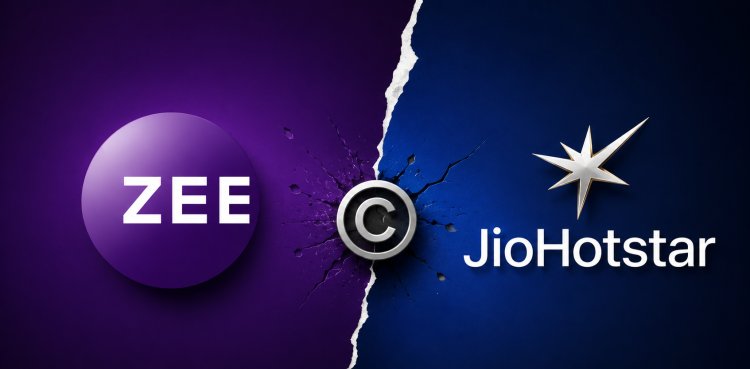
Zee Entertainment Enterprises has filed a suit against Jiohotstar before the Delhi High Court, alleging unauthorised use of its music catalogue after the expiry of licensing agreements in 2024 and 2025. The company seeks damages and injunctive relief, claiming that continued use of its works across television and digital platforms constitutes copyright infringement. The dispute raises an important legal question on whether the continued or archival availability of copyrighted content after licence expiry amounts to infringement. The case is expected to have broader implications for copyright enforcement and licensing practices in India’s evolving digital media landscape.
Introduction
Zee Entertainment Enterprises has initiated legal proceedings against Jiohotstar, the joint venture between Reliance Industries and Disney, alleging infringement of its music copyrights. The case, filed before the Delhi High Court on 14 April, centres on claims that Jiohotstar continued to use Zee’s music catalogue across its television channels and digital platforms even after the relevant licensing agreements had expired.
Background of the Dispute
According to the suit, Zee has sought damages amounting to approximately $3 million. The company contends that despite the lapse of licensing arrangements in 2024 and 2025, Jiohotstar allegedly persisted in broadcasting and streaming songs owned by Zee without securing renewed authorization. The issue arose following unsuccessful negotiations between the parties regarding renewal of licensing terms.
The dispute primarily concerns the use of Zee’s music content on JioHotstar, the streaming platform operated by Jiohotstar, as well as on several of its television channels. Jiohotstar emerged in 2024 as a major media entity following the merger of Viacom18 and Star India assets, creating a significant presence across television and digital streaming platforms.
Allegations of Copyright Infringement
In its court filings, Zee has asserted that Jiohotstar used its copyrighted music at least 50 times after the expiry of the licensing agreements. The company argues that such repeated use, in the absence of a valid licence, constitutes clear copyright infringement. Zee has emphasized that the alleged violations were not isolated incidents but formed part of a consistent pattern of unauthorised use.
Zee has further characterised this conduct as “illegal exploitation” of its intellectual property and highlighted the commercial value of its extensive catalogue, which includes over 19,450 songs across 17 languages.
To know more about this, click the link below -
Reliefs Sought and Court Proceedings
Zee has sought injunctive relief restraining Jiohotstar from further use of its music catalogue during the pendency of the proceedings, in addition to monetary damages.
During the initial hearing, the Delhi High Court directed Jiohotstar to ensure that no ongoing infringement occurs while the matter is under adjudication. This interim order aims to preserve the status quo and prevent further alleged violations. The next hearing is scheduled for 23 July.
Jiohotstar’s Defence
Prior to the litigation, both parties exchanged legal notices and engaged in discussions to resolve the dispute. In a communication issued in December, Jiohotstar stated that it had taken steps to remove potentially infringing content, including reviewing older programming.
However, Jiohotstar has argued that residual or archival content hosted on its platforms does not amount to copyright infringement. It maintains that legacy content should not be equated with active or commercial exploitation. Zee has disputed this position, asserting that any availability of its copyrighted works without a valid licence constitutes infringement, irrespective of the nature of hosting.
In a subsequent communication dated 16 March, Jiohotstar rejected Zee’s claim for damages but indicated willingness to explore an amicable commercial resolution.
Parallel Disputes and Broader Context
The present case forms part of a broader series of disputes involving Zee and Reliance. The parties are currently engaged in arbitration proceedings in London over a failed cricket broadcasting agreement, with Reliance reportedly seeking damages of up to $1 billion.
Separately, Zee has also filed a suit against Nykaa, alleging unauthorised use of its songs in promotional Instagram content. Zee claims that while its agreement with Meta permits non-commercial use of music by individuals, commercial entities cannot use such content without proper licensing. In that matter, Zee has sought damages of approximately ₹2 crore, with the next hearing scheduled for 26 May.
Legal Issues and Industry Implications
The case raises significant legal questions regarding post-licence usage of copyrighted works, particularly whether the continued or archival availability of content amounts to infringement under Indian law. It also highlights the challenges faced by digital platforms in managing large content libraries and ensuring compliance with licensing agreements.
The dispute reflects the increasing importance of copyright enforcement in India’s rapidly evolving media and digital ecosystem, where content is widely disseminated across multiple platforms.
Conclusion
The Delhi High Court’s interim direction currently restrains any alleged ongoing infringement while the matter proceeds. The outcome of the case is likely to have far-reaching implications for copyright law, especially in relation to expired licences, archival content, and platform liability. It may also influence industry practices concerning licensing and content management in the digital age.