+91 7297051181
Sports Video Copyright in India: Protecting Athlete Footage on Instagram & YouTube
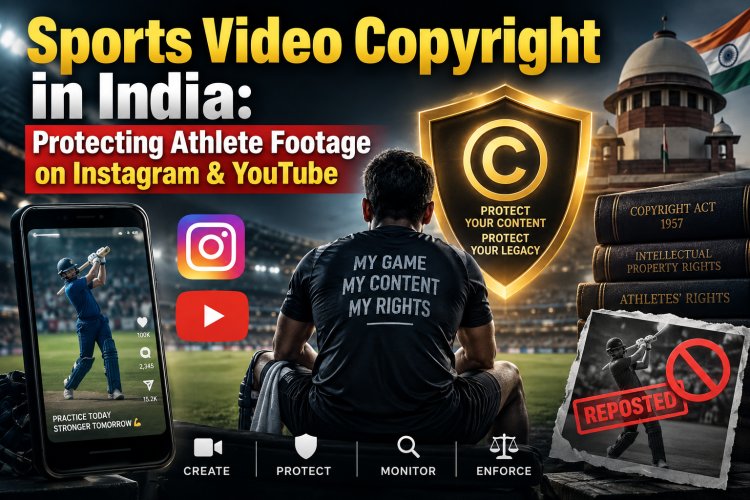
For athletes, practice videos, match footage, highlights, training clips, reels, photographs, and other social media content are more than just memories. They can become an important part of a personal brand, help attract sponsors, increase fan engagement, and create commercial opportunities.
However, as an athlete's social media presence grows, the risk of unauthorized copying and reposting of sports content also increases. Fan pages, sports aggregators, meme accounts, and other social media users may download and repost videos without obtaining permission from the original creator.
While fan pages and reposts can sometimes help an athlete reach a larger audience, unauthorized use can also result in the athlete losing control over how their original content is distributed and commercially exploited.
So, how can athletes protect their practice and match footage on Instagram and other social media platforms?
The answer begins with understanding copyright law and intellectual property rights.
What Copyright Protection Does an Athlete Get in India?
Under Indian copyright law, copyright generally protects original creative expression, rather than an abstract idea, concept, sporting technique, or general information.
The primary legislation governing copyright in India is the Copyright Act, 1957.
Section 13 of the Copyright Act provides for copyright protection in different categories of original works, including cinematographic films, artistic works, literary works, musical works and sound recordings, subject to the requirements of the Act.
For athletes and sports content creators, several types of content may potentially receive copyright protection.
1. Sports Videos, Reels and Match Footage
Videos uploaded to Instagram, YouTube, Facebook and other platforms may qualify as cinematograph films under copyright law, depending on the nature of the work.
Examples may include:
-
Match highlights
-
Training and practice videos
-
Workout videos
-
Behind-the-scenes footage
-
Sports documentaries
-
Interviews
-
Vlogs
-
Instagram Reels
-
YouTube videos
-
Edited highlight compilations
If an athlete or their production team creates original video content, unauthorized copying or reproduction may potentially amount to copyright infringement, depending on the circumstances.
2. Photographs and Visual Content
Athletes also frequently create or commission photographs and other visual materials for their social media profiles.
These may include:
-
Match photographs
-
Training photographs
-
Professional photoshoots
-
Promotional photographs
-
Digital artwork
-
Posters
-
Graphics
-
Thumbnails
-
Social media creatives
Original photographs and certain other visual creations may be protected as artistic works under the Copyright Act.
3. Music and Audio
Original audio content can also receive copyright protection.
Examples include:
-
Original songs
-
Background music
-
Podcasts
-
Voiceovers
-
Interviews
-
Original sound recordings
However, athletes should be particularly careful when using third-party music in their videos because having permission to use one piece of content does not automatically mean that every copyright component incorporated into it is owned by the athlete.
4. Written Content
Athletes may also create original written content, including:
-
Articles
-
Blogs
-
Scripts
-
Captions
-
Newsletters
-
Speeches
-
Biographical content
-
Social media posts
Original literary expression may be protected under copyright law.
Does Copyright Protect an Idea or the Actual Video?
One of the most important principles of copyright law is that copyright protects expression, not ideas themselves.
For example, the general idea of creating a video showing an athlete's training routine is not necessarily protected merely because someone thought of it first.
However, the specific original expression may receive protection.
This can include elements such as:
-
The way the video is structured
-
Original footage
-
Editing
-
Narration
-
Script
-
Creative sequencing
-
Original graphics
-
Selection and arrangement of content
Therefore, if someone simply takes an athlete's original video, downloads it and uploads the same video on another account without authorization, the situation is materially different from another person independently creating their own training video on a similar subject.
How Original Does a Work Have to Be for Copyright Protection?
Indian copyright law does not require a work to be completely revolutionary or unprecedented.
The Supreme Court of India discussed the standard of originality in Eastern Book Company v. D.B. Modak, emphasizing the requirement of sufficient skill and judgment in the creation of a work rather than mere effort or labour alone.
For digital creators, this principle is important because the protection generally relates to the original expression and creative choices involved in producing the work.
Therefore, athletes and sports content creators should preserve evidence showing how and when their content was created.
Who Owns Copyright in an Athlete's Social Media Content?
This is an important question, particularly where an athlete works with:
-
Videographers
-
Photographers
-
Sports agencies
-
Marketing agencies
-
Sponsors
-
Production companies
-
Social media managers
The person appearing in a video is not automatically the copyright owner merely because they are the subject of the video.
Copyright ownership can depend on factors such as who created the work, the contractual relationship between the parties, and whether copyright has been assigned or otherwise transferred in accordance with applicable law.
Therefore, athletes should carefully review agreements with photographers, videographers, agencies and brands.
Brand Collaborations and Athlete Content: Who Owns the Copyright?
Brand collaborations create another important copyright issue.
A brand may hire an athlete to create promotional content, but that does not automatically mean that the brand owns every copyright interest in the resulting material.
The agreement should clearly address:
-
Copyright ownership
-
Licence rights
-
Duration of use
-
Territory
-
Platforms
-
Advertising rights
-
Editing rights
-
Reproduction rights
-
Commercial exploitation
-
Exclusivity
-
Right to reuse the content
-
Permission to use the athlete's name, image and likeness
A properly drafted agreement can reduce disputes between athletes, sponsors, agencies and production teams.
Never assume that payment for creating content automatically answers every question about copyright ownership. The contract matters.
What Should an Athlete Do If Someone Reposts Their Video on Instagram?
If someone downloads an athlete's original video and uploads it to another account without authorization, the athlete can consider using Instagram's intellectual-property reporting mechanisms.
A typical reporting process involves identifying the infringing content and submitting a copyright complaint through the platform's available reporting channels.
Depending on the platform interface and circumstances, the process may involve:
-
Identifying the allegedly infringing post or Reel.
-
Selecting the relevant reporting/intellectual-property option.
-
Providing information regarding the original work.
-
Providing the relevant URLs or other identifying information.
-
Submitting the complaint.
-
Responding to any further requests from the platform.
Platform procedures can change, so creators should use the current reporting process provided by the relevant platform.
Is Giving Credit Enough to Avoid Copyright Infringement?
No.
One of the most common misconceptions on social media is:
"I gave credit to the athlete, so I can use the video."
Giving credit does not, by itself, create permission to reproduce or commercially exploit someone else's copyrighted work.
For example, writing:
"Credit: @AthleteName"
does not automatically grant permission to download and repost the athlete's video.
Permission, a valid licence, an applicable platform feature, or another legal basis may be required depending on the circumstances.
What About Instagram Reels, Remix and Other Platform Features?
Athletes should distinguish between using a platform's authorized functionality and downloading/re-uploading content independently.
Platforms may provide features such as:
-
Remix
-
Share
-
Embed
-
Collaboration tools
-
Audio reuse
The legal and contractual consequences can depend on how the platform feature operates and what permissions have been granted.
Using an authorized platform feature does not necessarily transfer copyright ownership to the person using the feature.
Therefore, athletes should understand the difference between copyright ownership, platform permissions, and a licence to use content.
How Can Athletes Protect Their YouTube Videos?
YouTube provides several tools for copyright enforcement.
Depending on eligibility and circumstances, creators may have access to mechanisms such as:
Content ID
Content ID can help eligible rights holders identify matching content across YouTube.
Copyright Removal Requests
Creators can also submit copyright removal requests where they believe their copyrighted content has been uploaded without authorization.
Copyright Strikes
Where a valid copyright removal request is processed, consequences may apply to the channel under YouTube's copyright enforcement system.
Athletes with substantial video libraries should maintain organized records of their original footage and publishing history.
What Is Meta Rights Manager?
For creators and rights holders with eligible content, Meta Rights Manager can provide tools designed to help identify and manage certain uses of copyrighted content across Meta platforms.
For athletes who regularly produce substantial amounts of original video content, rights-management tools can become particularly useful as their content library grows.
However, availability and eligibility depend on Meta's requirements and current policies.
Athletes should therefore review the current eligibility requirements before relying on Rights Manager as their primary enforcement mechanism.
How Should Athletes Build a Copyright Evidence File?
If your content is repeatedly being copied, maintaining evidence can make copyright enforcement easier.
Consider maintaining records of:
-
Original video files
-
Raw footage
-
Editing project files
-
Original photographs
-
Date of creation
-
Date of publication
-
Instagram URLs
-
YouTube URLs
-
Screenshots of original posts
-
Screenshots of infringing posts
-
Messages exchanged with the infringing account
-
Agreements with photographers and videographers
-
Brand collaboration agreements
-
Licences and permissions
A simple digital copyright evidence folder can become extremely valuable when dealing with repeated infringement.
Copyright Registration: Is It Necessary?
Copyright protection in India generally arises from the creation of an original work and does not depend on obtaining a copyright registration certificate.
However, registration can provide useful documentary evidence concerning the claimed work and its ownership.
For athletes with valuable content libraries, registration and proper documentation may therefore be considered as part of a broader intellectual-property strategy, particularly where the content has significant commercial value.
The appropriate approach depends on the nature and value of the content and the circumstances of the rights holder.
Copyright vs Image Rights: Athletes Need to Understand the Difference
An athlete's intellectual-property protection is not limited to copyright.
There can be different legal interests involved, including:
Copyright
Protects eligible original creative works such as videos, photographs, graphics and written content.
Trademark
Can protect eligible brand identifiers such as:
-
Athlete's brand name
-
Logo
-
Slogan
-
Merchandise branding
Personality/Publicity Rights
An athlete may also have legal interests concerning unauthorized commercial use of their name, image, likeness or persona, subject to applicable law and the facts of the case.
Therefore, an athlete whose photograph or video has been copied may need to consider more than just copyright.
What Should Athletes Do When Fan Pages Repost Their Content?
Not every repost necessarily requires the same response.
An athlete can consider different approaches depending on the circumstances.
Option 1: Request Removal
Where the content is unauthorized, the athlete can contact the account and request removal.
Option 2: Request Proper Permission
In some situations, the athlete may prefer to allow reposting subject to appropriate permission or licensing terms.
Option 3: Use Platform Reporting Tools
Where necessary, the athlete can use the platform's copyright reporting mechanisms.
Option 4: Consider Legal Action
Where unauthorized use is repeated, commercial, extensive or causing significant harm, the athlete may consider obtaining legal advice regarding available remedies.
The appropriate response depends on the facts, ownership position, contractual arrangements and applicable law.
Best Practices for Athletes to Protect Their Digital Content
Athletes can take several practical steps to strengthen their digital copyright strategy:
1. Keep original files safely stored.
Maintain copies of raw footage, edited videos and original photographs.
2. Maintain publishing records.
Keep records showing when content was originally uploaded.
3. Use clear ownership information.
Where appropriate, include copyright or ownership information in content descriptions and documentation.
4. Review contracts carefully.
Clearly define copyright ownership and licensing rights in agreements with brands, agencies, photographers and videographers.
5. Monitor social media.
Regularly search for unauthorized reposts of your videos and photographs.
6. Preserve evidence before reporting.
Take screenshots and save URLs of allegedly infringing content before it is removed or changed.
7. Use platform copyright tools.
Understand the reporting and rights-management mechanisms available on Instagram, Facebook, YouTube and other platforms.
8. Consider a broader IP strategy.
Copyright, trademarks and personality/publicity rights may all be relevant to an athlete's personal brand.
https://youtu.be/GrTs_5IIjg4?si=DJ8hg0yMBU4qkFMP
Conclusion: Protect Your Performance and Your Digital Brand
For modern athletes, the competition does not end when the match is over.
Your training videos, match highlights, photographs, interviews and social media content can become valuable intellectual property and an important part of your personal brand.
Understanding copyright law and using appropriate platform enforcement mechanisms can help athletes respond when their content is copied or used without authorization.
The most important step is to build a proper digital-rights strategy early:
Create → Document → Protect → Monitor → Enforce.
You put countless hours into your performance on the field. Your digital content deserves the same level of protection.
Protect your footage. Protect your brand. Protect your intellectual property.