+91 7297051181
Baburao vs Netflix: How IP Law Became the Hero of the Story
The recent ₹25 crore legal notice issued to Netflix and The Great Indian Kapil Show by producer Firoz Nadiadwala over the unauthorized use of the iconic Baburao character from Hera Pheri underscores the growing importance of intellectual property (IP) law in India. This case highlights trademark protection, copyright enforcement, and moral rights as essential tools for safeguarding creative works. Beyond legal technicalities, it demonstrates how IP law serves as a critical shield for creators, ensuring that iconic characters and cultural legacies are respected and preserved in the era of viral content and parody.
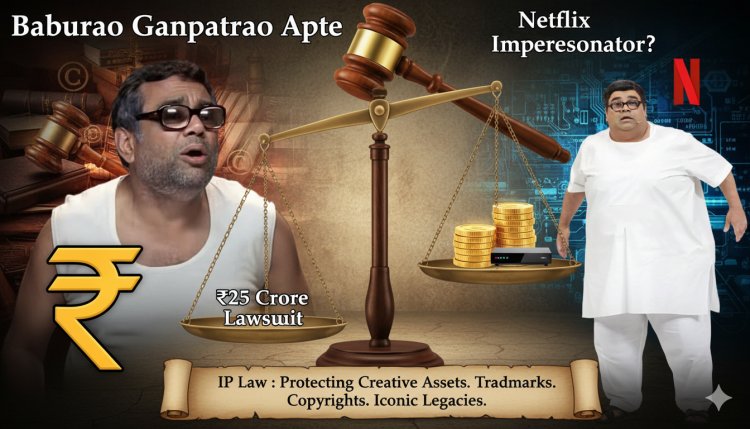
In a world where content is king, intellectual property (IP) is the crown that protects it. The recent ₹25 crore legal notice slapped on Netflix and The Great Indian Kapil Show by producer Firoz Nadiadwala is more than just a headline. It’s a wake-up call for creators, platforms, and audiences alike.
What Happened?
During a comedy skit aired on Netflix, comedian Kiku Sharda impersonated Baburao Ganpatrao Apte, the iconic character from Hera Pheri. While fans may have chuckled, Nadiadwala didn’t. He owns the rights to the character and claims Baburao is a registered trademark not just a pop culture icon, but protected creative property.
The result? A legal notice demanding:
- ₹25 crore in damages
- Removal of the skit from all platforms
- A formal apology within 24 hours
IP Law: The Silent Guardian
This case highlights how IP law is no longer just a technicality. It’s a powerful shield for creators. Here's how:
- Trademark Protection: Baburao is reportedly a registered trademark. That means unauthorized use, even in parody, can be legally challenged under the Trademarks Act, 1999
- Copyright Enforcement: The character’s likeness, dialogue style, and persona are protected under the Copyright Act, 1957. Using it without permission is a direct violation
- Moral Rights: IP law also defends the integrity of a creator’s work. Nadiadwala argues that the skit distorted the essence of Baburao, turning homage into exploitation
To know more about this you can follow the link beloe:
<iframe width="560" height="315" src="https://www.youtube.com/embed/QzOTYF2b0wg?si=-TNEc50rp7c9JOdf" title="YouTube video player" frameborder="0" allow="accelerometer; autoplay; clipboard-write; encrypted-media; gyroscope; picture-in-picture; web-share" referrerpolicy="strict-origin-when-cross-origin" allowfullscreen></iframe>
Why This Matters
In an age of viral content and meme culture, it’s easy to forget that behind every iconic character is a creator who holds legal rights. IP law ensures that legacy isn’t diluted for laughs or clicks. As Nadiadwala put it:
“Baburao is not just a character, but the soul of Hera Pheri. Culture is not for exploitation; it is for preservation.”
This isn’t just about one skit. It’s about setting a precedent. Whether you're a filmmaker, comedian, or streaming giant, IP is no longer optional. It’s essential.
Too Long; Didn't Read: The ₹25 crore lawsuit over the Baburao impersonation shows how IP law is evolving into a robust tool for protecting creative assets. From trademarks to copyrights, creators now have stronger legal ground to defend their work, and platforms must tread carefully when borrowing from iconic legacies.