+91 7297051181
Balancing Trademark Rights and Freedom of Expression: Insights from Case C‑298/23
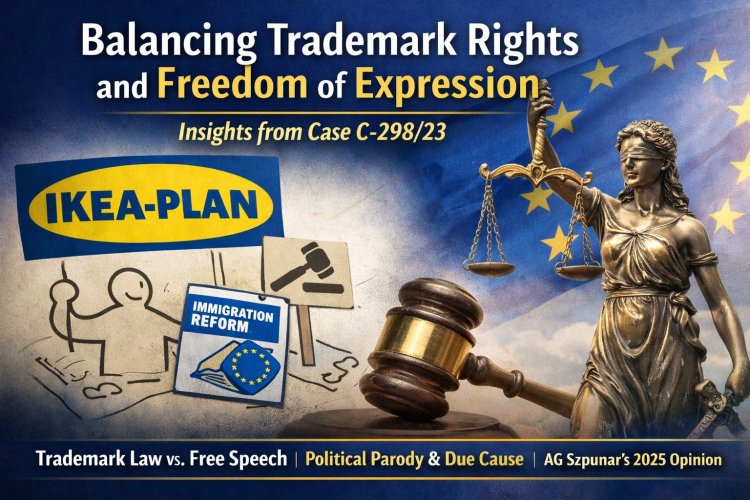
This blog explores Case C‑298/23, examining whether freedom of expression can justify the use of a sign identical or similar to a reputed trademark. The dispute involved a political campaign mimicking IKEA’s branding to convey immigration reform messages. Advocate General Szpunar’s 2025 opinion highlights how courts must weigh trademark protection against political expression, considering factors like commercial intent, public interest, reputation, and potential harm, reflecting evolving tensions between intellectual property rights and democratic freedoms.
Introduction
In an increasingly interconnected world, the interplay between intellectual property rights and freedom of expression has become a crucial legal battleground. This tension is vividly illustrated in Case C‑298/23, where the European Court of Justice (CJEU) was called to examine whether freedom of expression might serve as a legitimate justification termed "due cause" for the use of a trademark identical or similar to a reputed mark. The opinion issued by Advocate General Szpunar on 13 November 2025 highlights significant legal principles, challenges, and implications that can inform our understanding of intellectual property law and its boundaries.
The Case Overview
This particular case involves Inter IKEA Systems BV, famously known for its iconic IKEA brand, against political entities including Algemeen Vlaams Belang VZW and others, which launched an asylum and immigration reform initiative dubbed “IKEA-PLAN – Immigratie Kan Echt Anders.” This campaign not only referenced IKEA’s well-recognized brand but employed its distinctive logo and assembly-instruction style to present political ideas as "ready to assemble" proposals. The central issue escalated into a legal battle when IKEA claimed that the use of its trademarks constituted infringement, arguing that the defendants unfairly exploited the reputation of the brand. The case raises critical questions about the intersection of trademark law, particularly under the Directive (EU) 2015/2436 and Regulation (EU) 2017/1001, and fundamental rights, specifically freedom of expression.
Legal Framework and Context
Understanding this case necessitates a grasp of both trademark law and fundamental rights in the European Union framework. Under Article 10(2)(c) of the Directive and Article 9(2)(c) of the EU Trademark Regulation (EUTMR), the proprietors of reputed marks have the right to oppose the use of identical or similar signs, particularly where such use could damage their brand's distinctiveness or reputation. This legal protection extends beyond mere trademark infringement; it encompasses concerns regarding economic advantage produced by the unauthorized exploitation of known trademarks. The concept of “due cause” emerges as a crucial element in this discussion. If a party can demonstrate that their use of a trademark is justified by legitimate interests most notably freedom of expression then they may have a viable defence. Given the importance of political expression in a democratic society, the court's task is to balance these competing interests delicately.
The Legal Questions at Hand
The referral from the Nederlandstalige Ondernemingsrechtbank Brussel posed essential questions to the CJEU regarding the criteria that national courts should consider when balancing trademark rights with freedom of expression. AG Szpunar outlined several sub-questions that require thorough examination:
1. Can freedom of expression be deemed "due cause" for using a trademark that is identical or similar to a reputed mark?
2. What guiding principles should inform the balance between intellectual property rights and freedom of expression?
These inquiries are critical, as they engage with broader societal values and legal interpretations, impacting both current and future trademark litigation.
To know more about this, please check the link below.
Balancing Intellectual Property Rights and Freedom of Expression
To navigate these complexities, it is key to understand the nature of the use being contested. In the case of Vlaams Belang, the use of IKEA's trademark was not solely for commercial gain but was intertwined with a political message. Advocate General Szpunar noted that certain types of uses, including political statements, could indeed fall under the protective umbrella of freedom of expression. This line of reasoning aligns with the fundamental principles enshrined in the Charter of Fundamental Rights of the EU, specifically Articles 11 and 17, which protect both expression and property rights.
AG Szpunar emphasized that the evaluation of whether the use constitutes “due cause” requires considering several factors:
· Commercial Character: The more commercial the intent, the less likely that the use will be viewed as justified under freedom of expression.
· Competitive Motive: If the use of a trademark seeks to undermine the brand or compete commercially, this could undermine a claim to "due cause."
· Public Interest: The significance of the communication in terms of public interest must be weighed—political expression often holds substantial societal value.
· Extent of Use: The volume and manner of use can play a role in determining how much it affects the trademark owner.
· Degree of Reputation: The strength and recognition of the trademark may influence the evaluation, as more reputed marks warrant more robust protection.
· Harm to Distinctiveness: If the use dilutes or tarnishes the brand's identity, this could negate potential defences.
Implications of the Opinion
The implications of AG Szpunar’s opinion extend far beyond the immediate parties involved. A decision that accepts political expression as "due cause" for the use of similar or identical trademarks could encourage more creative and politically charged uses of brands, potentially leading to increases in parody and satire. However, it may also expose trademark holders to greater risks of brand dilution and confusion in the marketplace. Conversely, a ruling against the use could reinforce the protective mantle over trademark rights, thereby limiting the expressive opportunities of individuals and organizations seeking to engage with popular or well-known brands to convey significant societal messages. This would underscore the necessity for users to tread carefully when incorporating trademarked material into their expressions.
Conclusion
This case serves as a profound illustration of the legal struggles surrounding trademark rights and freedom of expression. As the opinion of Advocate General Szpunar highlights, the crucial balancing act between these competing interests requires careful consideration of context, intent, and societal values. As we look toward the future, it remains imperative for courts to navigate these waters thoughtfully and for lawmakers to contemplate how laws might evolve to keep pace with the changing dynamics of expression and commerce in our global society. In a world where branding and expression increasingly intersect, the outcomes of such cases will undoubtedly shape the legal landscape for intellectual property and the extent of free speech, guiding future discussions and court judgments in this complex arena.