+91 7297051181
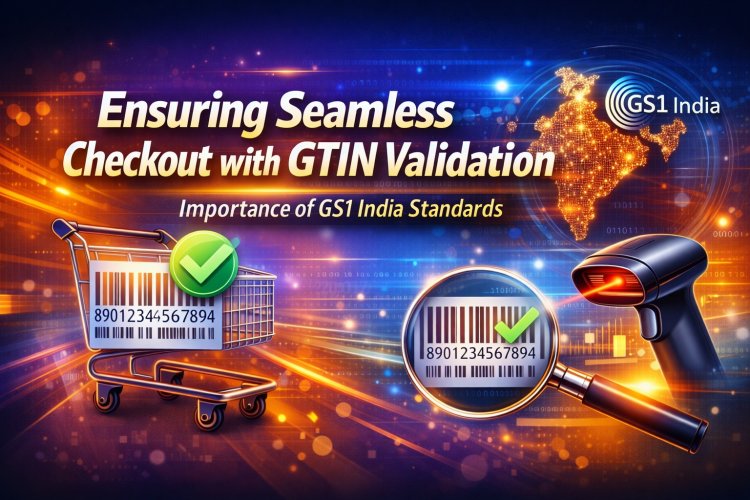
Ensuring Seamless Checkout with GTIN Validation | Importance of GS1 India Standards
Discover why GTIN validation is critical for seamless checkout, accurate inventory management, and marketplace compliance. Learn about GTIN formats, GS1 India’s role, and how proper validation reduces scanning errors and improves supply chain efficiency.
Introduction
Have you ever experienced a product not scanning properly or being rejected at checkout? It’s a frustrating experience we all likely share. It leads to delays, dissatisfaction, and an overall negative shopping experience. Now, imagine the same situation occurring with the products your business sells. This can result in reduced sales, a damaged brand reputation, and unhappy customers – a nightmare scenario for any business owner. To avoid such issues, it is crucial to ensure seamless product scanning and system compatibility at checkout. This is where the GTIN Validation service by GS1 India comes into play, safeguarding businesses from potential disruptions and ensuring accurate product identification. In this blog, we’ll explore what GTIN means, its importance, the various formats available, and why GTIN validation is vital for your business.
What Is a GTIN and Why Does It Matter?
Every product sold on the market, from medical supplies to consumer goods, carries a unique identification number known as the Global Trade Item Number (GTIN). Issued exclusively by GS1 member organizations to companies that manufacture or sell products, a GTIN serves the same purpose as a fingerprint; it is unique to each SKU (Stock Keeping Unit) produced and sold by a business. This number is commonly printed on the product’s packaging and can usually be found below the barcode, the recognizable black-and-white parallel lines.
Understanding the significance of GTINs can help businesses streamline operations and improve customer satisfaction. Here are three key reasons why GTINs matter:
1. Recommended by Marketplaces: Leading online marketplaces, such as Amazon and Flipkart, advocate for product listing through GTINs. This ensures faster listings, saving valuable time usually spent on manual entry and reducing the risk of errors.
2. Inventory Management: Having GTINs on products facilitates efficient inventory control. Retailers can mitigate overstocking and stock-outs, allowing for optimal inventory levels. This leads to increased profitability by reducing waste and enhancing customer satisfaction.
3. Interoperable Barcodes: GTINs are universally accepted by both online and offline marketplaces worldwide. Presence on products guarantees smoother trade operations and improved communication among stakeholders.
Contact our barcode experts at +91 729705118 and +91 8949793519.
With a solid understanding of GTIN basics, let’s delve into why businesses should acquire barcodes through GS1 member organizations specifically.
Why Choose GS1 India for GTINs?
GS1 is a globally recognized standard for supply chain management, boasting 120 member organizations in over 150 countries. GS1 India is one such organization, taking a leading role in the development and maintenance of supply chain standards, including barcoding and data sharing. Since 1996, India has been assigned the country code ‘890’ by GS1. Here are three reasons why businesses should trust GS1 India:
1. The Only Authorized Seller: GS1 India is the sole organization authorized to issue GTINs to companies in India. Other entities claiming to provide GTINs are not legitimate and may jeopardize your operations.
2. Building Trust and Authenticity: Products with GS1 barcodes foster trust and authenticity in the market. With GS1’s extensive data repositories, customers can easily authenticate products, enhancing credibility.
3. Globally Accepted Barcodes: GS1 barcodes are not only recognized in India but are endorsed globally, making them suitable for international trade and essential for businesses aiming for a larger market share.
Understanding GTIN Formats: Structures and Components
GTINs come in a few formats, catering to different product types and packaging requirements:
- GTIN-8 (8 digits): Designed for very small items that have limited packaging space.
- GTIN-12 (12 digits): Commonly referred to as UPC, this format is widely used in North America.
- GTIN-13 (13 digits): This is the most globally adopted format, encompassing regions like India and Europe (EAN-13).
- GTIN-14 (14 digits): Primarily used for higher-level packaging like cartons and pallets within supply chains.
Each GTIN serves a purpose within the supply chain and is not merely a random assortment of digits. For instance, a GTIN-13 comprises three main components: the Company Prefix, Item Reference, and Check Digit.
- Company Prefix: This identifier is assigned by the GS1 Member Organization to signify the brand owner and begins with a country code. In India, the prefix starts with ‘890’.
- Item Reference: This element is generated by the brand to distinguish a specific product type or SKU.
- Check Digit: A mathematically calculated digit that validates the proper formation of the GTIN.
Contact our barcode experts at +91 729705118 and +91 8949793519.
Why the Check Digit Matters
The check digit is critical for maintaining data integrity within identification numbers like GTINs. It enables systems to detect scanning or data entry errors before products navigate through POS systems, warehouses, or online catalogs. By applying a specific algorithm, the check digit is automatically calculated, serving as a safeguard against mistakes.
How to Validate and Use GTINs Accurately: A Step-by-Step Guide
Validation of GTINs is essential for businesses for several reasons, including enhancing product data accuracy, boosting operational efficiency, and building trust throughout the supply chain. Here’s a step-by-step approach to validating and using GTINs accurately:
1. Ensure Proper Registration: Always acquire GTINs from authorized GS1 member organizations to ensure authenticity.
2. Regularly Validate GTINs: Perform periodic checks of GTINs against GS1’s database to verify that they are still valid and not duplicated.
3. Implement Systems for Data Entry: Use systems with built-in validation rules to minimize manual data entry errors, ensuring the correct GTINs are consistently used.
4. Train Staff on GTIN Usage: Educate your employees about the importance of GTINs and their correct use in product listings, inventory management, and at the point of sale.
5. Monitor Inventory and Sales: Keep an eye on inventory levels, utilizing GTINs to effectively manage stock and prevent issues such as overstocking or stock-outs that could impact sales.
Conclusion
In today’s fast-paced retail environment, ensuring that products scan correctly at checkout is crucial for maintaining customer satisfaction and loyalty. GTINs serve as the backbone for product identification, offering numerous benefits such as faster listings on major marketplaces, streamlined inventory management, and enhanced supply chain communication. By partnering with GS1 India for GTIN registration, businesses can build trust, authenticity, and operational efficiency. In the quest for smooth transactions and positive customer experiences, embracing GTINs and their validation is not merely a choice, it’s a necessity for success in the modern marketplace.
Contact our barcode at +91 729705118 and +91 8949793519.