+91 7297051181
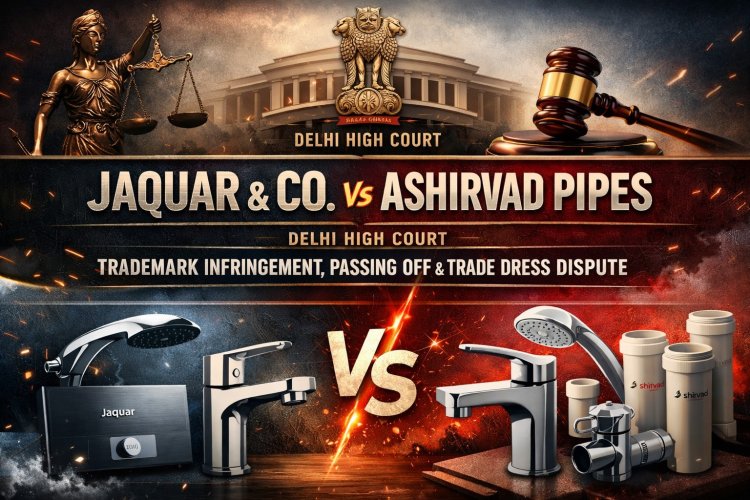
Jaquar & Co. v. Ashirvad Pipes (Delhi HC): Trademark Infringement, Passing Off & Trade Dress
A detailed analysis of Jaquar & Co. Pvt. Ltd. v. Ashirvad Pipes Pvt. Ltd. (Delhi High Court), examining trademark infringement, passing off, descriptive versus distinctive marks, trade dress protection, and interim injunction standards under Indian trademark law.
Introduction
In the competitive world of consumer goods, trademarks serve not only as identifiers of origin but also as symbols of a brand's reputation and goodwill. The increasing complexity of trademark disputes highlights the ongoing tension between established brands and emerging competitors. One such notable case is “Jaquar & Co. Pvt. Ltd. v. Ashirvad Pipes Pvt. Ltd. CS(COMM) 670/2023, decided by the “Delhi High Court”. The core of the dispute revolves around significant issues of trademark infringement and passing off, where established rights clash with the aspirations of a new market entrant. Jaquar, a dominant player known for its luxury sanitary fittings, alleged that Ashirvad's trademark “ARTISTRY” and “TIARA” pose a risk of consumer confusion and infringe upon its established marks, “ARTIZE” and “TIAARA”. This blog aims to delve deeply into the legal intricacies of the case, scrutinizing the arguments from both sides, the court's reasoning, and the broader implications for trademark law in India.
Background of the Case
Parties Involved
“Jaquar & Company Private Limited” (Jaquar) has established itself as a leading luxury sanitary fittings brand, primarily targeting premium segments of the market. Since its establishment, Jaquar has developed considerable goodwill associated with its distinctive products, marketed under the brands “ARTIZE” and “TIAARA”, which have gained recognition for their innovative designs and quality.Conversely, “Ashirvad Pipes Private Limited” is a relatively new entrant in the market, aspiring to gain share in the sanitary fittings segment. Ashirvad's products, launched under the “ARTISTRY” and “TIARA”” trademarks, aim to compete with established brands by leveraging similar aesthetic themes. The introduction of these marks has sparked significant controversy, leading to Jaquar's legal actions.
Legal Framework
The case was adjudicated under Indian commercial law, primarily focusing on the “Trade Marks Act”. It raised pivotal questions about the enforcement of trademark rights, particularly in relation to established versus newly registered marks, as well as the criteria needed to prove infringement and passing off as outlined under Sections 29 and 135 of the Trade Marks Act.
Trademark Registration
Jaquar has held its “ARTIZE” and “TIAARA” trademarks since 2008 and 2016, respectively, in Class 11 for sanitary fittings and Class 35 for advertising and business management services. In contrast, Ashirvad registered its “ARTISTRY” mark in January 2022 on a "proposed to be used" basis, which was argued by Jaquar as an attempt to capitalize on its established brand reputation.
Overview of the Case
Material Facts
In its claim, Jaquar asserted that since launching the “ARTIZE” brand in 2008 and “TIAARA in 2016, it has cultivated a strong market presence, evidenced by substantial sales figures. For instance, Jaquar reported sales of around ₹150.4 crore for ARTIZE in FY 2021-22 and ₹129.51 crore in FY 2022-23, along with TIAARA sales progressing to about ₹4.9 crore in the latest fiscal year. Jaquar highlighted that it has employed distinctive blue-and-gold packaging for ARTIZE products since inception, which has become an integral part of its branding. In contrast, Ashirvad's launch of its “ARTISTRY” mark came to Jaquar's notice in January 2023, following an advertisement in Casa Vogue. Jaquar's scrutiny unveiled that Ashirvad had already registered the ARTISTRY mark and used “TIARA prominently in its invoices and promotional materials for a line of faucets, leading to Jaquar's legal action invoking trademark infringement claims.
Key Legal Issues
The lawsuit encompassed several critical questions:
· Action for Infringement: Whether Jaquar could maintain a claim against Ashirvad's registered mark ARTISTRY and the use of TIARA.
· Deceptively Similar Marks: Evaluating if the marks ARTISTRY and TIARA were deceptively similar to Jaquar’s ARTIZE and TIAARA, respectively.
· Passing Off Standards: The need to establish a prima facie case for passing off, focusing on the marks' similarity and their trade dress.
· Monopolization of Descriptive Elements: Scrutinizing whether Jaquar was unjustifiably attempting to monopolize the prefix “ART,” which Ashirvad claimed was descriptive of artistic design.
· Interim Relief Requirements: Assessing whether the requisite conditions for granting an interim injunction—including prima facie case, balance of convenience, and irreparable injury—were satisfied.
Arguments Presented
Plaintiff’s Arguments (Jaquar)
Jaquar centered its arguments around its established prior use of the marks ARTIZE and TIAARA, emphasizing their reputation and the substantial goodwill associated with them. The primary pillars of Jaquar’s arguments included:
· Similarity of Marks: Jaquar contended that ARTISTRY and TIARA were similar enough to its trademarks that they could easily mislead consumers. This was supported under Sections 29(1) and 29(2)(b) of the Trade Marks Act, suggesting confusion was likely due to the identical nature of goods.
· Intent and Copying: Jaquar argued that Ashirvad's choice of trademarks followed its recognition of Jaquar's existing marks, signifying intent to ride on Jaquar's brand equity rather than create distinctive identities. This appeal to intent strengthened Jaquar's allegations of substantial similarity and confusion.
· Trade Dress Copying: Jaquar maintained that Ashirvad’s packaging—including the blue-and-gold stylization—closely resembled its long-established trade dress. This mimicry, Jaquar argued, compounded the likelihood of confusion among consumers.
· Legal Precedents: Utilizing the legal frameworks established in prior judicial decisions (e.g., Raj Kumar Prasad v. Abbott Healthcare), Jaquar sought to reinforce its ability to bring an infringement suit, maintaining that a challenge to the validity of Ashirvad’s trademark registration could still warrant an injunction.
· Descriptive Prefix Defense: Jaquar, countering Ashirvad's argument regarding the descriptiveness of "ART," asserted that ARTIZE is a distinctive and non-descriptive mark which should not be conflated with generic terms.
Defendant’s Arguments (Ashirvad)
On the other hand, Ashirvad mounted a robust defense claiming:
· Descriptive Nature of “ART”: Ashirvad argued the prefix "ART" can be regarded as descriptive in the sanitaryware context, citing numerous precedents of similar brand naming trends. They emphasized that descriptive terms cannot be monopolized by any single entity.
· Consumer Distinction: Ashirvad claimed that consumers are likely to differentiate between ARTISTRY and ARTIZE based on overall branding, packaging, and market positioning, which would mitigate any alleged confusion in the marketplace.
· Creative Independence: Ashirvad defended its design choices for trade dress as legitimate business practices. By highlighting industry standards, Ashirvad argued that the blue-and-gold color scheme was a common theme in branding, and not a deliberate imitation of Jaquar’s established trade dress.
· Legal Defenses to Infringement: They argued that the structure of trademark law—specifically the principles of non-exclusivity regarding descriptive terms—would not warrant an infringement finding and that Jaquar lacked grounds for the injunction.
Trademarks Comparative Table
|
Plaintiff: Jaquar & Co. Pvt. Ltd. |
Defendant: Ashirvad Pipes Pvt. Ltd. |
|
ARTIZE, TIAARA
|
ARTISTRY, TIARA
|
 ,
,
 ,
,
|
Plaintiff’s ‘ARTIZE’ trade dress |
Defendant’s impugned ‘ARTISTRY’ trade dress |
|
|
|
|
|
|


Court's Decision
Ruling
In its decision, the “Delhi High Court”, led by Justice C. Hari Shankar, delivered a nuanced judgment that recognized the complexities of the competing claims.
Key Outcomes
· Interim Injunction: The court granted an interim injunction against Ashirvad's use of ARTISTRY and TIARA pending further proceedings, citing the potential for consumer confusion and the importance of preserving the integrity of Jaquar’s brand.
· Precedent and Monopolization Consideration: The court acknowledged the complexities introduced by the descriptiveness of certain terms but maintained that trademarks, particularly those built on substantial equity, deserve protection. Notably, the decision pointed out that trademark only becomes descriptive after widespread industry establishment.
· Trade Dress and Market Presence: The court expressed concerns about the likelihood of consumer confusion arising from Ashirvad's similar packaging and branding elements, underscoring the importance of a distinct trade dress in maintaining brand identity.
Conclusion
The “Jaquar & Co. Pvt. Ltd. v. Ashirvad Pipes Pvt. Ltd. CS(COMM) 670/2023 (Delhi High Court)” case serves as a critical reference point in the field of trademark law, illustrating the delicate balance between protecting a brand's identity and fostering fair competition. The ruling from the Delhi High Court sheds light on the complexities of consumer confusion, descriptive trademark applications, and the importance of distinctive trade dress in the identity of products.As businesses grow and evolve in a dynamic market, understanding the intricacies of intellectual property rights becomes increasingly essential. This case exemplifies the continuing challenges within trademark law, reinforcing the need for brands to be vigilant, innovative, and legally astute. Ultimately, the case highlights the commitment to preserving fair competition while safeguarding the reputations of established brands, a critical element in fostering a robust market environment.