+91 7297051181
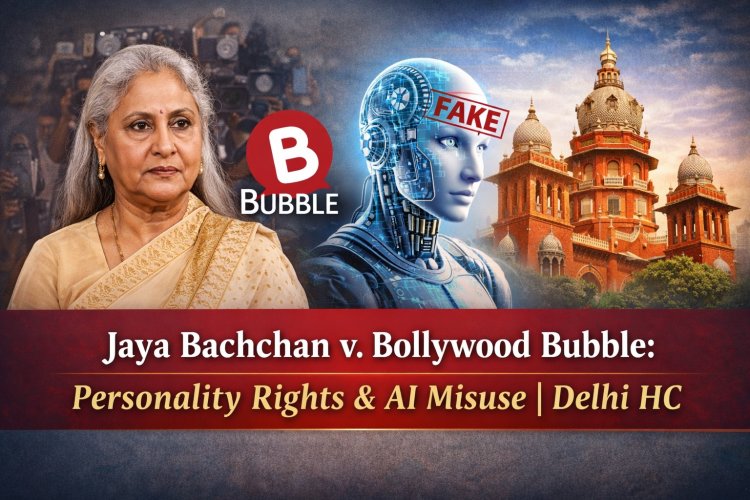
Jaya Bachchan v. Bollywood Bubble: Personality Rights & AI Misuse | Delhi HC
An analytical overview of the Delhi High Court case Jaya Bachchan v. Bollywood Bubble Television, examining personality rights, privacy, AI-generated content, and intellectual property violations involving unauthorized commercial exploitation of a public figure’s name and likeness in the digital age.
INTRODUCTION
In today’s hyper-connected world, the emergence of digital content creation has blurred the lines between creativity and legality, particularly concerning the unauthorized use of personalities. The relentless advancements in technology, especially artificial intelligence (AI), have created new avenues for exploitation of celebrity personas, leading to issues that challenge existing legal frameworks. One such pivotal case is “Jaya Bachchan v. Bollywood Bubble Television & Others CS(COMM) 1194/2025 with I.A. 27751/2025, 27752/2025, 27753/2025, 27754/2025, 27755/2025, 27756/2025, 27757/2025, 27758/2025”, which highlights the intricacies of intellectual property rights and the urgent need for robust legal protections for individuals in the entertainment industry. Jaya Bachchan, an iconic figure in Indian cinema with a prolific career spanning over six decades, has not only made a mark in film but also in politics as an esteemed Member of Parliament. Her name and persona have become synonymous with success and artistry, thus rendering her susceptible to misuse in the hands of unscrupulous entities. This case could set a significant precedent for how the law perceives and protects the rights of public figures against the backdrop of modern technology.
COURT’S ANALYSIS
The Court found as follows at the interim stage:
- The Plaintiff is “undoubtedly a renowned actress” with established goodwill and reputation in Indian and global cinema, and as a public figure through politics and public service.
- Her personality traits, including her names “Jaya Bachchan” and “Jaya Amitabh Bachchan,” likeness, signature, voice, image and other aspects of her persona are protectable elements of her personality rights.
- The Plaintiff has exclusive rights to commercially exploit her publicity rights and to protect herself against morphed and distorted content that is defamatory or demeaning to her and her family.
CASE OVERVIEW
Parties Involved
The plaintiff, “Jaya Bachchan”, is a celebrated actress and politician, known for her extensive contributions to Indian cinema. She seeks relief from several defendants, including:
· Defendant Nos. 1 and 2: Entities accused of distributing unauthorized merchandise and disseminating AI-generated content that exploits her likeness.
· Defendant Nos. 3 to 10: Various e-commerce platforms and authorities, including social media giants like Meta and Google, that are implicated as proforma defendants for not curbing the infringing activities.
· Defendant No. 11: Identified as "John Doe," representing unknown entities involved in creating and disseminating infringing content.
NATURE OF THE CASE
The plaintiff's legal grievance revolves around a multifaceted assertion encompassing.
· Misappropriation of personality and publicity rights: Jaya Bachchan argues that her name and likeness have been exploited without her consent for commercial gain.
· Copyright infringement and passing off: The defendants’ actions are seen as an infringement of her rights as a performer and the unauthorized use of her copyrighted materials.
· Dissemination of AI-generated and inappropriate content: This includes morphed images and videos that depict Bachchan in inappropriate contexts, thus infringing upon her dignity and privacy.
KEY FACTS
The case illustrates a pressing concern in the digital landscape:
· Jaya Bachchan’s extensive career has made her persona highly marketable, but this has also attracted unauthorized exploitation.
· Defendants have allegedly utilized AI technology to create content that sells merchandise bearing her likeness and name without permission.
· There are claims of fake social media accounts impersonating her, which further exacerbates the issue of identity theft and misrepresentation.
PROCEDURAL HISTORY
The procedural developments leading to the current status of the case reveal a series of interim applications. The plaintiff has sought exemptions and extensions concerning various legal formalities, indicating the urgency of the issues at hand. Notably:
· An exemption from prior notice to government authorities was granted, recognizing their role as proforma parties.
· The court allowed extensions for filing essential documents and certificates under applicable legislation, reflecting the complexities involved in gathering evidence in intellectual property cases.
CAUSES OF ACTION
The court summarized the plaintiff's causes of action as includes:
· Impersonation on social media: Fake accounts using Jaya Bachchan’s name and images for deception.
· Unauthorized merchandise sales: The defendants' sale of products featuring her likeness without consent violates her commercial rights.
· Creation and dissemination of misleading content: The AI-generated videos and images misrepresent the plaintiff and contribute to damage to her reputation.
To know more about, this please check the link below.
BROADER IMPLICATIONS
The outcome of this case has far-reaching implications not only for Jaya Bachchan but for the rights of all public figures in India. Here are a few potential ramifications:
· Protecting Personality Rights: This case underscores the urgent need for enhancing legal frameworks that protect the personality and publicity rights of individuals, especially in an age where technology can easily manipulate and distribute content.
· Addressing AI and Intellectual Property: As AI continues to evolve, the legal system must grapple with the new realities of copyright and personality rights. This case could prompt judicial interpretations to clarify how traditional laws apply to contemporary technology's challenges.
· Setting Legal Precedents: The ruling could set a significant legal precedent that informs future cases regarding intellectual property, especially concerning virtual environments and the unauthorized use of celebrity imagery. The courts may establish a clearer delineation of responsibilities for platforms and content creators in handling infringing material.
· Navigating Digital Ethics: The decision may ignite discussions on the ethical implications of AI in content creation and the responsibilities that come with technological capabilities. How society chooses to navigate these issues can shape future policies, regulations, and user behavior in digital spaces.
CONCLUSION
The case of “Jaya Bachchan v. Bollywood Bubble Television & Others CS(COMM) 1194/2025 with I.A. 27751/2025, 27752/2025, 27753/2025, 27754/2025, 27755/2025, 27756/2025, 27757/2025, 27758/2025”, serves as a pivotal point in the ongoing discourse on intellectual property rights, privacy, and the implications of AI technology in creative industries. As public figures like Jaya Bachchan seek to defend their identity and likeness against exploitation, it will be imperative for the legal system to adapt and provide a robust framework for protection that considers the evolving technological landscape. This case embodies not just a legal battle but a significant cultural conversation about the respect for individual rights in an increasingly digital world. The implications extend beyond Bachchan, encompassing the broader ecosystem of artists, influencers, and the evolving nature of personal branding in the age of technology. As the legal proceedings continue to unfold, the eyes of the nation will be on how the judiciary addresses these challenges and safeguard’s personal identity in an era marked by rapid technological advancements.