+91 7297051181
Legal Analysis of Rajani Products v. Madhukar Varandani | Copyright & Trademark Dispute in Edible Oils
An in-depth legal analysis of Rajani Products v. Madhukar Varandani, examining copyright rectification, originality of artistic works, and the scope of “person aggrieved” under the Copyright Act, 1957, in the context of trademark protection within India’s edible oils sector.
INTRODUCTION
Intellectual Property Rights (IPR) play a critical role in protecting the creative expressions and business interests of firms, notably in competitive markets. This legal analysis focuses on a pivotal case, Rajani Products v. Madhukar Varandani, which arose from a copyright dispute within the edible oils sector. The case foregrounds several fundamental issues, such as the concept of originality in artistic works, the status of trademark holders as "persons aggrieved," and the necessary actions to rectify erroneous copyright registrations. Rajani Products, a well-established name in the edible oils market, has sought rectification of a copyright registration held by Madhukar Varandani related to an artistic work that closely resembles Rajani's own registered works. The resolution of this case will not only impact the parties involved but also set a legal precedent on issues of copyright enforcement, trademark integrity, and the broader implications for brand management in India’s dynamic marketplace.
CASE BACKGROUND
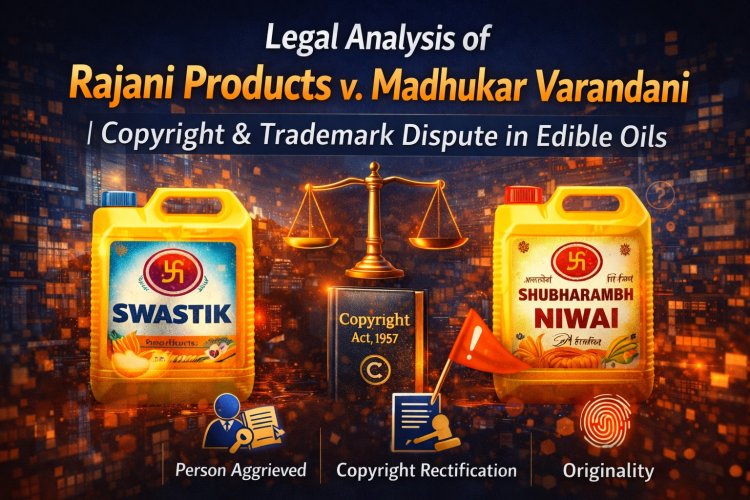
The petitioner, Rajani Products, is a partnership firm engaged in the manufacturing and sale of edible oils, claiming a long history of trademark use since 1975, including names such as "SWASTIK" and designs incorporating the swastik logo. The company's registered trademarks reinforce its longstanding presence and consumer recognition in the sector. Conversely, the respondent, Madhukar Varandani, has operated under the trademarks "SHUBHARAMBH" and "NIWAI," incorporating the swastik device. The contention arose when Varandani registered a copyright for an artistic work titled "NIOP NIWAI IN ENGLISH AND HINDI WITH DEVICE OF SWASTIK," which Rajani alleged was a mere reproduction of their earlier works. Notably, during proceedings, despite being given multiple chances, the respondent failed to contest the claims made by Rajani, effectively closing the door on their defence. The Delhi High Court, led by Justice Tejas Karia, was faced with the challenge of deciding whether Rajani qualified as a "person aggrieved" under Section 50 of the Copyright Act and whether the registration held by Varandani warranted annulment.
Rjani products is a partnership firm engaged in manufacturing and markeying edible oils and allied goods. Through its predecessors, it claims adoption and use of the trademarks/labels “SWASTIK”, “SWASTIK NO.1” and a SWASTIK logo in relation to edible oils since 1975
PETITIONER’S TRADEMARK REGISTRATION
|
SR. NO |
TRADEMARK |
APPLICATION NO. |
GOODS/ CLASS |
STATUS |
|
1. |
SWASTIK NO.1 |
411334 |
Mustard Oil, Til Oil (Edible)- Class 29 |
Registered; valid up to 29.09.2034 |
|
2. |
Device label containing SWASTIK
|
1055218 |
Edible Oil, Til Oil, Mustard Oil, Groundnut Oil, Soyabean Refined Oil – Class 29 |
Registered; valid up to 30.10.20131 |
|
3. |
Label with SWASTIK
|
2146301 |
Edible Oil, Mustard Oil – Class 29 |
Pending |
|
4. |
Label with SWASTIK
|
4838086 |
Edible Oil, Mustard Oil – Class 29 |
Pending |


PETITIONER’S COPYRIGHT REGISTRATIONS
|
SR. NO |
COPYRIGHT LABEL |
REGISTRATION NO. |
|
1. |
SWASTIK label
|
A-45417/1984 |
|
2. |
SWASTIK label
|
A-46097/1984 |


LEGAL CONSIDERATIONS
- Statutory Framework: The pivotal statute in question, the Copyright Act, 1957, provides mechanisms for the protection of original works and recourse for individuals and organizations who believe that their rights have been violated. Section 50 enables any "person aggrieved" by a copyright registration to seek rectification of the register. This provision is significant as it emphasizes the rights of entities that have substantial claims to originality and trademarks in their creative outputs.
- Requirements for a "Person Aggrieved": For Rajani Products to successfully challenge the copyright, it must demonstrate that it is a "person aggrieved." Given that it has been a longstanding provider of edible oils using similar artistic elements tied to the swastik device, it may convincingly present that the registration harms its business interests and reputation.
- Originality vs. Substantial Reproduction: Justice Karia's task was to ascertain whether Varandani's registered work was an original creation or a slavish imitation of Rajani's pre-existing registered works. The criteria for originality in copyright law stipulate that the work must exhibit a minimal degree of creativity and not merely reproduce another entity's work. The petitioner argues that Varandani's work effectively replicates the color schemes, arrangement, and stylistic essence of Rajani's artistic expressions, thereby infringing on their originality.
To know more about this, please check the link below.
ARGUMENTS FROM BOTH PARTIES
Rajani Products articulates several core arguments in support of its claim:
1. Historical Use and Registration: Rajani's longstanding use of the "SWASTIK" mark since 1975 establishes it as the original nationalist design and leads to consumer goodwill and trust.
2. Substantial Similarity: Rajani emphasizes that Varandani's impugned work closely resembles its previously registered copyrights, amounting to a significant reproduction that threatens to deceive consumers.
3. Bad Faith Adoption: The launch of a similar artistic work post-dates Rajani’s established presence in the market, suggesting mala fide intent, further complicating Varandani's defense.
From the respondent's perspective, the lack of any filings or rebuttals signifies a profound weakness in their position. Respondent No. 2, representing government interests, did oppose Rajani's application but offered no substantive legal rebuttal in court proceedings.
CONCLUSION
The case of Rajani Products v. Madhukar Varandani serves as a critical juncture in the discussion surrounding copyright and trademark law within the competitive and evolving landscape of India's edible oils industry. The court’s eventual ruling on whether Rajani is deemed a "person aggrieved" and whether Varandani's copyright should indeed be rectified will promulgate significant ramifications for both parties and establish a potential groundwork for the future battles over inspiration, originality, and the scope of protection under the Copyright Act. In essence, this case underscores the necessity for vigilance in protecting intellectual property rights, particularly in sectors where trademark and copyright overlap. It highlights the importance of maintaining a robust legal framework to safeguard creativity and ensure that market competition operates within the bounds of respect and integrity towards established players and their contributions. As this case unfolds, its implications will resonate far beyond the courtroom, impacting brand strategies and consumer perceptions within the South Asian context and beyond.