+91 7297051181
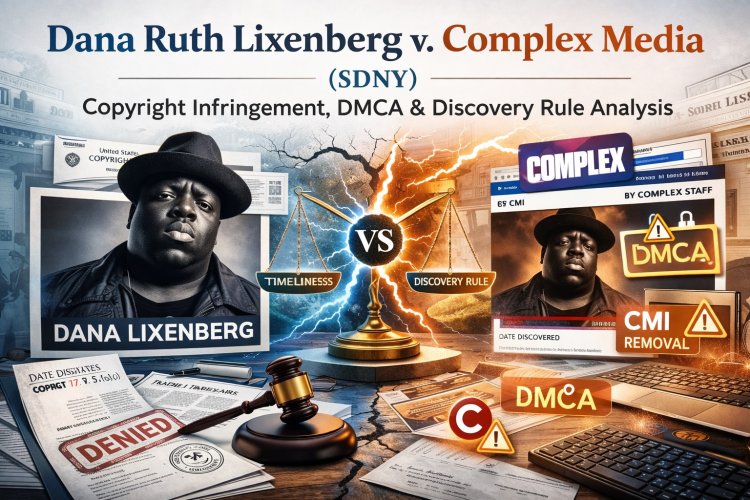
Dana Ruth Lixenberg v. Complex Media (SDNY): Copyright Infringement, DMCA & Discovery Rule Analysis
An in-depth analysis of Dana Ruth Lixenberg v. Complex Media, Inc., examining unauthorized online use of a Notorious B.I.G. photograph, application of the discovery rule, statute of limitations, and DMCA claims involving removal and false copyright management information (CMI). The case reinforces digital attribution standards and strengthens creators’ rights under U.S. copyright law.
Introduction
In the ever-evolving landscape of copyright law, the case of Dana Ruth Lixenberg v. Complex Media, Inc., No. 22-CV-354 (RA), has emerged as a noteworthy development, with implications that resonate beyond the parties involved. This litigation encapsulates critical questions about copyright infringement, the protection of authorship, and the standards applied to copyright holders in the digital realm.
Background: Who’s Who in the Case
The lawsuit was initiated by Dana Ruth Lixenberg, an acclaimed photographer whose works have captured the essence of various personalities, including the late rapper Notorious B.I.G. The defendants in the case are Complex Media, Inc. and various unnamed "John Doe" defendants. At its core, the dispute arose when Complex Media published an online article in celebration of Notorious B.I.G.’s birthday, embedding Lixenberg’s iconic 1996 photograph without her permission or proper attribution.
Photograph of well-known musical artist, the Notorious B.I.G., created and published by the plaintiff in the year 1996 is below.

The above photograph is registered with the United States Copyright Office under Registration No. VA0001976754.
Photograph on the defendant’s website is below.

The Legal Manoeuvring
The legal battle began in January 2022 when Lixenberg filed a suit against Complex Media, asserting multiple claims, including copyright infringement under the Copyright Act and violations of the Digital Millennium Copyright Act (DMCA). Specifically, she contended that Complex’s use of her photograph constituted both the removal of copyright management information (CMI) and the provision of false CMI. As the case progressed, Complex Media sought to dismiss the Second Amended Complaint or, alternatively, for summary judgment. The defendant argued that the complaint should be dismissed due to the expiration of the statute of limitations on copyright claims. However, the court, presided over by Judge Ronnie Abrams, rejected this motion, allowing Lixenberg’s claims to proceed.
Understanding the Statute of Limitations
One of the pivotal legal questions revolved around the statute of limitations applicable to copyright claims. Under the Copyright Act, claimants have three years from the date of discovery of the infringement to file a lawsuit. The discovery rule dictates that a claim accrues when the copyright holder discovers or reasonably should have discovered the infringement.
The Rejection of the Rotkiske Argument
Complex also attempted to draw parallels between copyright claims and debt collection practices by referencing the Rotkiske v. Klemm ruling. They argued that the discovery rule should not apply to copyright cases unless fraud is involved. The court firmly disagreed, emphasizing that existing Second Circuit precedent maintained that the discovery rule continued to govern the accrual of copyright claims. This sets a significant reinforcing notion that established doctrines in copyright law remain valid and effective.
The DMCA Claims: CMI and False CMI
Lixenberg also brought forward claims under the DMCA regarding the removal and falsification of copyright management information. The court determined that she had sufficiently alleged all the necessary elements for these claims. Notably, she contended that her name as the author typically accompanied the photograph and that the unauthorized use by Complex Media constituted a removal of this important copyright management information (“CMI”). The court emphasized the importance of context, stating that the totality of the allegations demonstrated that Complex Media was aware that the removal of the CMI would conceal the copyright infringement. This finding underscores a fundamental principle in copyright law: parties cannot shield themselves from liability through intentional omission or misrepresentation of authorship. Furthermore, the court addressed the provision of false CMI. The nature of Complex’s logo and the tagline stating “BY COMPLEX STAFF” was argued to signal ownership of not just the article but also the photograph itself. This depiction could mislead viewers regarding the true authorship. The implications of this decision are significant; logos, bylines, and even watermarks may qualify as CMI, reinforcing the obligations to accurately credit original creators.
To know more about this, please check the link below.
The Issue of John Doe Defendants
A fascinating aspect of this case was the inclusion of John Doe defendants. Although more than three years had passed since Lixenberg filed her suit, the court opted not to dismiss these unnamed defendants due to the circumstances in which the case found itself—primarily, it had been stayed, and discovery had yet to commence. The court recognized that plaintiffs often require some form of discovery to unearth the identities of Doe defendants, affirming the necessity of allowing time for such processes before dismissal could be considered.
Key Takeaways from the Case
The Lixenberg v. Complex Media case ultimately highlights several significant takeaways that will resonate with photographers, artists, and potential defendants alike:
· Application of the Discovery Rule: The case reaffirms that in the Second Circuit, the discovery rule applies to claims of copyright infringement. This understanding provides some leeway to copyright holders, ensuring that their claims are not easily dismissed based on subjective standards of diligence related to their professional experience.
· Limitation Arguments Must Appear on the Face of the Complaint: Generic assertions that a copyrighted work was publicly accessible do not suffice to establish inquiry notice at the motion to dismiss stage. This protects creators from premature dismissal of their claims based solely on assumption rather than clear evidence.
· Definition of CMI: The court’s interpretation of CMI includes not only author-identifying details like gutter credits but also logos and watermarks that signal ownership. This broad interpretation bolsters the protections available to copyright holders against unauthorized use and misrepresentation.
· Suitability of Naming Doe Defendants: Plaintiffs may have a legitimate pathway to pursue claims against unnamed defendants, especially when discovery has not yet taken place. This aspect is vital for safeguarding creators’ rights in situations where the infringers may initially remain unknown.
Conclusion: A Victory for Creators
The case represents a significant victory for creators, affirming their rights to control and protect their work against unauthorized use. As digital platforms continue to evolve and the lines between content creation and copyright infringement blur, this case serves as a crucial reminder of the importance of respecting intellectual property rights. Moving forward, it is vital for creators and entities alike to understand and navigate the complexities of copyright law to safeguard artistic integrity and ownership in the digital age.