+91 7297051181
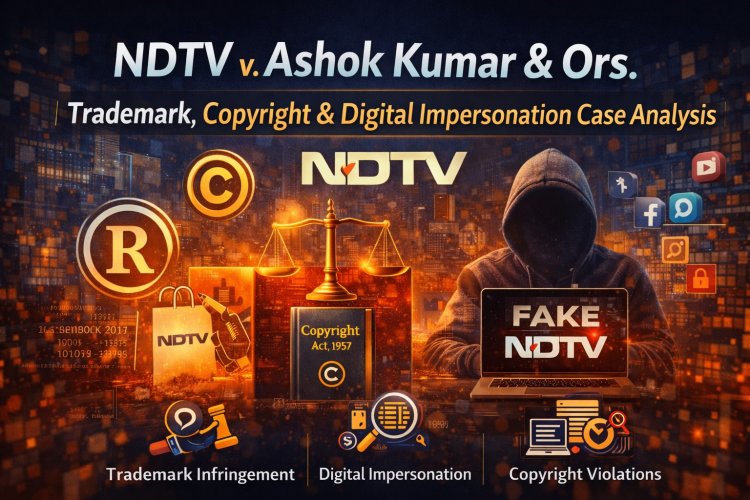
NDTV v. Ashok Kumar & Ors. | Trademark, Copyright & Digital Impersonation Case Analysis
A detailed legal analysis of New Delhi Television Limited v. Ashok Kumar & Others (Delhi High Court, 2025), examining trademark infringement, copyright violations, digital impersonation, and court-led enforcement measures to protect well-known media brands in the online ecosystem.
INTRODUCTION
In the fast-evolving landscape of digital media, the intersection of technology and law has become increasingly complex. The internet provides unparalleled opportunities for sharing and consuming content, but it also presents significant challenges regarding the protection of intellectual property. The case of “New Delhi Television Limited v. Ashok Kumar & Others CS(COMM) 869/2025, I.A. 20320/2025, I.A. 20321/2025, I.A. 20322/2025 & I.A. 20323/2025” illustrates this conflict poignantly. As a leading independent news broadcaster in India, NDTV has consistently invested in building a brand recognized for its integrity and journalistic excellence. This case, recently adjudicated by the High Court of Delhi, raises critical questions about the protection of trademarks and copyrights in a digital world where impersonation and unauthorized use flourish.
PROCEDURAL POSTURE
The case was initiated by NDTV against a myriad of defendants, including an unknown primary infringer as well as multiple domain name registrars, social media platforms, and even governmental agencies. On August 20, 2025, the High Court of Delhi reviewed NDTV's commercial suit, which sought not only permanent injunctions but also damages related to alleged trademark infringement, passing off, copyright infringement, and unfair competition.
The plaintiff's course of action involved several interim applications, specifically targeting:
Ø Extension of Time for Court Fees: NDTV sought more time to file necessary fees, recognizing the extensive litigation ahead.
Ø Leave to File Additional Documents: Supporting evidence was crucial for substantiating the claims.
Ø Exemption from Pre-Institution Mediation: NDTV argued that the urgency of the matter warranted immediate court intervention.
Ø Ex Parte Ad-Interim Injunction: The plaintiff aimed to secure a temporary relief to halt the ongoing infringing activities while the case was heard.
The court's decisions on these applications laid the groundwork for the judicial process that followed, particularly stressing the urgency of addressing the alleged infringements.
MATERIAL FACTS
Ø The Plaintiff’s Rights and Business
NDTV, founded in 1988, has evolved into a key player in the Indian news broadcasting landscape, operating channels like NDTV 24x7, NDTV India, and regional broadcasts such as NDTV World. The company has been using the NDTV mark and its variations since 2003 the establishing an extensive portfolio of trademark registrations across various classes. The brand's intellectual property is further supported by its official domain name, www.ndtv.com, registered in 1996. NDTV's website serves as a hub for original content, heavily protected by copyright laws as artistic and literary works under the Copyright Act, 1957. The company’s status as a well-known trademark, recognized by the Trade Marks Registry earlier in 2025, significantly enhances its ability to pursue legal remedies against infringement.
PLANTIFF HAS BEEN USING NDTV MARK AND DISTINCTIVE LOGO SINCE 2003:
|
S. NO |
MARK |
STATUS |
CLASSES |
LOGO |
|
1. |
WORD MARK |
Registered |
9, 16, 35, 38, 41, 42 |
NDTV |
|
2. |
DEVICE MARK |
Registered |
9, 16, 35, 38, 41, 42 |
|
|
3. |
DEVICE MARK |
Registered |
9, 16, 35, 38, 41, 42 |
|
|
4. |
DEVICE MARK |
Registered |
9 |
|


Alleged Infringing Activities
The core of NDTV's complaint stems from the discovery of several unauthorized entities using its trademarks and content. In July 2025, NDTV identified multiple websites and social media platforms impersonating its brand, leading to public confusion and potential harm to its reputation. Some of the major offending websites include:
v https://ndtv-news.com: Allegedly operated without any authorization, utilizing NDTV’s branding.
v https://ndtvhindu.com: Registered through a domain registrar.
In addition to websites, NDTV claimed infringement across various social media platforms. Throughout its investigation, NDTV discovered multiple accounts on YouTube, Telegram, X (formerly Twitter), and Facebook that unlawfully used the NDTV name and logo, often suggesting affiliation or offering misleading information to viewers. The plaintiff contended that these actions not only exploit NDTV’s established goodwill but also pose significant risks to democratic processes, journalistic integrity, and the safeguarding of information in society—an assertion that resonates deeply in today's media landscape, where misinformation can lead to detrimental consequences.
THE NDTV DISCOVERED THET THE DEFENDANTS WERE INFRINGING ITS COPYRIGHT AND WELL-KNOWN TRADEMARK “NDTV”:
|
S.NO |
LOGO |
|
1. |
|
|
2. |
|
|
3. |
|
|
4. |
|


To know more about this, please check the link below.
COURT’S DELIBERATION AND DIRECTIONS
During the hearing, the High Court evaluated the interim applications with the understanding that the current legal framework allows for rapid responses in cases of intellectual property infringement. The judge, Hon'ble Ms. Justice Manmeet Pritam Singh Arora, underscored the importance of protecting well-known trademarks. The court was particularly stringent about the potential damage to NDTV's brand and the urgent need to address the ongoing infringement. To assure that NDTV's reputation and resources are safeguarded, the Court issued several directions to ensure the faster resolution of issues at hand and prevent further infringement. These included granting the requested ex parte ad-interim injunction to halt the unlawful activities while the suit proceeded for a full hearing.
IMPLICATIONS FOR MEDIA ORGANIZATIONS
The implications of the case extend beyond NDTV itself; they pose crucial considerations for media organizations navigating the digital terrain. In an era where information is disseminated rapidly, the challenge of protecting intellectual property demands proactive engagement. This case illustrates the importance of:
Ø Vigilance in Brand Monitoring: Organizations must actively surveil their branding and online presence to quickly identify and address unauthorised uses.
Ø Legal Preparedness: Having robust legal frameworks in place, including swift access to redressal mechanisms through courts, is essential for managing potential infringements.
Ø Public Awareness and Education: Educating the public on genuine sources of news and information can help mitigate the effects of misinformation and impersonation.
Ø Collaboration with Platforms: Media organizations may benefit from stronger partnerships with platforms like Google, Facebook, and others to ensure the rapid removal of infringing content.
NDTV, a prominent television broadcasting company, has alleged unauthorized online distribution of its content through rogue websites and social media platforms. To address these violations, the Court had previously ordered the blocking of certain online resources and required the disclosure of subscriber information.
CURRENT PROCEEDING
The recent order focuses on compliance with earlier court directives from August 2025. Key points addressed include: - Verification of compliance by major platforms like Google, Telegram, X, and Meta. - The status of potentially active infringing URLs and channels. - Necessary procedural steps for the continuation of the case.
COMPLIANCE STATUS
Ø Google confirmed compliance with blocking directives and is working on providing subscriber information.
Ø Telegram has suspended 16 channels as ordered and provided information related to them.
Ø X (formerly Twitter) blocked 121 handles and is in the process of supplying related data.
Ø Meta partially complied, blocking 86 accounts while working to verify and provide additional information.
Domain name registrars reported mixed levels of compliance, though some websites remain active despite orders to suspend them. The Court noted the varying levels of adherence to its directives but did not issue further enforcement actions in this session. The focus remains on ensuring compliance to protect NDTV’s copyrighted content effectively.
CONCLUSION
The case of “New Delhi Television Limited v. Ashok Kumar & Others serves as a compelling illustration of the challenges faced by CS(COMM) 869/2025, I.A. 20320/2025, I.A. 20321/2025, I.A. 20322/2025 & I.A. 20323/2025” media entities in the digital age. As the lines between genuine and counterfeit blur, intellectual property rights become increasingly crucial to protecting brands, maintaining public trust, and ensuring the free flow of information without the risk of exploitation. With the court’s acknowledgment of the severity of the alleged infringements, this case offers vital insights for other media organizations aiming to fortify their intellectual property rights. Ultimately, as digital media continues to evolve, robust legal protections and proactive measures will be essential to uphold the integrity of journalistic practice and the safeguarding of media organizations’ reputations. The enduring question remains: how can we balance innovation and accessibility with the need for accountability and protection within the realm of digital media? By navigating these complexities, the legal framework can continue to adapt, ensuring that established brands and their valuable intellectual property are not only recognized but effectively defended in a rapidly changing digital landscape.