+91 7297051181
The Impact of Barcode Technology on Healthcare: Enhancing Patient Safety & Efficiency
Discover how barcode technology is transforming healthcare by reducing medical errors, improving patient safety, and streamlining medication management, specimen tracking, blood transfusions, and surgical workflows. Learn about its applications, benefits, challenges, and future integration with healthcare IT and EHR systems.
Introduction
In today’s fast-paced healthcare environment, patient safety and operational efficiency are paramount. As technology advances, the adoption of innovative solutions like barcode technology has become a game-changer within the sector. This technology, which uses optical machine-readable representations of data, has its roots in the 1970s but has gained significant traction in recent years, particularly in light of growing concerns regarding medical errors and healthcare costs.
Historical Context and Evolution
The journey of barcode technology in healthcare began in the 1970s when initial applications started emerging. By the early 2000s, published reports revealed alarming rates of medical errors, often linked to inaccurate medication administration and specimen collection. These findings prompted healthcare institutions to explore solutions that could mitigate risks associated with human error. The growing emphasis on patient safety led organizations like the Healthcare Information and Management Systems Society (HIMSS) to rank barcode technology as a top priority in their annual leadership surveys, recognizing its potential to significantly reduce errors and enhance safety across healthcare systems.
Applications of Barcode Technology
Barcode technology finds applications across various facets of healthcare, each contributing to enhanced patient care and operational efficiency. Below are some key areas where barcode technology has made a substantial impact:
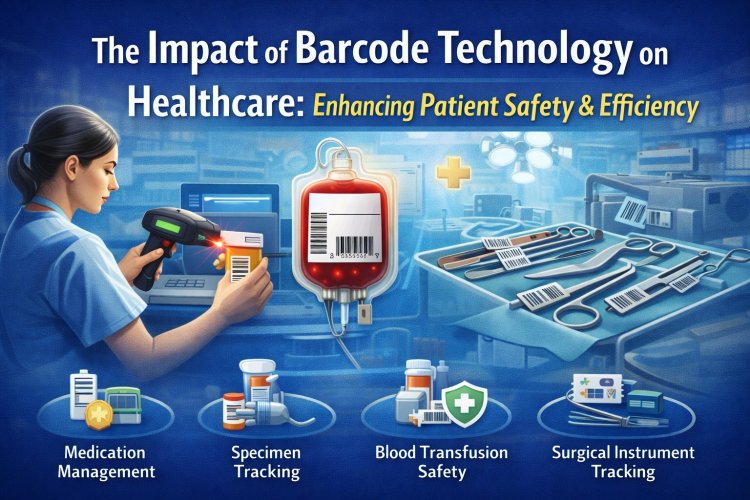
1. Drug Identification and Medication Management
One of the most critical applications of barcode technology in healthcare is in drug identification and medication management. The U.S. Food and Drug Administration (FDA) mandated that barcodes must be used on certain human medications since February 2004. These barcodes include vital information such as the National Drug Code (NDC) number, dosage, and the drug manufacturer.
The implementation of barcode medication verification at the bedside safely documents drug administration by allowing healthcare providers, particularly nurses, to scan barcodes before giving medications to patients. A study conducted in 2010 found that this technology prevented approximately 90,000 serious medical errors annually and led to a 20% reduction in mortality rates related to medication errors.
Notably, one case study demonstrated an 82% decrease in medication administration errors across five units after the implementation of barcode technology. Beyond reducing errors, this technology has also enhanced nursing staff satisfaction and improved patient trust and satisfaction in their healthcare providers.
2. Specimen Collection and Laboratory Safety
Accurate specimen collection is essential for diagnosing diseases and monitoring treatment. However, misidentification of patients or laboratory specimens can lead to erroneous test results and serious adverse medical events. In the U.S. alone, more than 160,000 adverse events each year have been linked to laboratory errors.
Integrating barcode technology into specimen collection protocols has proven to be a strong intervention to mitigate these risks. By using barcodes, healthcare professionals can ensure that the correct patient is receiving the appropriate analysis, significantly reducing instances of mislabeling and its disastrous consequences.
Contact our barcode experts at 729705118 and 8949793519.
Moreover, barcode technology has contributed to improved patient comfort, decreased delays in diagnosis and treatment, and reduced rework for nursing and laboratory staff. Medical laboratories that have adopted barcode systems have reported marked reductions in identification errors, underscoring the critical role of barcoding in enhancing laboratory safety.
3. Blood Product Identification and Safety
Blood transfusions, while often life-saving, carry substantial risks if mismatches occur. Errors in blood product identification can result in patient harm or even fatalities. To mitigate these risks, the FDA requires all blood and blood components manufactured after April 26, 2006, to carry barcode labels.
The barcode on blood products must contain essential information, including a unique facility identifier, lot number, product code, and blood type. By ensuring accurate identification of blood products through barcoding, healthcare facilities significantly reduce the risk of administering incompatible blood to patients.
4. Surgical Instrument Tracking and Compliance
In surgical settings, maintaining an accurate inventory of instruments and supplies is vital for ensuring compliance and enhancing patient outcomes. Barcodes can be employed to track surgical instruments and kits, ensuring that they match surgeons' preferences as well as maintaining compliance with safety standards.
Using barcodes allows hospitals to monitor which instruments are regularly used and which are not, enabling them to optimize surgical kits based on actual usage rather than assumptions. This not only enhances operational efficiency but also reduces expenditure on unused supplies, creating cost-effective solutions for healthcare facilities.
Contact our barcode experts at 729705118 and 8949793519.
Challenges and Considerations
Despite the myriad benefits associated with barcode technology adoption in healthcare, there are challenges that providers must also navigate. Implementation can require significant investment in infrastructure and staff training. Additionally, all staff members must be adequately trained to use the technology to ensure its effectiveness and consistency in application.
Moreover, barcode systems must be continually updated to reflect changes in inventory, medication, and procedures to remain effective. Any lapse in system maintenance can lead to errors that negate the advantages of barcode usage.
The Future of Barcode Technology in Healthcare
As technology continues to advance, barcode technology is expected to evolve further, potentially incorporating mobile applications and enhanced tracking systems that leverage cloud-based data management. The integration of barcode systems with electronic health records (EHRs) and other health IT systems could lead to unprecedented levels of accuracy and risk reduction.
Additionally, the advent of advanced barcode scanning technologies, such as 2D barcodes and QR codes, is set to expand the capabilities and applications of barcode technology in healthcare. These advancements may allow for the inclusion of even more data within a smaller physical space, further enhancing the ability of healthcare providers to access critical patient information quickly.
Conclusion
The adoption of barcode technology in healthcare has proven to be a vital step towards improving safety and operational efficiency. From medication management to specimen collection and surgical instrument tracking, the applications are diverse and impactful. As healthcare systems continue to prioritize patient safety and strive for error-free environments, barcode technology will undoubtedly play a key role in shaping the future of healthcare practices.
By embracing these innovations, healthcare providers can ensure that they are equipped to face the challenges of modern medicine while prioritizing the well-being and safety of their patients. The successful integration of barcode technology not only enhances patient outcomes but also fosters a culture of safety and accountability within healthcare settings.
Contact our barcode experts at 729705118 and 8949793519.