+91 7297051181
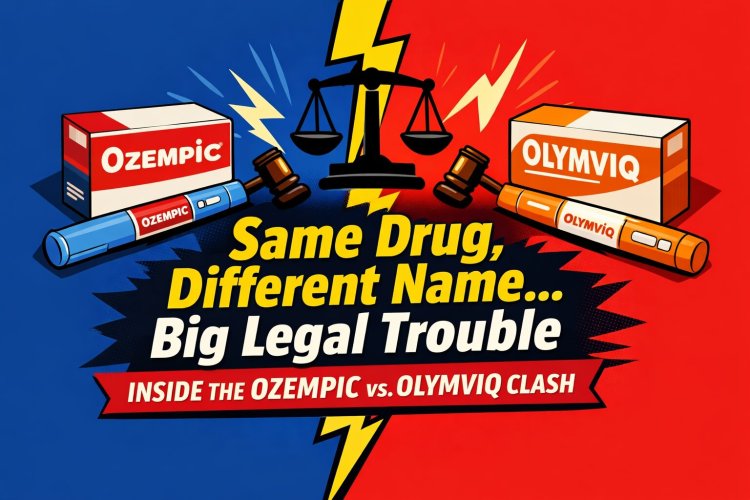
Same Drug, Different Name… Big Legal Trouble: Inside the Ozempic vs. Olymviq Clash
A billion-dollar drug lost its patent—and overnight, a legal storm began. When Dr. Reddy’s launched a generic version of Ozempic as “Olymviq,” it wasn’t the formula that sparked the fight, but the name. In a high-stakes clash before the Delhi High Court, the question wasn’t just trademark infringement—it was patient safety vs. market competition. Could two similar-sounding drug names risk real-world harm? The Court’s solution broke the usual script: no immediate ban, no destruction of stock. Instead, a smart compromise—rebrand, sell for 30 days, and donate the rest. This case isn’t just about trademarks. It’s about how far the law will bend to protect both business identity and human lives in India’s fast-growing generic drug market.
The Patent Cliff and the Generic Gold Rush
The expiry of a pharmaceutical patent typically results in a surge of generic drug manufacturers entering the market. This phenomenon is known as the “generic gold rush.” Once exclusivity ends, companies are free to manufacture and sell the same drug formulation, leading to increased competition and significantly lower prices.
In India, where affordability is a key concern in healthcare, this transition plays a vital role. The cost of semaglutide in international markets is extremely high, making it inaccessible to many patients. The entry of Indian generic manufacturers promised a drastic reduction in price, improving access for thousands of patients suffering from Type-2 diabetes.
However, while the formula becomes public, branding does not. This distinction between patent rights and trademark rights lies at the heart of the Ozempic vs. Olymviq dispute.
Facts of the Case
Dr. Reddy’s Laboratories launched its version of semaglutide under the brand name “Olymviq.” Shortly thereafter, Novo Nordisk approached the Delhi High Court seeking an injunction. The primary allegation was that “Olymviq” was deceptively similar to its well-known trademark “Ozempic.”
Novo Nordisk argued that the similarity was not coincidental but likely to cause confusion among consumers, doctors, and pharmacists. Given the nature of pharmaceutical products, even minor confusion could have serious consequences.
Trademark Law at the Center Stage
The dispute brought trademark law into sharp focus. Under Section 29 of the Trade Marks Act, 1999, a registered trademark is infringed when a similar or identical mark is used in a way that causes confusion or association with the original brand.
Novo Nordisk emphasized that “Ozempic” is an invented or fanciful word, which has no dictionary meaning. Such marks are granted a higher degree of protection because they are inherently distinctive. The company argued that “Olymviq” closely resembled “Ozempic” in sound and structure, thereby increasing the likelihood of confusion.
Pharmaceutical Trademarks: A Higher Threshold
Trademark disputes in the pharmaceutical sector are treated with greater caution compared to other industries. The reason is simple: confusion in medicine can lead to serious health risks.
The Supreme Court in Cadila Healthcare Ltd. v. Cadila Pharmaceuticals Ltd. (2001) established that a stricter standard must be applied in such cases. The Court emphasized that even a possibility of confusion should be avoided, as it could result in incorrect prescriptions or dispensing errors.
This principle significantly influenced the arguments in the present case. Novo Nordisk relied on this precedent to argue that the similarity between the two marks was unacceptable, regardless of intent.
To know more about this, click the link below
Court’s Observations and Approach
The Delhi High Court, presided over by Justice Jyoti Singh, acknowledged the sensitivity of pharmaceutical trademarks. The Court observed that in matters involving medicines, even a minimal degree of confusion cannot be tolerated.
At the same time, the Court also recognized the broader context of the dispute. The drug in question was essential for patients, and any abrupt removal from the market could adversely affect public health.
This dual concern—protecting trademark rights while ensuring access to medicine—shaped the Court’s approach.
The Settlement: A Balanced Resolution
Instead of prolonging litigation, the parties reached a settlement that balanced competing interests. Dr. Reddy’s agreed to discontinue the use of the name “Olymviq” and rebrand the product as “Olymra.”
Importantly, the Court allowed the company to sell its existing stock for a period of 30 days. This was a pragmatic decision, considering the drug’s temperature sensitivity and medical necessity. Destroying the stock would have resulted in wastage of valuable medicine.
Further, the Court directed that any unsold stock after the stipulated period be donated to government hospitals. This ensured that the medicine would continue to benefit patients rather than being discarded.
Public Interest vs. Private Rights
One of the most significant aspects of this case is its emphasis on public interest. Intellectual property law is designed to protect innovation and brand identity, but it must also serve the larger public good.
The Court’s decision reflects a nuanced understanding of this balance. While it upheld the importance of trademark protection, it refused to adopt a rigid approach that would harm patients.
This approach aligns with the broader principle of proportionality in law, which requires that remedies should not be excessive or disproportionate to the harm caused.
Implications for the Pharmaceutical Industry
The Ozempic vs. Olymviq case sets an important precedent for the pharmaceutical industry. It sends a clear message that generic manufacturers must exercise caution while selecting brand names. Even after patent expiry, the original brand continues to enjoy strong legal protection.
The case also highlights the growing importance of trademarks as long-term assets. While patents have a limited duration, trademarks can last indefinitely, making them a critical component of business strategy.
For Indian pharmaceutical companies, this case serves as a reminder that compliance with trademark law is essential, particularly in a highly regulated and sensitive sector.
Critical Analysis
From a legal perspective, the settlement represents a pragmatic solution. A strict injunction could have resulted in the destruction of essential medicines, which would have been contrary to public interest. On the other hand, allowing continued use of a confusingly similar mark could have undermined trademark protection.
By adopting a middle path, the Court ensured that both objectives were achieved. However, some may argue that allowing temporary sales could dilute the deterrent effect of trademark enforcement. Others may view it as a necessary compromise in a country where access to healthcare remains a challenge.
Conclusion: Formula vs. Identity
The Ozempic vs. Olymviq dispute underscores a fundamental principle of intellectual property law: while patents protect innovation, trademarks protect identity. Even after a patent expires, the brand continues to hold value and remains legally enforceable.
The Delhi High Court’s handling of the case demonstrates a thoughtful balance between legal rights and public welfare. It sets a precedent for future disputes in the pharmaceutical sector, particularly in the context of increasing generic competition.
Ultimately, the case serves as a reminder that the law must evolve to address complex realities, ensuring that it protects not only businesses but also the people who depend on them.