+91 7297051181
Trademark Law in Action: Why Flipkart Lost the ‘MarQ’ Battle
This article examines a recent ruling of the Delhi High Court concerning the trademark dispute between Flipkart and Marc Enterprises. The decision underscores the supremacy of the “prior user” principle in Indian trademark law, emphasizing that earlier commercial use outweighs subsequent adoption, regardless of a company’s market dominance. The court also highlighted the legal significance of phonetic similarity in determining the likelihood of consumer confusion, holding that minor spelling variations do not create distinct brand identities. The ruling reinforces the importance of robust intellectual property protection and due diligence in brand selection, while also demonstrating the tangible commercial consequences of trademark infringement. It serves as a key precedent for balancing the rights of legacy businesses against modern corporate branding strategies.
Introduction
The Indian judiciary has recently reinforced the importance of protecting established trademarks, particularly in disputes involving large commercial entities. In a notable ruling, the Delhi High Court rejected the “MarQ” trademark claim put forward by Flipkart, thereby affirming the rights of a long-standing domestic brand. The decision serves as a strong reminder that commercial dominance does not justify the adoption of marks that closely resemble pre-existing ones. It further reiterates that phonetic similarity can play a decisive role in determining trademark infringement.
Background of the Dispute
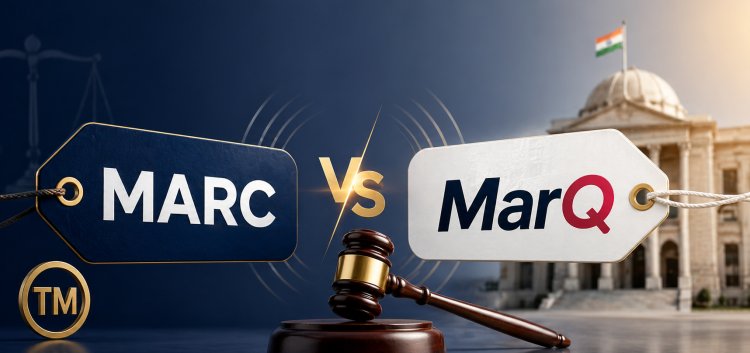
The controversy arose when Marc Enterprises challenged Flipkart’s use of the mark “MarQ,” alleging infringement of its “MARC” trademark. The dispute reflects a common tension between legacy businesses and modern private-label brands. Marc Enterprises successfully demonstrated continuous use of its mark since 1984—well before Flipkart’s entry into the market.
Under Indian trademark jurisprudence, priority of use holds significant weight. The court emphasized that the relevant inquiry is not merely who registered the mark first, but who established its commercial use earlier. This principle, often referred to as the “prior user” doctrine, protects businesses from having their goodwill diluted by subsequent entrants seeking to benefit from an already established reputation.
Significance of Prior Use and IP Protection
The ruling highlights the critical importance of intellectual property due diligence. Businesses, irrespective of their size, must ensure that their branding does not conflict with existing marks. The court found that the “MARC” trademark had acquired substantial goodwill over decades, entitling it to exclusive protection within its domain.
This case illustrates that intellectual property rights are not merely procedural formalities but substantive protections capable of withstanding even the most resource-rich competitors. The judgment reinforces that consumer protection remains central to trademark law—ensuring that customers are not misled due to similarities in brand identity.
Phonetic Similarity and Likelihood of Confusion
A key aspect of the court’s reasoning was the phonetic resemblance between “MARC” and “MarQ.” Despite the visual distinction in spelling, the court held that both marks are pronounced identically. In trademark law, phonetic similarity is often sufficient to establish confusion, particularly in markets where consumers rely on verbal communication.
Given that Flipkart’s “MarQ” branding was applied to similar categories such as electronics and home appliances, the likelihood of confusion was deemed significant. The court observed that altering a single letter—replacing “C” with “Q”—does not meaningfully distinguish the mark. As a result, the variation was considered insufficient to create a separate commercial identity.
To know more about this, click the link below -
Implications of the Judgment
The outcome of this case has tangible commercial consequences. Flipkart has been directed to discontinue the use of the contested mark within a stipulated timeframe, necessitating rebranding and potential restructuring of its private label strategy. Such directions underscore that trademark disputes are not merely theoretical but can have wide-ranging financial and operational implications.
Ultimately, the decision strengthens the “first-to-use” principle under Indian trademark law. It ensures that established businesses are protected against encroachment by newer entities, regardless of their market influence. This ruling is likely to serve as an important precedent, particularly in cases involving phonetic similarity and prior use.
Going forward, businesses must exercise heightened caution in selecting brand names. A failure to conduct comprehensive trademark searches and legal assessments can result in costly disputes and reputational setbacks. The case stands as a clear reminder that originality and legal compliance are indispensable in brand development.
Conclusion
The Flipkart–Marc dispute stands as a compelling reminder that in trademark law, priority of use outweighs market power. The Delhi High Court’s decision reinforces that even minor phonetic similarities can lead to legal consequences when they create a likelihood of consumer confusion. For businesses, this judgment highlights the necessity of conducting thorough trademark searches, legal due diligence, and strategic brand planning before entering the market. Ultimately, the case underscores that strong intellectual property compliance is not merely a legal requirement but a critical business safeguard—ensuring brand integrity, protecting goodwill, and preventing costly disputes in an increasingly competitive commercial environment.