+91 7297051181
Trademark Opposition Procedure: Complete Step-by-Step Guide for India
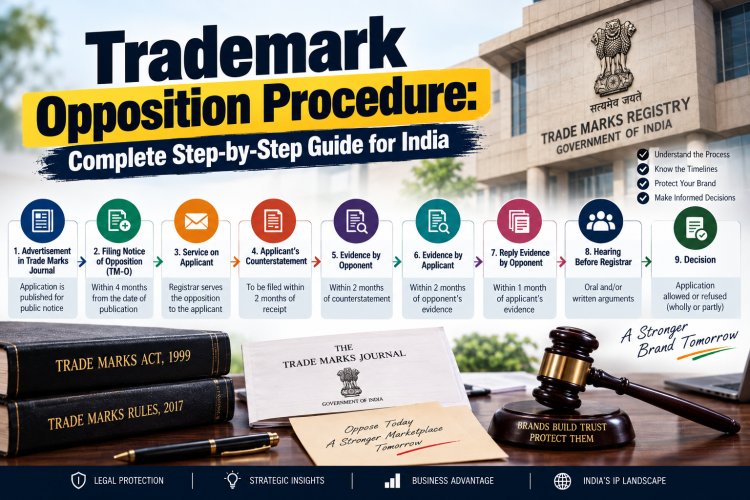
Trademark Opposition Timeline in India: What Happens After an Opposition Is Filed?
Filing a trademark application in India does not automatically result in registration. Before a trademark is registered, it goes through examination and, where applicable, advertisement in the Trade Marks Journal, giving third parties a statutory opportunity to oppose the application.
A trademark opposition in India is a formal proceeding in which a person challenges the registration of an advertised trademark before the Registrar of Trade Marks.
Section 21 of the Trade Marks Act, 1999 permits any person to oppose an application within the prescribed period after advertisement or re-advertisement. The Trade Marks Rules, 2017 then establish the procedure for filing the opposition, counterstatement, evidence and hearing. (India Code)
Understanding the trademark opposition timeline is essential because missing a procedural deadline can have serious consequences.
What Happens After a Trademark Is Advertised?
Once a trademark application is advertised or re-advertised in the Trade Marks Journal, an interested person can file a notice of opposition within the statutory period.
The process can broadly be understood as:
Trademark Advertisement
↓
Opposition Filed – TM-O
↓
Counterstatement by Applicant
↓
Opponent's Evidence
↓
Applicant's Evidence
↓
Opponent's Reply Evidence
↓
Hearing
↓
Registrar's Decision
The exact duration of the overall proceeding can vary depending on procedural developments, hearings, adjournments and other circumstances.
Step 1: Trademark Is Advertised in the Trade Marks Journal
Before an application proceeds to registration, it may be advertised in the Trade Marks Journal.
The purpose of advertisement is to provide public notice that registration of the trademark is being sought.
This creates an opportunity for third parties to raise objections under Section 21 of the Trade Marks Act.
A potential opponent should therefore regularly monitor the Trade Marks Journal if it has an earlier trademark or another legally relevant interest that could be affected by the proposed registration.
Step 2: Filing the Trademark Opposition Within 4 Months
Under Section 21(1) of the Trade Marks Act and Rule 42 of the Trade Marks Rules, 2017, a notice of opposition is filed in Form TM-O within four months from the date of publication of the relevant Trade Marks Journal in which the application was advertised or re-advertised. (India Code)
This is one of the most important deadlines in the trademark opposition process.
Key point:
Trademark Journal Publication → 4 Months → Opposition Deadline
The opposition should identify the application being opposed and set out the relevant grounds of opposition.
Step 3: What Should a Trademark Opposition Notice Contain?
Rule 43 specifies requirements for the notice of opposition.
The notice should contain relevant particulars including:
-
Trademark application number
-
Goods or services against which opposition is directed
-
Applicant's name
-
Earlier trademark or right relied upon
-
Details of the opposing party
-
Grounds of opposition
-
Verification of the notice
The grounds should be properly pleaded rather than simply stating that the proposed trademark is "similar."
For example, an opponent may rely upon:
-
Section 9 grounds
-
Section 11 relative grounds
-
Prior trademark rights
-
Prior use
-
Bad faith
-
Other applicable statutory grounds
The precise grounds should depend upon the facts and legal basis of the opposition. (IP India)
Step 4: Registrar Serves the Opposition on the Applicant
After the opposition is filed, the Registrar ordinarily serves a copy of the notice of opposition on the trademark applicant.
Under Rule 42(5), the copy of the notice is ordinarily served by the Registrar within three months of receipt by the appropriate office. (IP India)
The applicant must then respond through a counterstatement.
Step 5: Applicant Files Counterstatement Within 2 Months
Under Section 21(2) of the Trade Marks Act and Rule 44, the applicant must file a counterstatement in Form TM-O within two months from receipt of the notice of opposition. (India Code)
The counterstatement is effectively the applicant's formal defence.
It should address the allegations made by the opponent and state the facts on which the applicant relies in support of registration.
Important:
If the applicant does not file the counterstatement within the prescribed period, the application is deemed to have been abandoned under Section 21(2). (India Code)
Therefore:
Opposition Served → 2 Months → Counterstatement
Step 6: Opponent Files Evidence Under Rule 45
After the counterstatement is served on the opponent, the opposition moves into the evidence stage.
Under Rule 45, the opponent has two months from service of the counterstatement to either:
-
File evidence by affidavit in support of the opposition; or
-
Inform the Registrar and applicant that it does not wish to file additional evidence and intends to rely upon the facts stated in the notice of opposition. (IP India)
If the opponent takes no action within the prescribed period, the opposition is deemed to have been abandoned.
What Evidence Can an Opponent File?
Depending upon the case, evidence may include:
-
Invoices
-
Sales records
-
GST-related commercial documents
-
Product packaging
-
Advertisements
-
Website records
-
E-commerce listings
-
Promotional material
-
Domain records
-
Media coverage
-
Distribution documents
-
Licensing agreements
-
Evidence of prior use
-
Evidence of goodwill and reputation
The evidence should be relevant to the grounds pleaded in the opposition.
Step 7: Applicant Files Evidence Under Rule 46
Once the opponent's evidence or intimation is received, the applicant gets an opportunity to file evidence.
Under Rule 46, the applicant has two months from receipt of the opponent's evidence or intimation to:
-
File evidence by affidavit in support of the application; or
-
Inform the Registrar that it does not wish to file evidence and intends to rely upon its counterstatement and/or existing evidence. (IP India)
If the applicant takes no action within the prescribed period, the application is deemed to have been abandoned.
Applicant's evidence may include:
-
Evidence of adoption
-
Evidence of use
-
Sales invoices
-
Advertising material
-
Product packaging
-
Website records
-
E-commerce records
-
Evidence of distinctiveness
-
Evidence responding to the opponent's claims
-
Evidence concerning honest adoption or concurrent use, where legally relevant
Step 8: Opponent Files Evidence in Reply
The opponent gets a further opportunity to respond to the applicant's evidence.
Under Rule 47, the opponent may file evidence by affidavit in reply within one month from receipt of the applicant's affidavit. (IP India)
This evidence should ordinarily be directed toward matters raised in the applicant's evidence.
It is not simply an opportunity to repeat the entire opposition.
Step 9: Further Evidence
Rule 48 provides that further evidence should not ordinarily be filed by either side.
However, the Registrar may, where appropriate, grant permission for additional evidence on terms relating to costs or otherwise. (IP India)
Therefore, parties should generally ensure that their important evidence is submitted during the prescribed evidence stages.
Step 10: Hearing Before the Registrar
Once the evidence stage is closed, the matter can proceed to hearing.
Under Rule 50, the Registrar gives notice of the first hearing date. The first hearing date must be at least one month after the date of the first notice. (IP India)
At the hearing, the parties may present their legal and factual submissions based on:
-
Notice of opposition
-
Counterstatement
-
Evidence
-
Applicable provisions of the Trade Marks Act
-
Trade Marks Rules
-
Relevant judicial decisions
The Registrar can also consider written arguments submitted by the parties. (IP India)
Can a Trademark Hearing Be Adjourned?
Yes, the Rules provide for adjournments where the prescribed conditions are satisfied.
Under Rule 50, a party may request an adjournment for reasonable cause through Form TM-M with the prescribed fee.
The Rules state that no party shall be given more than two adjournments, and each adjournment shall not be for more than 30 days, subject to the Registrar's discretion under the Rule. (IP India)
This makes hearing management another important aspect of trademark opposition proceedings.
Step 11: Registrar's Decision
After considering the pleadings, evidence and submissions, the Registrar issues a decision.
If the opposition is accepted, the application may be refused, either entirely or in relation to the goods or services affected by the opposition.
If the opposition is unsuccessful, the application may proceed toward registration, subject to the applicable provisions of the Act and Rules.
The Registrar's decision is communicated to the parties in writing at the address for service. (IP India)
Trademark Opposition Timeline: Quick Overview
| Stage | Time Limit |
|---|---|
| Trademark advertised in Journal | — |
| Filing Notice of Opposition | 4 months from publication |
| Applicant's Counterstatement | 2 months from receipt of opposition |
| Opponent's Evidence | 2 months from service of counterstatement |
| Applicant's Evidence | 2 months from receipt of opponent's evidence/intimation |
| Opponent's Reply Evidence | 1 month from receipt of applicant's affidavit |
| Hearing | After closure of evidence |
| Decision | After proceedings/hearing |
These are the principal periods prescribed under Section 21 and Rules 42–50; the overall case duration can be considerably longer because service, hearings, adjournments and other procedural events affect the timeline. (IP India)
Example of a Trademark Opposition Timeline
Suppose Company A applies for the trademark "NEELAM FRESH".
Company B claims prior rights in "NEELAM" and decides to oppose the application.
The process could look like this:
Month 0
NEELAM FRESH is advertised in the Trade Marks Journal.
Within 4 Months
Company B files the opposition in Form TM-O.
After Service
Company A receives the opposition.
Within 2 Months
Company A files its counterstatement.
Next 2 Months
Company B files evidence supporting its opposition.
Next 2 Months
Company A files evidence supporting its application.
Next 1 Month
Company B files evidence in reply.
After Evidence
The matter proceeds toward hearing.
Final Stage
The Registrar considers the matter and issues a decision.
This is a simplified illustration. Actual proceedings may take longer depending on the circumstances.
What Happens If You Miss a Trademark Opposition Deadline?
Procedural deadlines in trademark opposition proceedings are important.
Different stages have different consequences.
If the opponent fails to act under Rule 45
The opposition can be deemed abandoned. (IP India)
If the applicant fails to file the counterstatement
The application is deemed to have been abandoned under Section 21(2). (India Code)
If the applicant fails to act under Rule 46
The application can be deemed abandoned. (IP India)
This is why monitoring the Trade Marks Registry and maintaining a proper deadline system is essential.
Is a Trademark Opposition Just a Simple Objection?
No.
A trademark opposition is a structured proceeding involving:
Pleadings → Evidence → Reply → Hearing → Decision
The parties are not merely sending an informal objection to the Registry.
They are participating in a statutory proceeding in which legal grounds, factual allegations and documentary evidence can all become relevant.
What Evidence Should You Maintain for a Trademark Opposition?
Businesses should maintain trademark-related records even before a dispute arises.
Important records may include:
-
Earliest invoices
-
GST invoices
-
Product packaging
-
Product photographs
-
Advertising campaigns
-
Website screenshots and records
-
Domain registration information
-
E-commerce listings
-
Sales figures
-
Distributor agreements
-
Promotional materials
-
Social-media records
-
Media coverage
-
Licensing agreements
If prior use or goodwill becomes an issue years later, these documents may become important in establishing the history of the trademark.
5 Common Mistakes in Trademark Opposition Proceedings
1. Missing the Four-Month Opposition Period
An interested party should carefully monitor the Trade Marks Journal and calculate the opposition deadline.
2. Filing a Weak Notice of Opposition
A notice should clearly establish the legal grounds and factual basis of the opposition.
3. Ignoring the Counterstatement
For applicants, failure to file the counterstatement can result in abandonment of the application.
4. Treating Evidence as an Afterthought
Prior use and goodwill claims should be supported by relevant documentary evidence.
5. Not Tracking Procedural Deadlines
Every stage has its own timeline. A proper case-management system can help avoid missed deadlines.
https://youtu.be/HB5x_3fpL6g?si=10OvCRSiJz_Yicr9
Trademark Opposition Timeline: Key Takeaway
The trademark opposition process in India follows a structured sequence under Section 21 of the Trade Marks Act, 1999 and Rules 42–50 of the Trade Marks Rules, 2017.
The most important deadlines include:
4 months → Opposition after Journal publication
2 months → Applicant's counterstatement
2 months → Opponent's evidence
2 months → Applicant's evidence
1 month → Opponent's reply evidence
The process then moves toward hearing and decision. (IP India)
For both trademark applicants and opponents, success in the proceeding depends not only on the substantive legal grounds but also on proper pleadings, relevant evidence and strict attention to procedural timelines.
A trademark opposition should therefore be treated as a formal legal proceeding—not simply as an objection to another company's brand.