+91 7297051181
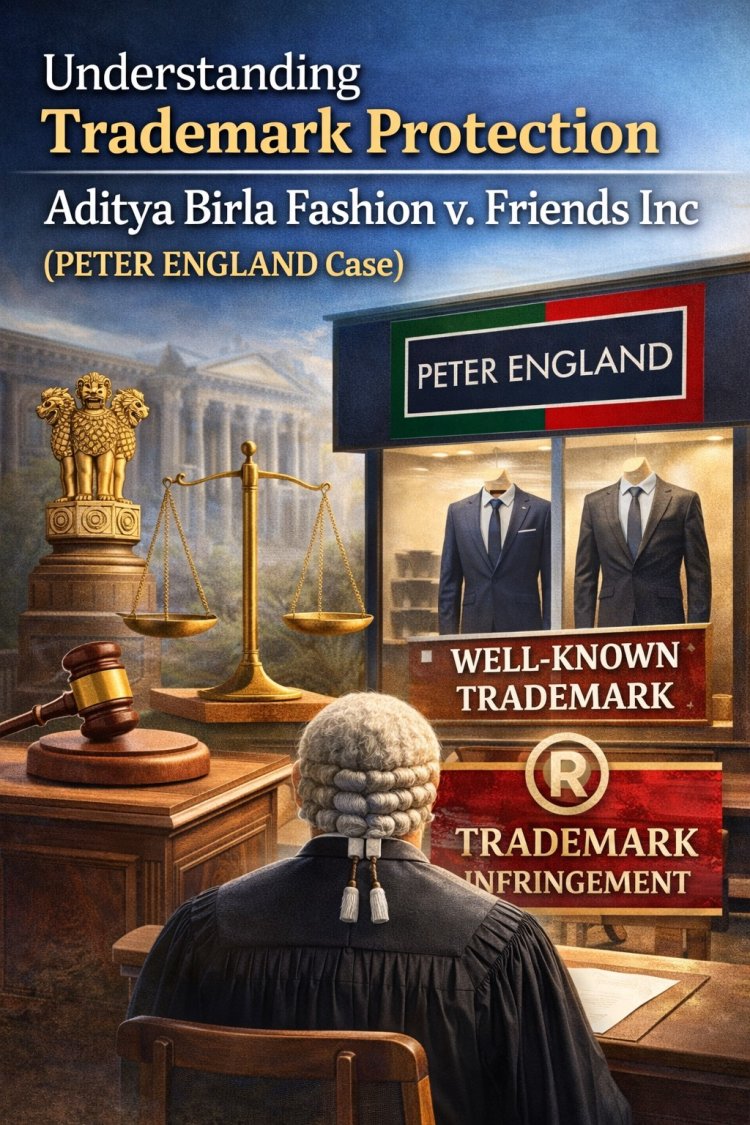
Understanding Trademark Protection: Aditya Birla Fashion v. Friends Inc (PETER ENGLAND Case)
An in-depth legal analysis of Aditya Birla Fashion and Retail Limited v. Friends Inc, where the Delhi High Court granted permanent injunction and declared PETER ENGLAND a well-known trademark under the Trade Marks Act, 1999, reinforcing trademark protection and brand integrity in India.
INTRODUCTION
In today's global marketplace, where branding is pivotal for business success, the protection of intellectual property, particularly trademarks, has never been more crucial. Trademarks not only serve as identifiers of the origin of goods and services, but they also embody the reputation and quality associated with a brand. As consumers increasingly seek authenticity and trust in products, brands must ensure their trademarks are safeguarded against infringement and misuse. The legal landscape surrounding trademarks is complex, encompassing various rights and protections granted by law, and navigating this terrain requires a deep understanding of both legal principles and market dynamics.A recent and significant case that sheds light on these issues is “Aditya Birla Fashion and Retail Limited v. Friends Inc, CS(COMM) 566/2024, I.A. 33082/2024 & I.A. 33087/2024” which was heard in the High Court of Delhi. This case centres around the well-known brand PETER ENGLAND, which carries a rich legacy dating back to its inception in 1889 in England. The plaintiff, Aditya Birla, acquired the brand in India in 1997, further solidifying its presence in the fashion industry. However, the plaintiff found itself compelled to take legal action against Friends Inc. and its manager, Amandeep Singh, who allegedly infringed upon the PETER ENGLAND trademark by using it without authorization, leading to potential confusion among consumers. The proceedings reveal pivotal aspects of trademark law, including the legal mechanisms available for addressing infringement and the criteria that must be met for a trademark to be deemed well-known under the Trade Marks Act, 1999. In this blog, we will explore the details of the case, including its background, procedural history, and the court’s comprehensive analysis leading to its decision. By examining this case, we gain valuable insights into the significance of trademark protection in maintaining brand integrity and consumer trust, while highlighting the essential role that the judicial system plays in upholding these rights in a competitive commercial landscape.
BACKGROUND AND FACTS
In the case of “Aditya Birla Fashion and Retail Limited v. Friends Inc, CS(COMM) 566/2024, I.A. 33082/2024 & I.A. 33087/2024” the plaintiff, Aditya Birla Fashion and Retail Limited, sought a permanent injunction against the defendants—Friends Inc and its manager Amandeep Singh—aimed at prohibiting them from using the trademark "PETER ENGLAND." This mark, synonymous with quality fashion, reportedly has a rich history dating back to 1889, when it was originally conceived in England. Aditya Birla acquired the rights to the PETER ENGLAND brand in India in 1997 and formally obtained ownership through an Assignment Deed in 2000.The plaintiff alleged that the defendants’ use of the mark constituted trademark infringement, which amounted to passing off, thereby violating its registered trademarks and copyright protections regarding the brand’s artistic label. Given PETER ENGLAND’s extensive usage across 382 stores in over 180 towns and cities in India, along with significant brand recognition and promotional efforts, the plaintiff was adamant about asserting its rights.
PROCEDURAL HISTORY
The case saw a series of developments beginning with an interim order on July 12, 2024. The High Court of Delhi issued an injunction against the defendants, restricting their use of the PETER ENGLAND mark. By September 5, 2024, the defendants confirmed their compliance, having removed infringing signboards and stopped using the mark on invoices. Despite the defendants’ acknowledgment of the plaintiff’s rights, matters concerning the genuine goods remained permissible under the court's direction.Following these preliminary resolutions, the plaintiff sought a declaration of the PETER ENGLAND brand as a well-known trademark. On November 6, 2024, the plaintiff submitted an evidence affidavit demonstrating the brand’s extensive market presence, leading to a more comprehensive inquiry by the court.
ISSUES
The core issues concerning the case revolved around two significant aspects:
1. Did the defendants’ use of the PETER ENGLAND trademark constitute infringement warranting permanent injunction?
2. Does PETER ENGLAND meet the criteria to be declared a well-known trademark under Section 2(1) (zg) of the Trade Marks Act, 1999?
APPLICABLE LAW
The governing law for this case falls under the “Trade Marks Act, 1999”. Specifically, Section 2(1) (zg) defines well-known trademarks and establishes criteria for their identification based on usage duration, extent, and public awareness. The principles from landmark cases, such as “Tata Sons Ltd. v. Manoj Dodia (2011),” also provided foundational guidance in determining whether PETER ENGLAND deserved the designation of a well-known trademark.
KEY EVIDENCE RELIED UPON
The Court relied on several pieces of evidence, including:
· The historical timeline of the PETER ENGLAND brand starting from its conception in 1889 and official entry into the Indian market in 1997.
· Over 382 operating stores across more than 180 cities, showcasing significant market penetration and consumer outreach.
· Multiple trademark registrations spanning various classes and international jurisdictions.
· Substantial sales turnover, which for the fiscal year 2023-2024 was approximately INR 1289 crores, coupled with considerable advertising expenditures of around INR 31 crores.
· Strong public endorsements and promotional activities that have built a reputable image for the brand.
To know more about this, please check the link below.
COURT’S ANALYSIS
The High Court evaluated the defendants' compliance and their cessation of the infringing activities, which bolstered the order for injunctive relief. The court recognized the overwhelming evidence presented by the plaintiff, coupled with the defendants’ lack of objection during the proceedings. In discussing the well-known trademark designation, the court critically analyzed several determinants, including the scale of usage, geographical extent, recognized registrations, cumulative advertising efforts, sales figures, and historical evidence of public recognition. The findings underscored the PETER ENGLAND brand's strong identity established over decades, qualifying it as a well-known trademark under Section 2(1)(zg).
HOLDING AND RELIEF
The suit was ultimately decreed in favor of Aditya Birla Fashion and Retail Limited, granting permanent injunctive relief against the defendants’ use of the PETER ENGLAND mark. Additionally, the court upheld the declaration of PETER ENGLAND as a well-known trademark as specified under Indian trademark law.
RATIONALE FOR WELL-KNOWN DECLARATION
The rationale provided by the court for the well-known designation referenced several critical factors, including:
· A long-standing history of brand usage, demonstrated by vital penetration into the Indian market.
· Robust trademark and copyright protection extending domestically and internationally.
· An outstanding commercial presence marked by increased sales and advertisement budgets translating to public recognition.
· Evidence that the mark is intrinsically linked with the plaintiff's source and quality, reflecting the values essential to trademark recognition.
CONCLUSION
The case of “Aditya Birla Fashion and Retail Limited v. Friends Inc CS(COMM) 566/2024, I.A. 33082/2024 & I.A. 33087/2024” not only illustrates the legal dimensions of trademark protection but also serves as a reminder of the importance of safeguarding intellectual property rights in the bustling landscape of commerce. The court's ruling underscores the significance of maintaining a well-documented and actively monitored trademark portfolio, particularly as businesses grow and diversify. For brands looking to expand their reach in both domestic and international markets, this case underscores the need to establish robust legal protection mechanisms that can efficiently address any potential infringement. As we move forward, it remains crucial for companies to remain vigilant against unauthorized use of their trademarks and to seek legal remedies when necessary to uphold their brand integrity.