+91 7297051181
Kellogg Trade Dress Case Explained | Passing Off & Trade Dress Law in India
A detailed analysis of the Delhi High Court’s landmark ruling in Kellogg Company v. Pravin Kumar Bhadabhai (1996), examining trade dress protection, passing off, consumer confusion, and the role of prominent brand names in trademark disputes under Indian law.
INTRODUCTION
In today's consumer-driven marketplace, brand identity has become paramount. Companies continually strive to protect their distinctive trade dress to maintain their reputation and customer loyalty. One notable case that highlights the tension between brand protectiveness and misleading consumer practices is “Kellogg Company v. Pravin Kumar Bhadabhai & Another 1996 (36) DRJ 509.” Decided by the Delhi High Court in 1996, this case is pivotal in understanding the nuances of trade dress protection and the legal grounds for passing off. As we navigate through the details of this case, we will explore its implications on intellectual property law and how it shapes the landscape for brands today.
BACKGROUND OF THE CASE
Kellogg Company, a well-established name in the breakfast cereal market, is most recognized for its “Kellogg’s Corn Flakes.” With a distinctive trade dress encompassing a rectangular carton design, vivid colors, and iconic imagery, Kellogg's has successfully built a strong brand identity over the years. However, the emergence of competitors employing similar designs has led to disputes over the potential for consumer confusion. In this case, the defendants, Pravin Kumar Bhadabhai and another party, marketed their corn flakes under the brand name “AIMS ARISTO.” The appeal to the Delhi High Court arose from a prior order by a Single Judge who refused to grant Kellogg Company a temporary injunction based on the claim of passing off due to deceptive similarities in trade dress.
MATERIAL FACTS OF THE CASE
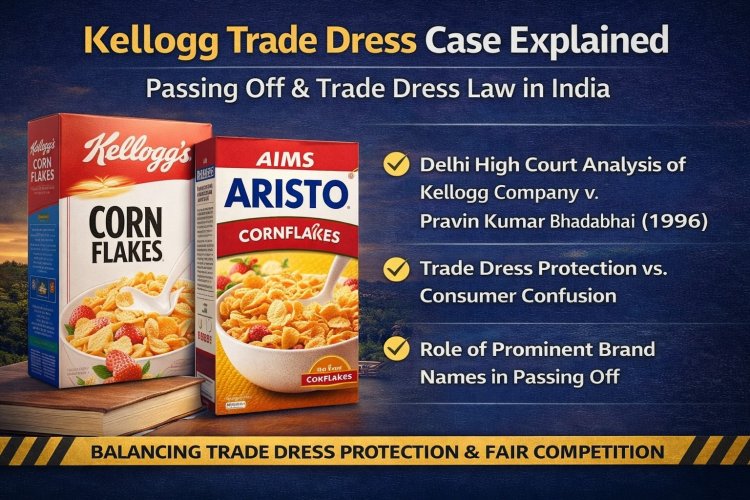
The crux of Kellogg Company's argument lay in the visual similarities between its packaging and that of the respondents. Both brands featured:
· Rectangular cartons with a square area to display the product name.
· A prominent horizontal red band at the top.
· Vivid imagery depicting cereal within a bowl.
· Overall layouts that were strikingly similar, leading Kellogg to claim that consumers might confuse AIMS ARISTO's corn flakes for their own.
The contention revolved around the assertion that the respondents’ carton was designed to mislead consumers, potentially harming Kellogg’s brand reputation and market position.
PROCEDURAL POSTURE AND LEGAL ISSUES
The case reached the Delhi High Court as an appeal against the Single Judge’s refusal to grant an interim injunction under “Order 39 Rule 1 of the CPC.” The primary legal issues presented were:
· Whether the trade dress of the respondents’ packaging was deceptively similar to that of Kellogg’s.
· Whether the prominent display of the brand name “AIMS ARISTO” was sufficient to dispel any likelihood of confusion among consumers.
· The appropriateness of granting a temporary injunction to prevent the defendants from using the contentious carton design.
ARGUMENTS PRESENTED
Appellant's Case: Kellogg Company
Kellogg argued that the similarities in packaging were not coincidental but rather a deliberate attempt by the respondents to mislead consumers. The key points raised included:
· Similar Visual Elements: The packaging of both products could easily lead consumers to draw comparisons, especially when considering the identical carton shapes, square product names, and similar color schemes.
· Imperfect Memory of Consumers: Kellogg posited that consumers often have imperfect memories. When purchasing familiar products, they might confuse look-alike packaging unless they are comparing them side by side.
· Deliberate Intent: Kellogg emphasized that the respondents' choice to mimic their trade dress evidenced a clear intention to benefit from Kellogg's established goodwill.
To support their claims, Kellogg referenced previous legal precedents that highlighted how even minor similarities in trade dress could warrant protection under the concept of passing off.
Respondents' Counterarguments: AIMS ARISTO
In their defense, the respondents argued that:
· Prominent Brand Differentiation: The signage of “AIMS ARISTO” was prominently featured on the packaging, which they contended would guide consumers to recognize the product as distinct from Kellogg’s.
· No Intention to Deceive: The respondents maintained that there was no fraudulent intent behind their packaging choices. They argued that the overall appearance of their product set it apart sufficiently from Kellogg’s.
· Consumer Intelligence: They contended that the average consumer, exercising reasonable judgment, would not confuse the two brands given the evident differences.
The respondents cited various legal authorities supporting their argument that a distinctive brand name could outweigh visual similarities in trade dress.
THE COURT'S REASONING AND LEGAL PRINCIPLES APPLIED
The Delhi High Court, while acknowledging the principles of trade dress protection, took a holistic view of the case. The court emphasized two paramount legal doctrines:
· Overall Impression Test: The court ruled that the assessment of trade dress should consider the complete package rather than isolate elements. The primary focus was on whether an ordinary consumer with reasonable intelligence could be misled by the overall appearance of the products.
· Role of Prominent Trade Name: The court highlighted that a clearly displayed different brand name generally serves as a sufficient warning to consumers, which would diminish the likelihood of confusion, even in cases where packaging might exhibit similarities.
To know more about this, please check the link below.
IMPLICATIONS FOR TRADE DRESS AND PASSING OFF
The verdict in “Kellogg Company v. Pravin Kumar Bhadabhai & Another 1996 (36) DRJ 509” serves as a critical reference point in the realm of intellectual property law. It illustrates the balance courts must maintain between protecting a company's trade dress rights and preventing the undue imposition of restrictions on competitors.
CONSUMER PROTECTION VS. BRAND IDENTITY
This case reinforces the notion that brand identity is strongly tied to how well consumers can distinguish between products based on overall impressions. While companies are entitled to safeguard their brands, the presence of a striking and distinguishable brand element—like a prominent trade name—can significantly alleviate risks of confusion.
POTENTIAL FOR FUTURE LEGAL DISPUTES
The decision sets a precedent for similar cases in the future where trade dress similarities are disputed. Companies must be circumspect in designing their packaging to avoid crossing over into deceptive territory. However, it also empowers new market entrants to create competitive products without fear of excessive litigation, provided that they can substantiate their distinctiveness in branding.
CONCLUSION
The “Kellogg Company v. Pravin Kumar Bhadabhai & Another case 1996 (36) DRJ 509” exemplifies the complexities that arise in protecting trade dress and navigating the legal landscape of passing off. While Kellogg's pursuit to safeguard its brand integrity was commendable, the court's ruling underscored the importance of distinguishing features that consumers can rely upon. As brands continue to evolve, it is essential to strike a balance between creating visually compelling packaging and maintaining transparency so that consumers can make informed choices. Ultimately, the case reaffirmed the principles that govern modern intellectual property law, paving the way for future discourse on the equilibrium between brand protection and fair competition in the marketplace.