+91 7297051181
How to File TM Opposition in India Under the Trade Marks Act, 1999
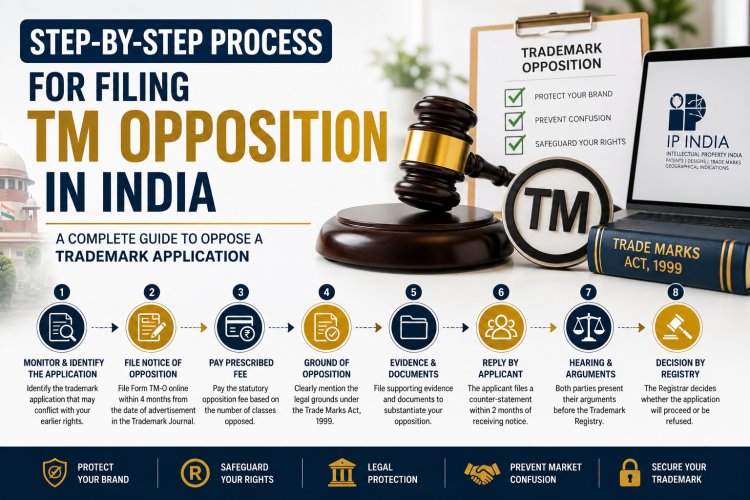
Trademark Opposition Filling In India Step - By - Step Guide
Introduction
A Trademark Opposition is one of the most effective legal remedies available under the Trade Marks Act, 1999 to prevent the registration of a trademark that may infringe or dilute an existing brand. Instead of waiting for a conflicting trademark to be registered and then initiating costly litigation, businesses can proactively oppose the application during the registration process.
The Trademark Opposition Process in India is strategic, cost-effective, and designed to protect the rights of trademark owners against confusingly similar or identical trademarks. However, success in a trademark opposition depends on timely action, well-drafted pleadings, and strong documentary evidence.
This guide explains the step-by-step process for filing a Trademark Opposition in India, including timelines, documents, evidence, hearings, and the final decision by the Trademark Registry.
What is a Trademark Opposition?
A Trademark Opposition is a legal proceeding through which any person who believes that a published trademark application may adversely affect their rights can oppose its registration before the trademark is granted.
The objective is to prevent the registration of trademarks that are:
-
Identical or deceptively similar to an existing trademark
-
Likely to create consumer confusion
-
Filed in bad faith
-
Descriptive or non-distinctive
-
Contrary to the provisions of the Trade Marks Act, 1999
Trademark opposition helps businesses safeguard their brand identity and avoid future trademark infringement disputes.
When Can a Trademark Opposition Be Filed?
Before understanding the opposition process, it is important to know the stages of a trademark application.
After a trademark application is filed, the Trademark Registry examines it. If objections are raised, the applicant must respond to the Examination Report within the prescribed time.
Once the Registrar is satisfied, the trademark is published in the Trademark Journal.
From the date of publication, a four-month opposition period begins. During this period, any person may file a Notice of Opposition against the trademark application.
Step 1: Filing the Notice of Trademark Opposition
The first stage of the Trademark Opposition Process is filing a Notice of Opposition (Form TM-O) before the Trademark Registry.
The notice should clearly mention:
-
Trademark application number
-
Class of goods or services
-
Details of the applicant
-
Details of the opponent
-
Grounds of opposition
-
Prior trademark registrations
-
Prior use of the trademark
-
Similar or identical trademarks
-
Similar goods or services
-
Likelihood of consumer confusion
-
Supporting facts and legal provisions
The grounds of opposition should be supported by proper facts demonstrating why registration of the trademark should be refused.
Step 2: Counter Statement by the Applicant
Once the Notice of Opposition is served, the trademark applicant has two months to file a Counter Statement.
The Counter Statement is the applicant's formal reply to every allegation raised by the opponent.
The applicant may argue that:
-
The trademark is distinctive.
-
There is honest and bona fide adoption.
-
The trademarks can peacefully coexist.
-
There is no likelihood of confusion.
-
The opponent has no exclusive rights over the claimed elements.
Failure to submit the Counter Statement within the prescribed period may result in the trademark application being deemed abandoned.
Step 3: Filing Evidence by Both Parties
After the pleadings are complete, both parties are given an opportunity to submit documentary evidence.
Evidence by the Opponent
The opponent generally submits:
-
Trademark Registration Certificates
-
User Affidavits
-
Sales invoices
-
Tax invoices
-
Advertising and promotional materials
-
Social media records
-
Website screenshots
-
Domain name registrations
-
Product catalogues
-
Packaging samples
-
Market reputation documents
These documents establish prior use, goodwill, and reputation of the trademark.
Evidence by the Applicant
The applicant files evidence to demonstrate:
-
Honest adoption of the trademark
-
Continuous commercial use
-
Independent creation of the mark
-
Absence of consumer confusion
-
Distinctiveness of the trademark
Strong documentary evidence often plays a decisive role in trademark opposition proceedings.
Step 4: Trademark Opposition Hearing
Once evidence has been filed, the Registrar schedules a hearing before the Trademark Registry.
During the hearing:
-
Both parties present oral arguments.
-
Trademark attorneys rely upon documentary evidence.
-
Relevant provisions of the Trade Marks Act, 1999 are discussed.
-
Judicial precedents may also be cited.
The hearing provides both parties with an opportunity to explain why the trademark should either be registered or refused.
Step 5: Decision by the Trademark Registry
After considering the pleadings, documentary evidence, and oral arguments, the Registrar passes a reasoned order.
The Registrar may:
-
Allow the trademark registration.
-
Refuse the trademark application.
-
Allow registration with limitations or conditions.
If either party is dissatisfied with the decision, an appeal may be filed before the appropriate appellate forum in accordance with applicable law.
Documents Required for Trademark Opposition
Some commonly required documents include:
-
Trademark Registration Certificate
-
User Affidavit
-
Sales and purchase invoices
-
GST records
-
Advertising materials
-
Product packaging
-
Website screenshots
-
Social media evidence
-
Domain registration details
-
Legal notices (if any)
-
Authorization documents or Power of Attorney
Maintaining proper records significantly strengthens a trademark opposition case.
Why Trademark Opposition is Important
Filing a Trademark Opposition provides several advantages:
-
Prevents registration of conflicting trademarks.
-
Protects brand identity and goodwill.
-
Reduces future trademark litigation.
-
Saves legal costs.
-
Prevents consumer confusion.
-
Strengthens intellectual property rights.
-
Preserves market reputation.
-
Protects business investments.
Early opposition is often far more effective than initiating infringement proceedings after registration.
Conclusion
The Trademark Opposition Process in India is a proactive, strategic, and cost-effective mechanism for protecting valuable trademarks before conflicting registrations are granted.
Whether you are a startup, MSME, established business, or individual entrepreneur, monitoring the Trademark Journal and taking timely legal action can prevent significant commercial losses.
A successful trademark opposition depends on three essential factors:
-
Timely filing within the statutory deadline.
-
Well-drafted legal pleadings.
-
Strong documentary evidence establishing prior rights and reputation.
Businesses should regularly monitor new trademark applications, preserve evidence of trademark use, and seek professional legal assistance whenever a conflicting trademark appears. A timely trademark opposition can save years of litigation and protect one of your most valuable business assets—your brand.