+91 7297051181
Trademark Opposition vs Rectification: Key Differences & Which Strategy is Best?
Trademark Opposition vs Rectification
Introduction
Protecting a trademark does not end with filing a Trademark Registration application. Businesses must continuously monitor the market and the Trademark Journal to ensure that no conflicting or deceptively similar trademarks are registered.
The Trade Marks Act, 1999 provides two important legal remedies to safeguard brand owners:
-
Trademark Opposition – a pre-registration remedy
-
Trademark Rectification – a post-registration remedy
Although both remedies aim to protect trademark rights, they operate at different stages of the trademark registration process and serve different legal purposes.
Understanding the difference between Trademark Opposition and Trademark Rectification helps businesses choose the appropriate legal remedy at the right time.
What is Trademark Opposition?
A Trademark Opposition is a legal proceeding initiated after a trademark application is published in the Trademark Journal but before it is registered.
It is a preventive mechanism that allows any person to challenge the registration of a trademark that may adversely affect their existing rights.
The opposition must be filed within four months from the date of publication of the trademark application in the Trademark Journal.
If no opposition is filed within the prescribed period, the trademark generally proceeds towards registration.
Grounds for Filing a Trademark Opposition
A trademark may be opposed on several legal grounds, including:
-
The trademark is identical or deceptively similar to an earlier registered or pending trademark.
-
The proposed mark is likely to cause confusion or deception among consumers.
-
The trademark application has been filed in bad faith or with mala fide intention.
-
The mark lacks distinctiveness or is descriptive.
-
The trademark is misleading or contrary to the provisions of the Trade Marks Act, 1999.
-
The applicant is attempting to unfairly benefit from the goodwill of an established brand.
These grounds are intended to prevent conflicting trademarks from entering the Register.
Trademark Opposition Process in India
The Trademark Opposition Process generally includes the following stages:
Step 1: Notice of Opposition
The opponent files a Notice of Opposition (Form TM-O) before the Trademark Registry, stating the legal grounds and supporting facts.
Step 2: Counter Statement
The trademark applicant has two months to file a Counter Statement responding to the allegations.
Failure to file the Counter Statement within the prescribed period may result in the trademark application being deemed abandoned.
Step 3: Evidence
Both parties submit documentary evidence such as:
-
Trademark registration certificates
-
Sales invoices
-
Advertising materials
-
Website records
-
Social media evidence
-
Domain registration details
-
User affidavits
Step 4: Hearing
The Registrar hears arguments from both parties and examines the evidence presented.
Step 5: Decision
After considering the pleadings, evidence, and submissions, the Registrar decides whether the trademark application should be registered or refused.
What is Trademark Rectification?
Unlike trademark opposition, Trademark Rectification is a post-registration remedy.
It is used when a trademark has already been registered but should not remain on the Trademark Register because of legal defects or changed circumstances.
Rectification allows the Trademark Register to remain accurate and prevents invalid or wrongly registered trademarks from continuing to enjoy statutory protection.
Grounds for Trademark Rectification
A registered trademark may be rectified or removed on several grounds, including:
-
The trademark was registered without sufficient cause.
-
The registration was obtained by fraud, false representation, or misstatement.
-
The trademark has become misleading.
-
The trademark has not been used for the statutory period and is therefore liable to be removed for non-use.
-
The registration wrongly remains on the Register.
-
There has been an error or omission in the Register requiring correction.
Trademark rectification ensures that only valid and legally enforceable trademarks remain registered.
Trademark Rectification Process
The rectification process generally involves:
-
Filing a rectification application before the appropriate authority.
-
Serving notice on the registered proprietor.
-
Filing replies and supporting evidence.
-
Hearing before the competent authority.
-
Final order directing removal, amendment, or retention of the trademark registration.
Depending on the nature of the dispute, rectification proceedings may be decided by the appropriate authority under the Trade Marks Act, 1999.
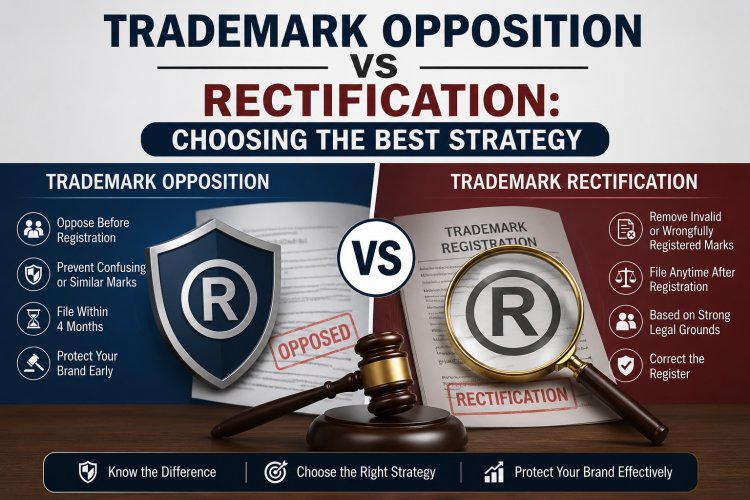
Trademark Opposition vs Trademark Rectification
| Particulars | Trademark Opposition | Trademark Rectification |
|---|---|---|
| Stage | Before registration | After registration |
| Purpose | Prevent registration | Correct or remove invalid registration |
| Timing | Within four months of publication | After trademark registration |
| Nature | Preventive remedy | Corrective remedy |
| Objective | Stop conflicting trademarks | Remove or amend wrongly registered trademarks |
| Cost | Generally more cost-effective | Usually more time-consuming and expensive |
| Evidence | Prior rights, likelihood of confusion | Invalid registration, fraud, non-use, or legal defects |
Which Remedy Should You Choose?
The appropriate remedy depends entirely on the stage of the trademark application.
Choose Trademark Opposition when:
-
A conflicting trademark has been published in the Trademark Journal.
-
You want to prevent registration before rights are granted.
-
You wish to avoid future trademark litigation.
Choose Trademark Rectification when:
-
The conflicting trademark has already been registered.
-
The registration was obtained unlawfully.
-
The trademark is vulnerable to removal due to non-use, fraud, or other legal grounds.
Taking timely legal action significantly improves the chances of protecting your brand.
Why Trademark Monitoring is Essential
Many businesses lose valuable trademark rights simply because they do not monitor newly published trademark applications.
Regular monitoring of the Trademark Journal enables businesses to:
-
Detect conflicting trademark applications early.
-
File opposition within the statutory time limit.
-
Prevent consumer confusion.
-
Protect brand reputation.
-
Avoid lengthy and expensive litigation.
Proactive trademark monitoring is one of the most effective brand protection strategies available.
Conclusion
Both Trademark Opposition and Trademark Rectification play a crucial role in protecting intellectual property rights in India.
A Trademark Opposition acts as a preventive shield by stopping conflicting trademarks before registration, while Trademark Rectification serves as a corrective remedy by removing or amending improperly registered trademarks.
For businesses, choosing the right legal remedy depends on the stage of the trademark lifecycle. Timely action, continuous monitoring of the Trademark Journal, and strong documentary evidence are essential to successfully protect a brand.
Whether you are launching a new business or managing an established brand, understanding these legal remedies will help safeguard your trademark rights and preserve the value of your intellectual property.