+91 7297051181
How to Renew a Trademark in India: Process, Fees & Timeline
Trademark Renewal & maintenance
Introduction
A trademark is much more than a legal right—it is the identity, reputation, and commercial value of a business. While obtaining Trademark Registration is an important milestone, protecting your trademark does not end there. To retain exclusive rights over your brand, every trademark owner must ensure timely Trademark Renewal and proper Trademark Maintenance.
Failure to renew a trademark can result in the loss of valuable intellectual property rights, allowing competitors to adopt or register a similar brand name. Therefore, maintaining your trademark portfolio is essential for long-term business growth and brand protection.
This guide explains the Trademark Renewal Process in India, maintenance requirements, consequences of non-renewal, and renewal timelines in different jurisdictions.
Why is Trademark Renewal Important?
A registered trademark gives the owner exclusive rights to use the mark in relation to the registered goods or services. However, these rights are not permanent unless the trademark is renewed within the prescribed period.
Timely Trademark Renewal offers several benefits:
-
Maintains exclusive ownership of the trademark.
-
Protects brand identity and reputation.
-
Prevents competitors from registering similar trademarks.
-
Preserves customer trust and goodwill.
-
Strengthens the value of intellectual property.
-
Supports licensing, franchising, and business expansion.
Regular renewal ensures that your trademark remains legally enforceable for decades.
<iframe width="560" height="315" src="https://www.youtube.com/embed/zolXX6yOk58?si=onJKGPaZW5PyQneJ" title="YouTube video player" frameborder="0" allow="accelerometer; autoplay; clipboard-write; encrypted-media; gyroscope; picture-in-picture; web-share" referrerpolicy="strict-origin-when-cross-origin" allowfullscreen></iframe>
Duration of Trademark Protection in India
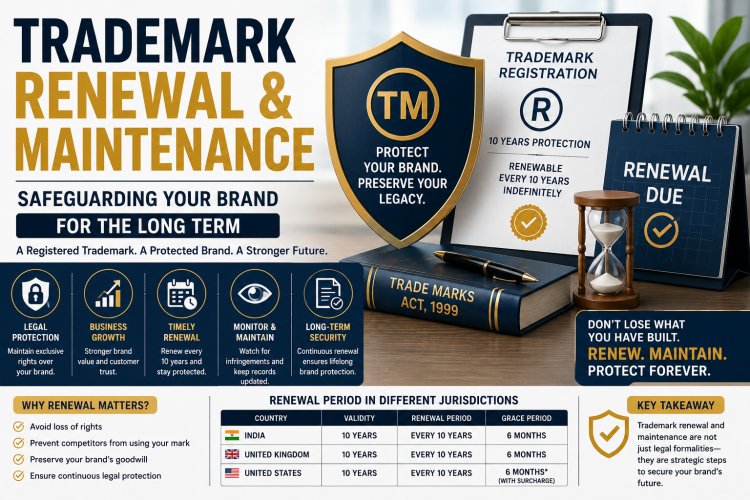
Under the Trade Marks Act, 1999, a registered trademark is valid for:
-
10 years from the date of registration.
-
The trademark can be renewed every 10 years without any limitation on the number of renewals.
-
As long as the prescribed renewal fee is paid and legal requirements are fulfilled, trademark protection can continue indefinitely.
This makes trademarks one of the few intellectual property rights capable of lasting forever through continuous renewal.
Trademark Renewal Process in India
The Trademark Renewal Process is straightforward but requires timely action.
Step 1: Monitor the Renewal Due Date
Although the Trademark Registry may issue a renewal reminder, the ultimate responsibility lies with the trademark owner.
Businesses should maintain an internal system or consult a trademark professional to ensure that renewal deadlines are never missed.
Step 2: File the Trademark Renewal Application
Before the expiry of the registration, the proprietor should submit the prescribed renewal application along with the applicable government fee.
The application should contain:
-
Trademark Registration Number
-
Proprietor details
-
Power of Attorney (if applicable)
-
Prescribed renewal fee
Timely filing avoids unnecessary legal complications.
Step 3: Grace Period for Late Renewal
If the trademark is not renewed before its expiry date, Indian trademark law provides a six-month grace period.
During this period:
-
The trademark can still be renewed.
-
Additional late fees become payable.
-
Failure to renew even within the grace period may result in removal of the trademark from the Register.
Therefore, businesses should avoid relying on the grace period except in exceptional circumstances.
Step 4: Renewal Confirmation
Once the Trademark Registry approves the renewal application, the trademark continues to enjoy statutory protection for another 10 years.
The renewal cycle can continue indefinitely, provided renewals are filed on time.
What Happens if a Trademark is Not Renewed?
Failure to renew a trademark can have serious legal and commercial consequences.
The consequences include:
-
Loss of exclusive trademark rights.
-
Removal of the trademark from the Trademark Register.
-
Increased risk of competitors adopting or registering a similar mark.
-
Weakening of brand reputation and goodwill.
-
Additional legal costs associated with restoration or fresh registration.
-
Potential loss of licensing and franchising opportunities.
Although restoration of a removed trademark may be possible in certain circumstances, the owner may lose valuable priority rights built over many years.
Timely renewal is therefore far more economical than attempting to restore an expired trademark.
Trademark Maintenance: More Than Just Renewal
Trademark Maintenance involves much more than simply renewing the registration.
To preserve trademark rights, owners should continuously manage and protect their intellectual property.
Important maintenance obligations include:
Continuous Use of the Trademark
A registered trademark should be used genuinely in commerce.
Prolonged non-use may expose the trademark to cancellation proceedings under the Trade Marks Act, 1999.
Monitor Trademark Infringement
Businesses should regularly monitor the market and the Trademark Journal for conflicting or similar trademarks.
Prompt legal action against infringers helps preserve the distinctiveness and value of the brand.
Update Trademark Records
Trademark proprietors should keep the Trademark Registry informed of:
-
Change of name
-
Change of address
-
Assignment of ownership
-
Licensing arrangements
-
Corporate restructuring
Keeping records updated avoids procedural complications in future legal proceedings.
Expand Trademark Protection
As businesses diversify, trademark protection should also expand.
Owners should consider:
-
Registering trademarks in additional classes.
-
Filing international trademark applications where appropriate.
-
Protecting logos, slogans, packaging, and trade dress.
A comprehensive trademark portfolio strengthens long-term brand security.
Trademark Renewal Period in Different Countries
| Country | Trademark Validity | Renewal Period | Grace Period |
|---|---|---|---|
| India | 10 Years | Every 10 Years | 6 Months |
| United Kingdom | 10 Years | Every 10 Years | 6 Months |
| United States | 10 Years* | Every 10 Years (subject to statutory maintenance requirements) | 6 Months (with surcharge) |
*In the United States, trademark owners must also comply with periodic use and maintenance filing requirements to keep the registration active.
Best Practices for Trademark Maintenance
Businesses should adopt a proactive trademark management strategy by:
-
Maintaining a trademark renewal calendar.
-
Keeping evidence of continuous trademark use.
-
Monitoring the Trademark Journal regularly.
-
Taking immediate action against infringement.
-
Updating ownership and contact details.
-
Conducting periodic trademark portfolio audits.
-
Consulting trademark professionals for renewals and enforcement.
A well-managed trademark portfolio significantly reduces legal risks and enhances business value.
Conclusion
Trademark Renewal and Trademark Maintenance are not merely administrative formalities—they are essential components of a successful brand protection strategy.
While trademark registration establishes your legal rights, regular renewal, continuous commercial use, infringement monitoring, and portfolio management ensure that those rights remain enforceable for years to come.
Businesses that actively maintain their trademarks are better positioned to protect their reputation, expand into new markets, attract investors, and preserve valuable intellectual property assets.
A strong trademark is built not only through registration but through consistent protection and timely renewal.