+91 7297051181
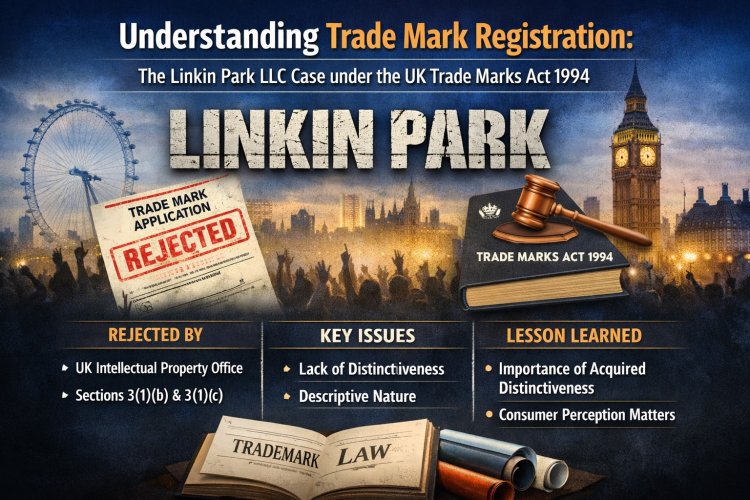
Understanding Trade Mark Registration: The Linkin Park LLC Case under the UK Trade Marks Act 1994
Explore the Linkin Park LLC trade mark case before the UK Intellectual Property Office under the Trade Marks Act 1994. Learn why the mark “LINKIN PARK” was refused registration for printed matter due to lack of distinctiveness and descriptiveness, and understand the importance of acquired distinctiveness and consumer perception in trademark law.
Introduction
In the world of trade marks, the registration process can be a challenging and complex journey, particularly for celebrities and artists seeking to protect their brand. The case of Linkin Park LLC and their attempt to register "LINKIN PARK" as a trade mark for printed matter, including posters, is a notable example. This case not only illuminates the intricacies of trade mark law but also the barriers that even well-known entities can face in securing legal rights to their names and brands. Linkin Park, a band formed in 1996, quickly rose to fame and became a household name by the early 2000s. The band’s unique sound and dynamic presence in the music industry made them a significant cultural phenomenon. In 2002, amidst their rising popularity, Linkin Park LLC sought to register the trade mark "LINKIN PARK" for various goods, including printed matter, posters, and poster books. This application was filed on October 18, 2002. However, the registration process was not smooth. The UK Intellectual Property Office (UKIPO) raised objections under sections 3(1)(b) and 3(1)(c) of the Trade Marks Act 1994. These sections pertain to the distinctiveness and descriptiveness of trade marks. In essence, the examiner believed that the name "Linkin Park" failed to meet the necessary criteria for registration due to its descriptive nature concerning the goods in question. The case proceeded to a hearing, where the Registrar maintained the objections. The Hearing Officer ultimately dismissed the application, leading to an appeal by Linkin Park LLC. Richard Arnold QC, sitting as the Appointed Person, reviewed the case and made several critical observations.
Details of the Linkin Park’s application with respect to the contentious class description are below.
|
Mark |
Application No. |
Class |
|
LINKIN PARK (word) |
2313504 |
Class 16: “printed matter, posters, poster books.” |
Distinctiveness versus Descriptiveness
To grasp the implications of this case, it's essential to understand the legal principles behind trade mark registration. Section 3(1)(b) of the Trade Marks Act 1994 states that marks that lack distinctiveness cannot be registered. Conversely, Section 3(1)(c) prohibits registration for signs that are descriptive of the goods or services in question. Mr Arnold noted that by the filing date in October 2002, "LINKIN PARK" was already widely recognized as the name of the band. Consequently, it indicated the subject matter of the posters that consumers would seek. Thus, the average consumer would likely request a "Linkin Park poster," understanding the mark not as a source identifier but rather as a description of the type of poster they were seeking. The decision reflected the principle that public interest demands descriptive terms be free for use by all traders, ensuring that competitors can adequately describe their goods. The decision reinforces the underpinning philosophy of trade mark law: to promote fair competition and avoid monopolistic practices.
Rejection of the Invented Word Argument
Linkin Park LLC argued that "LINKIN PARK" was an invented word, deserving of trade mark protection. However, this argument was rejected by the Office. The reasoning was that distinctiveness is evaluated based on consumer perception at the time of application, rather than on the word's originality or novelty. By the time of Linkin Park's application, the name had already become synonymous with the band, hence losing its status as an invented or arbitrary term; it transitioned into the realm of descriptiveness. Moreover, Mr Arnold referred to established legal precedents that highlighted the relevance of public perception in determining whether a sign serves as a trade mark. If consumers do not associate a name with a specific source of goods, then it fails to meet the distinctiveness requirement.
Evidence Requirements
One critical aspect of this case was the lack of evidence presented by Linkin Park LLC to support their claim of acquired distinctiveness for the term "LINKIN PARK" as it related specifically to posters. While the band was popular, without direct evidence showing that consumers viewed "LINKIN PARK" as a brand identifier for posters, the application could not proceed. This underscores a vital takeaway for other artists and celebrities: merely being a well-known name is insufficient for trade mark protection. Rights holders must provide concrete evidence that consumers associate their name with specific goods or services in the marketplace.
Implications for Celebrities
The Linkin Park decision serves as a cautionary tale for celebrities and brands aspiring to protect their names in merchandise markets, particularly in relation to printed matter. The decision indicates that being a well-known name doesn't automatically confer trade mark rights over all possible uses of that name. For many artists, the significance of their name extends beyond music; it encompasses a vast range of commercial products and branding opportunities. However, without establishing distinctiveness, they may find themselves barred from registering their names as trade marks for certain goods.
To know more about this, please check the link below.
Parallel Strategies for Protection
As a result of this case, it is crucial for celebrities and brands to adopt comprehensive strategies that encompass more than just trade mark registration:
· Building Distinctiveness: Artists should focus on building their brand, ensuring that consumers unequivocally associate their name with the specific goods they wish to protect.
· Evidence Documentation: Keeping detailed records of marketing efforts, sales data, and consumer feedback can serve as valuable evidence of distinctiveness when required.
· Consider Alternative Branding: In situations where names face registration challenges, artists might explore alternative names or logos that better signify their brand identity and are less likely to be deemed descriptive.
· Legal Expertise: Engaging trade mark attorneys or IP professionals can help navigate the complexities of trade mark law, ensuring that all necessary steps are taken to secure protection.
Conclusion
The case of Linkin Park LLC against the UK Trade Marks Registry is a seminal example of the challenges faced by well-known brands in the realm of intellectual property law. The final decision dismissed the appeal for "LINKIN PARK" as a trade mark for printed matter, underscoring the significance of distinctiveness and descriptiveness in trade mark law. As the landscape of branding continues to evolve, especially in the digital age where names can carry immense commercial weight, it remains critical for artists and businesses to adapt and strategically manage their intellectual property. Understanding the legal framework surrounding trade mark registration and the necessity of consumer perception can make all the difference in successfully protecting one's brand identity.