+91 7297051181
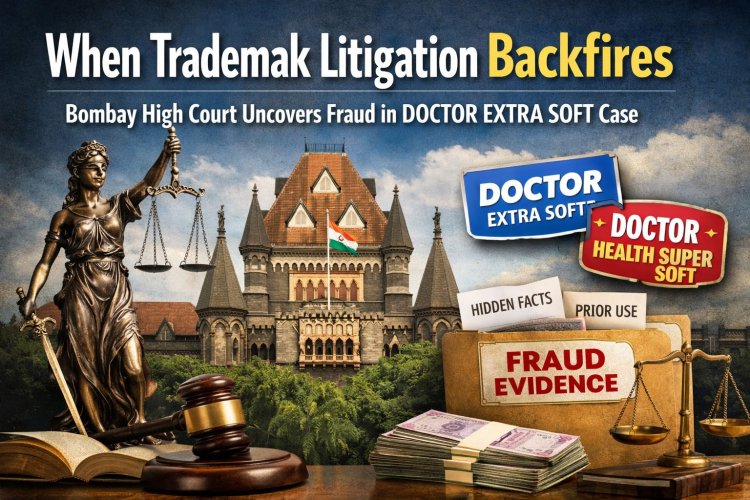
When Trademark Litigation Backfires: Bombay High Court Uncovers Fraud in DOCTOR EXTRA SOFT Case
The Bombay High Court dismissed a trademark infringement suit after finding suppression of material facts, territorial limitations, and misleading claims, reinforcing the duty of honesty and clean hands in trademark litigation.
Introduction
In the realm of trademark law, the integrity of litigation processes is critical. The recent ruling from the Bombay High Court in the case of “Shoban Salim Thakur v. Chaitanya Arora & Ors. (15 October 2025)” sheds light on the consequences of misleading the court and highlights the importance of full disclosure. This case underscores not only the principles surrounding trademark infringement but also the ethical responsibilities of litigants in upholding the judicial process.
Background of the Case
The case revolves around a trademark dispute where Shoban Salim Thakur, the proprietor of a business under the mark “DOCTOR EXTRA SOFT,” sought legal remedies against several parties, including Chaitanya Arora and his business entities, using the mark “DOCTOR HEALTH SUPER SOFT.” Shoban Salim Thakur owned a registered trademark in Classes 20, 25, and 35, which includes goods such as footwear.In June 2025, a preliminary ruling saw the Bombay High Court grant an “ex parte ad interim injunction” restraining the defendants from using marks that were similar to Thakur's. This ruling was reached without the defendants present to contest. However, a significant turning point arose when the defendants filed an application to vacate the injunction, arguing that Thakur had suppressed critical information and misled the court.
Parties Involved
Plaintiff: Shoban Salim Thakur
Shoban Salim Thakur operates a business under the name M/s Family Footwear and holds the registered trademark “DOCTOR EXTRA SOFT” in Classes 20, 25, and 35. Notably, the Class 25 registration is limited to the state of Maharashtra, which became a pivotal factor in this case.
Defendants: Chaitanya Arora & Ors.
The defendants include Delhi-based individuals and businesses who were using the mark “DOCTOR HEALTH SUPER SOFT.” They contested the injunction on the grounds of prior use and alleged suppression of material facts by Thakur.
Procedural History
The case had two significant procedural phases:
Ø Initial Ex Parte Ruling (June 30, 2025): The court granted Thakur an initial injunction based on his assertions of trademark infringement.
Ø Vacating the Injunction Application (Post-Motion): The defendants sought to vacate the injunction by presenting evidence of prior use and allegations against Thakur for suppressing material facts.The high court ultimately decided to address the motions raised by the defendants and the merits of the case.
Key Findings of the Court
The Bombay High Court's ruling, delivered by Justice Arif S. Doctor, rejected Thakur’s claims for several reasons tied to the doctrine of good faith and full disclosure in legal proceedings.
Summary of Material Facts Relevant to Suppression/Fraud
Ø Territorial Limitation on the Class 25 Registration:
The court noted that Thakur’s trademark registration for “DOCTOR EXTRA SOFT” was limited to the state of Maharashtra. This critical fact was not disclosed in Thakur's application for an ex parte injunction, which the court deemed dishonest and detrimental to the judicial process. During oral arguments, Thakur admitted that the injunction could not legally extend beyond Maharashtra, yet the initial injunction was granted for all of India.
Ø Prior Use Evidence by the Defendants:
The defendants had previously filed an opposition against Thakur's claims in the Trade Marks Registry, asserting their continuous use of “DOCTOR HEALTH SUPER SOFT” since April 2022, backed by affidavits that included purchase orders and listings. Thakur was aware of this information yet failed to attach the evidence to his plaint, misleading the court into believing that the defendants had not established credible use.
Ø Contradictory Statements by the Plaintiff:
In an earlier correspondence with the Trade Marks Registry, Thakur argued against the similarity of his mark to existing trademarks, implying that terms like “DOCTOR” and “SOFT” were not distinctive to him. However, he later claimed these terms were essential to his mark, seeking broad injunctive relief without transparency.
Core Issues Before the Court
The court was mandated to evaluate the following primary issues:
Ø Had the plaintiff suppressed material facts and perpetrated fraud on the court to obtain an ex parte injunction?
Ø If found in favor of the defendants, what remedies should be applied, including vacating the injunction or dismissing the suit outright?
Ø Should exemplary costs be imposed on Thakur due to the demonstrated suppression of material facts?
<iframe width="560" height="315" src="https://www.youtube.com/embed/bAjf0b-zTIQ?si=VvM0z_h0EdvredDT" title="YouTube video player" frameborder="0" allow="accelerometer; autoplay; clipboard-write; encrypted-media; gyroscope; picture-in-picture; web-share" referrerpolicy="strict-origin-when-cross-origin" allowfullscreen></iframe>
Analysis of the Court's Decision
Ø Materiality of the Class 25 Limitation
The court held that Thakur’s Class 25 registration the one covering footwear was relevant to the dispute. Therefore, the territorial limitation, which restricted the registration to Maharashtra, was a decisive fact that should have been disclosed during the ex parte application. The court pointed out that the failure to do so amounted to a deliberate act of dishonesty. The ruling emphasized that disclaimers and limitations on trademark registrations must be fully disclosed, especially when seeking urgent injunctions that significantly impact the rights of others—such as defendants in this case.
Ø Non-Disclosure of the Defendants’ Prior Use Evidence
The court found that Thakur's knowledge of the defendants' prior use, illustrated by their duly filed documents in opposition proceedings, further strengthened the case for vacating the injunction. Thakur’s attempt to downplay this evidence created an impression of intentional misrepresentation. The evidence included invoices and affidavits indicating the defendants’ legitimate use of the mark well before Thakur’s claims. Thakur's argument that he only became aware of this usage in March 2025 was unconvincing to the court, which found the plaintiff’s timeline inconsistent with his prior knowledge.
Ø Contradictory Stances in Trademark Prosecution
The court highlighted the contradictions within Thakur's arguments, which demonstrated a lack of candor. Thakur had previously argued in prosecution proceedings that the words “DOCTOR” and “SOFT” were not inherently distinctive to him. This admission showed that his claim of exclusivity was not well-founded and underscored the need for honesty in representing trademark rights.
Conclusion
In the case of “Shoban Salim Thakur v. Chaitanya Arora & Ors. Interim Application (L) No. 18278 of 2025 in Commercial Suit (L) No. 18197 of 2025 with Leave Petition (L) No. 18257 of 2025, along with Interim Application No. 5889 of 2025”, the Bombay High Court underscored the critical importance of transparency in trademark litigation. The Court found that the plaintiff, Shoban Salim Thakur, had deliberately suppressed key facts regarding the territorial limitation of his trademark registration for “DOCTOR EXTRA SOFT,” which was confined to Maharashtra. This non-disclosure invalidated the nationwide injunction he sought. Additionally, the plaintiff's failure to acknowledge the defendants’ prior use of the disputed mark “DOCTOR HEALTH SUPER SOFT” since April 2022 further contributed to the Court's conclusion. As a result, the Court dismissed the suit and imposed exemplary costs on the plaintiff for attempting to mislead the Court, reinforcing the principle that honesty is paramount in legal proceedings.