+91 7297051181
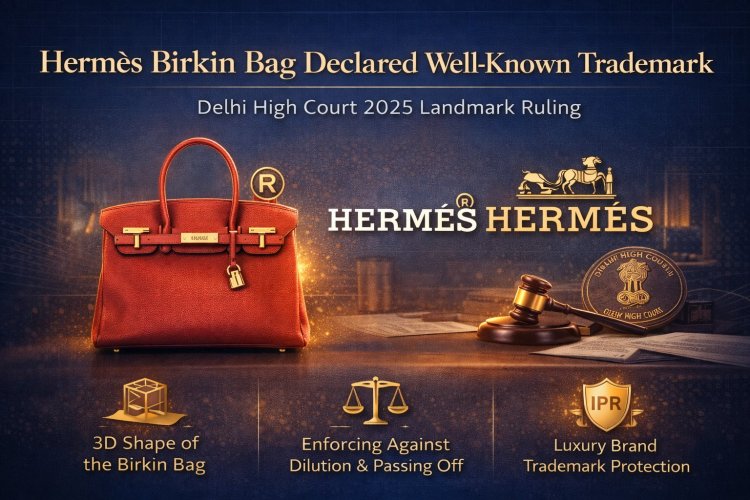
Hermès Birkin Bag Declared Well-Known Trademark | Delhi High Court 2025 Landmark Ruling
In a landmark 2025 judgment, the Delhi High Court recognised the Birkin Bag’s 3D shape and Hermès’ stylized marks as well-known trademarks under the Trade Marks Act, 1999. The ruling strengthens protection for luxury brands, reinforces Indian jurisprudence on shape marks, and underscores strict enforcement against trademark dilution, passing off, and unfair competition in the fashion industry.
Introduction
In an age where brand identity and consumer perception significantly influence commercial success, the protection of trademarks has never been more vital. The ongoing battle between global luxury brands and local competitors often revolves around questions of trademark infringement and the recognition of well-known trademarks. The recent case of “Hermes International & Anr. v. Macky Lifestyle Private Limited & Anr. CS(COMM) 716/2021 & I.A. 17569/2021” is a striking example of this dynamic, highlighting how the judicial system navigates these conflicts in the Indian context. This case not only illustrates the complexities involved in establishing trademark infringement but also underscores the mechanisms available to luxury goods manufacturers in safeguarding their unique brand identities. This blog will dissect the case in detail, exploring its legal background, the court’s reasoning, and its implications for businesses operating in India’s competitive marketplace.
Procedural History
The case (No. CS(COMM) 716/2021) was brought before the High Court of Delhi, presided over by Justice Tejas Karia on November 24, 2025. The plaintiffs, “Hermes International” a renowned France-based luxury goods company and “Hermes India”, its Indian subsidiary, initiated the lawsuit against Indian company “Macky Lifestyle Private Limited” and its director. The plaintiffs sought reliefs for trademark infringement, passing off, copyright infringement, dilution, and more, centered around the well-known three-dimensional shape of the Birkin bag and related trademarks. The procedural history took a notable turn on April 15, 2025, when the court ordered the defendants to provide an affidavit addressing specific claims regarding their business activities. Subsequently, the defendants filed an affidavit on June 18, 2025, albeit with a delay. This affidavit was pivotal, as it included claims that the defendants had never manufactured or sold any products resembling the Birkin bag, which led to significant developments in the case.
Material Facts
To grasp the case’s ramifications fully, it is essential to understand the relevant material facts. Hermes International, a prestigious brand known for its luxury bags and accessories, claimed exclusive rights over the three-dimensional shape of the Birkin bag and the trademarks “Hermes” and its stylized marks. The defendants were accused of producing and offering for sale bags that were either identical or deceptively similar to the Birkin bag, allegedly using the subject marks without permission. The plaintiffs presented various pieces of evidence, including images of bags marketed by the defendants on platforms such as IndiaMART, as proof of trademark violation. However, the defendants’ affidavit indicated a significant shift: active business operations had ceased, and the materials in question were only used as reference points for potential future designs none of which materialized.
Critical Issues
The crux of the case revolved around two primary issues:
· Whether the suit should be decreed in terms of the injunctive and ancillary reliefs claimed, given the defendants’ assertions and plaintiffs' acceptance of those claims.
· The trademarks in question, including the three-dimensional shape mark of the Birkin bag, qualify as well-known trademarks under Indian law.
Legal Framework
The court primarily referenced “Section 11(6)” of the “Trade Marks Act, 1999,” which outlines factors for determining the reputation of a trademark. Key factors included public knowledge of the trademark, the geographical extent of its use and promotion, the duration of the brand's presence in the market, and any historical recognition by courts as a well-known mark.
Submissions on Well-Known Status
The plaintiffs presented a compelling case to establish the well-known status of their trademarks, unpacking several essential factors:
1. Knowledge or Recognition in Relevant Public: Hermes' retail presence, particularly in major Indian cities like Mumbai and Delhi, facilitated brand recognition. Media coverage from reputable outlets further validated the brand's status, indicating widespread recognition among the public.
2. Duration, Extent, and Geographical Area of Use: The Birkin bag has been in existence since 1984, and its extensive history of use globally reinforced its appeal and recognition. Evidence of an established customer base and luxury appeal in India played a critical role in reinforcing the brand's well-known status.
To know more about this, please check the link below.
Judicial Reasoning
In deliberating the case, the court acknowledged the plaintiff's acceptance of the defendants' position, particularly that no infringing goods were manufactured or sold, and that the defendants had ceased business operations. On this basis, the court leaned towards granting the plaintiffs’ requests for injunctive relief regarding well-known trademark status. The court ultimately endorsed the view that the “Hermes” trademarks and the three-dimensional shape of the Birkin bag should be recognized as well-known trademarks in India, affirming their association with luxury, exclusivity, and quality. Given the substantial evidence presented by the plaintiffs, the court's decision was rooted in promoting fair competition and protecting the rights of well-established brands.
Broader Implications
The significance of this ruling extends beyond the immediate parties involved. By reaffirming the status of well-known trademarks, the court set a precedent for future cases involving trademark infringement, especially in the luxury segment. This decision highlights the Indian judiciary's commitment to protecting intellectual property rights and promoting fair market practices. As India continues to integrate into the global economy, the need for robust intellectual property protections becomes increasingly essential. This case serves as a critical reference point, indicating that the judiciary is willing to uphold trademark integrity against potential infringers, no matter their scale or influence. Luxury brands, in particular, can take solace in the assurance that their unique identities will be shielded from dilution and infringement.
Conclusion
The case of “Hermes International & Anr. v. Macky Lifestyle Private Limited & Anr. CS(COMM) 716/2021 & I.A. 17569/2021” offers a detailed examination of trademark law's role in safeguarding brand identity, particularly in the luxury sector. By illustrating the legal mechanisms available to protect well-known marks and emphasizing the importance of judicial vigilance, this case reinforces the significance of intellectual property rights in a competitive marketplace. As businesses navigate the complexities of trademark law, Hermes’ victory serves as a reminder that recognition, reputation, and legal protections are essential assets in fostering brand loyalty and ensuring commercial success. The evolving landscape of Indian trademark law, as emphasized by this ruling, promises to present both challenges and opportunities for brands and defendants alike in the years to come.