+91 7297051181
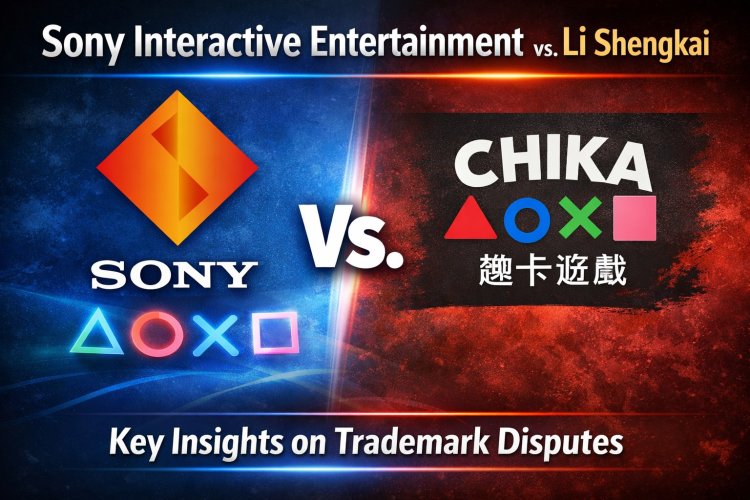
Sony Interactive Entertainment v. Li Shengkai: Key Insights on Trademark Disputes
This blog analyzes the trademark dispute over the “CHIKA and device” mark, exploring Sony’s claims of similarity, fame, and bad faith. It highlights how the Taiwan IPO dismissed the appeal due to low similarity and insufficient evidence, offering lessons on proving confusion, distinctiveness, and intent in trademark cases.
Introduction
Trademark disputes often hinge on the complex interplay of consumer perception, brand recognition, and legal interpretations. A pertinent case to explore in this realm is Sony Interactive Entertainment Inc. v. Li Shengkai, which delves into issues of trademark similarity, confusion, and alleged bad faith. This case, involving the registered trademark “CHIKA and device,” raises important questions about the nature of trademark protection and the balance between innovation and brand ownership.
Overview of the Case
The petition emerged as a challenge against the trademark registration No. 2308293 for "CHIKA and device," registered by Li Shengkai for a range of services classified under Class 35. These services included toy retail and wholesale, educational supplies, marketing, and various other consumer-related services. The main party challenging this registration was Sony Interactive Entertainment Inc., commonly known as Sony, a global leader in electronics and gaming. The legal battle primarily rested on the premise that Li Shengkai's trademark was confusingly similar to Sony’s long-established trademarks, which prominently feature geometric shapes reminiscent of their iconic PlayStation controller buttons—triangle, circle, cross, and square. As Sony argued, the potential for consumer confusion loomed large, given the retail and gaming focus of both parties.
Details of the Li Shengkai’s contested mark are below.
|
Mark |
Registration No. |
Class |
|
|
02308293 |
Class: 035 |

Details of the Opponent’s marks are below.
|
Mark |
Registration No. |
Class |
|
|
00971797 |
Class: 028 |
|
|
01125754 |
Class: 028 |
|
|
02204821 |
Class: 028 and 038 |
|
|
01447909 |
Class: 09, 014, 016, 018, 020, 025, 026, 028 |
|
|
01552630 |
Class: 09, 016, 028, 035, 036, 038, 041, 042 |


Legal Grounds of the Petition
Sony's petition was grounded in several articles of the Trademark Act. Specifically, they invoked:
· Article 30 Paragraph 1, Subparagraph 10: This clause addresses situations where a similar mark on the same or similar goods/services could lead to consumer confusion.
· Subparagraph 11: It discusses trademarks that resemble well-known marks and may cause confusion or dilution of the original brand.
· Subparagraph 12: This points out cases of bad faith, where an applicant knowingly seeks to register a trademark similar to an already established one to exploit its reputation.
Through these avenues, Sony sought to establish that Li Shengkai's trademark not only infringed on its rights but also damaged the distinctiveness and reputation associated with its own well-known marks.
To know more about this, please check the link below.
Examination of Similarity
One of the core arguments raised by Sony hinged on the visual and conceptual similarities between the two marks. The comparison drew attention to the four geometric shapes in question, asserting that their arrangement in Li’s trademark was strikingly similar to that of Sony’s button symbols. In an industry where brand recognition is integral to consumer choice, such visual similarities can significantly impact market perception. The Intellectual Property Office (IPO) relevantly noted that while there was a superficial resemblance in using basic geometric shapes, the overall design, including the additional Chinese wording “quka video game” and other features in Li’s mark, rendered the marks distinctly different. This assessment played a crucial role in the IPO's determination of “very low similarity,” leading to the conclusion that consumers are unlikely to confuse the two trademarks.
Grounds of Distinctiveness and Fame
Central to any trademark dispute is the concept of distinctiveness. For a brand to claim rights over a trademark, it must demonstrate that the mark has acquired distinctiveness in the marketplace. Sony argued that its geometric symbols had become synonymous with its products over the past 30 years, thereby establishing a reputation that transcends individual products. However, the IPO’s decision highlighted the lack of sufficient evidence to conclusively prove that Sony’s button-symbol marks were well-known among Taiwanese consumers at the time of Li's trademark application in 2011. This slanted the review towards a more cautious interpretation of fame, ultimately favouring Li in the absence of robust evidence confirming social recognition of Sony’s trademarks in the jurisdiction.
Allegations of Bad Faith
Another significant aspect of Sony’s argument concerned the issues surrounding bad faith. Here, Sony claimed that Li Shengkai had knowledge of Sony’s established marks and intended to exploit that familiarity to his advantage. The IPO, however, found insufficient evidence to support these allegations, highlighting the absence of a direct contractual or business relationship that could lend credence to the notion that Li had malicious intent. While the retailing of gaming products may imply familiarity with competitive marks, without tangible evidence of intent to deceive or infringe, the bad faith component of Sony’s argument remained unsupported. This aspect elucidates the complexity inherent in proving bad faith; it necessitates more than just circumstantial evidence but rather a clear narrative of intent.
The Conclusion and Implications
In the end, the Petition Review Committee dismissed Sony’s appeal, upholding the Taiwan IPO’s original decision that the opposition was not established. The decision reinforced key takeaways for companies utilizing trademark protection:
· Evidence is Key: The importance of presenting comprehensive evidence cannot be overstated. In trademark law, particularly in establishing fame, companies must ensure they compile substantial proof of market recognition to support their case.
· Understanding Similarity: Trademark cases often ride on nuanced interpretations of similarity. Visual, conceptual, and phonetic elements must be analysed in totality, and parties should anticipate challenges in establishing consumer confusion.
· Bad Faith Claims Require Distinct Proof: Simply having knowledge of another's mark or business does not automatically imply bad faith. Applicants are encouraged to meticulously document their practices and intentions to avoid pitfalls related to bad faith allegations.
A Path Forward
While this case centred on the trademark dispute between a retail start-up and a corporate giant, it encapsulates broader themes relevant to trademark law. For start-ups, it serves as a reminder of the complexities they must navigate while establishing their brand identity, especially in sectors dominated by well-known players like Sony. For established companies, it emphasizes the ongoing need to protect their intellectual property proactively and to substantiate their claims with rigorous documentation and market presence evidence. The balance between innovation and protecting brand identity will continue to influence trademark practices as new players enter established markets. Through careful consideration of the lessons learned from Sony Interactive Entertainment Inc. v. Li Shengkai, brands can refine their approaches to trademark registration, opposition, and defence, ultimately contributing to a more aware and responsibly managed marketplace. In conclusion, the landscape of trademark law remains intricate and evolving. Companies must remain vigilant, not only in safeguarding their marks but also in recognizing the competitive environment that continues to shape consumer perceptions and rights within the commercial sphere.