+91 7297051181
Understanding the “雪の愛 YUKI & LOVE and Device” Trademark Decision: Cultural Symbols in IP Law
This blog analyzes the MOEA’s refusal of the “雪の愛 YUKI & LOVE and Device” trademark due to structural similarities with Japan’s chrysanthemum emblem. It highlights the role of cultural symbols, Article 6ter of the Paris Convention, and legal reasoning in protecting national emblems while navigating global trademark registration.
Introduction
In the dynamic world of intellectual property, trademarks serve as a crucial asset for businesses, distinguishing their goods and services from those of others. However, the management of such intellectual property often leads to disputes surrounding registration and protection. One such noteworthy case is the petition decision of the Ministry of Economic Affairs (MOEA) concerning the trademark “雪の愛 YUKI & LOVE and Device”. This case not only highlights the intricacies involved in trademark law but also illustrates how different cultural symbols can impact intellectual property rights.
Background of the Case
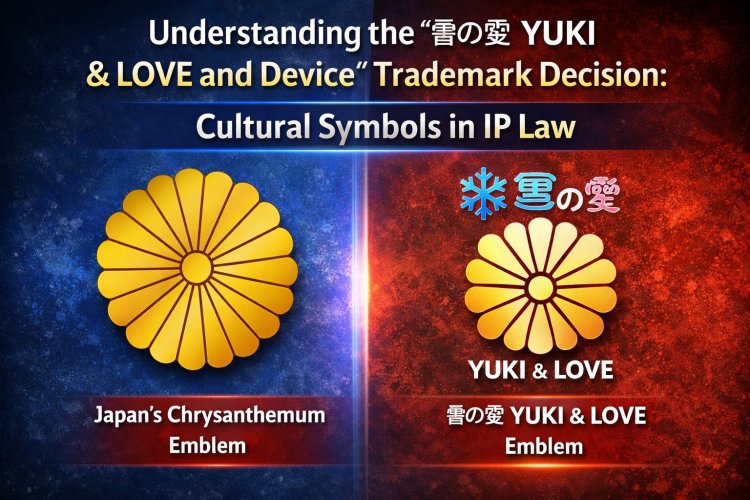
The petitioner, Souvenir Shop Co., Ltd., sought to register the trademark “雪の愛 YUKI & LOVE and Device” on June 4, 2014. The trademark features a combination of Chinese and Japanese characters, the corresponding Latin words, a distinct snow design, and a floral emblem with 12 symmetrical petals radiating from a central circle. These elements were intended to evoke feelings of love and connection, which the petitioner argued was core to its branding strategy. The designated goods included an array of food items such as cakes, candies, snacks, and pastries.
The Legal Framework
The trademark application faced hurdles primarily grounded in the Trademark Act of Taiwan. Specifically, Article 30, Paragraph 1, Subparagraph 2 prohibits trademarks that are identical or similar to flags, national emblems, military insignias, or other symbols recognized under international treaties such as the Paris Convention. The original decision from the Intellectual Property Bureau (Trademark Office) found substantial similarities between the petitioner’s mark and Japan’s notified emblem, the chrysanthemum emblem, which consists of a bouquet of 16 symmetrical petals, leading to a refusal of registration.
Image of The Imperial crest of Japan (most commonly known as the chrysanthemum crest) is below.

|
Mark |
Registration No. |
Class |
|
Snow Love YUKI & LOVE and pictures |
112051966 |
Class 30 |

The Core of the Conflict
The crux of the conflict lay in the floral element of both trademarks. The Taiwan IP office asserted that the markings within the trademarks were visually similar: both featured a central circle with symmetrical petals radiating outward. The conclusion was drawn from a comparison of their structures, despite the two designs differing in terms of the number of petals and their arrangement. However, Souvenir Shop Co. Ltd. countered this perspective by presenting several arguments focused on the uniqueness of their design, the emotional resonance of their brand, and the interpretation of the Paris Convention regarding the protection of national emblems.
Petitioner’s Arguments
· Differences in Design: The petitioner highlighted that their floral design consisted of 12 petals, whereas Japan’s emblem has 16 petals. They suggested that the applied mark presented a single-layered, decorative floral element which was substantially different from the layered complexity of the chrysanthemum emblem. They argued that consumers would perceive these differences both in terms of visual density and overall impression without needing to count the petals.
· Cultural and Generic Motifs: The petitioner introduced the argument that the Paris Convention’s Article 6ter should not inhibit the use of common floral motifs. It posited that many emblems utilize general shapes that could be found in nature, thus should not confine ordinary trades from using similar designs unless the trademark evokes the emblematic essence of a state symbol. They further claimed that symmetrical floral designs were prevalent in various trademarks and that their mark did not suggest a connection to the emblematic character of Japan’s national symbol.
· Conclusion Requesting Reconsideration: The petitioner concluded that their trademark should not be dismissed under the provisions of the Trademark Act as it neither infringed upon Japan’s emblem nor evoked its state character. They urged a revocation of the original refusal and a reconsideration of their application.
To know more about this, please check the link below.
The Petitions and Appeals Committee of Taiwan’s Ministry of Economic Affairs Analysis
The Committee’s decision on October 16, 2025 reaffirmed the original finding of high structural similarity between the two floral designs. The Committee’s analysis pointed out that despite slight differences, both trademarks serve as identifying elements featuring a central circular component with symmetrical petals radiating outward. The conclusion emphasized that ordinary consumers, who possess a general knowledge of floral designs, may likely perceive the two marks as being closely similar.
The Broader Implications of the Decision
This case underscores the importance of understanding cultural symbols within trademark law. The floral design in question represents more than just a decorative element; it carries emotional weight and cultural significance. In a globalized market, where brands seek to connect with consumers across cultures, such trademarks represent the confluence of tradition and modern branding. Additionally, the reliance on the Paris Convention's Article 6ter raises questions about the balance of protecting national symbols while not stifling creativity and cultural expression in business. As seen in this case, there is a thin line between protecting state emblems and allowing businesses to leverage common motifs that are part of a larger cultural narrative.
The Future of Trademark Registration and Protection
As economies become increasingly intertwined and the lines between cultures continue to blur, the issue of trademark registration will likely grow more complex. Businesses must navigate these waters carefully, understanding not only the legal parameters but also the cultural implications of their branding. For legal practitioners and business owners alike, this case serves as a reminder to proactively safeguard their trademarks while being mindful of existing cultural symbols. It highlights the necessity for a nuanced understanding of both national and international laws governing intellectual property.
Conclusion
The petition decision surrounding the “雪の愛 YUKI & LOVE and Device” trademark is emblematic of the complex interplay between trademark law and cultural identity. With ongoing globalization, trademarks are no longer mere indicators of brand identity but are intertwined with the cultural sensibilities of consumers worldwide. As businesses navigate these challenges, the balance between the protection of state emblems and the freedom to create distinctive trademarks will continue to be a contentious and evolving area of law. In summary, while the Committee reaffirmed the refusal to register the trademark based on structural similarities with Japan's floral emblem, this case serves as a pivotal learning opportunity for businesses and legal experts, spotlighting how intellectual property rights can shape branding strategies globally.