+91 7297051181
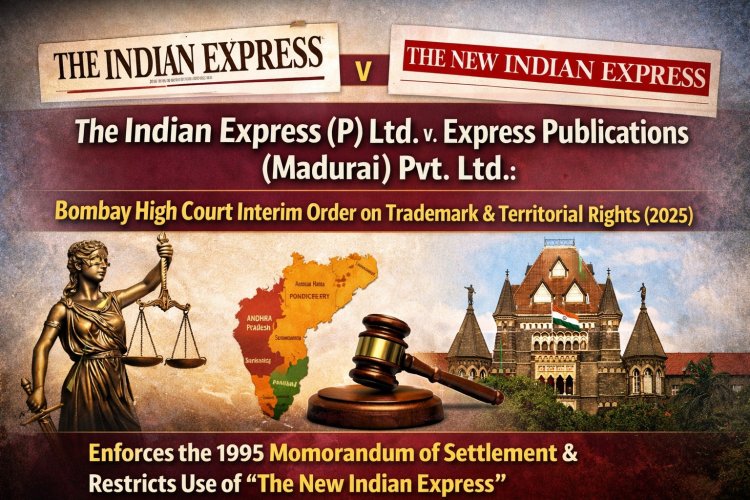
The Indian Express (P) Ltd. v. Express Publications (Madurai) Pvt. Ltd.: Bombay High Court Interim Order on Trademark & Territorial Rights (2025)
An analysis of the Bombay High Court interim order in The Indian Express (P) Ltd. v. Express Publications (Madurai) Pvt. Ltd., examining trademark infringement, territorial usage of “The New Indian Express,” enforcement of the 1995 Memorandum of Settlement, and its impact on media ownership and corporate governance in India.
Introduction
In a case that intertwines corporate law, intellectual property rights, and family dynamics, the Bombay High Court's decision in The Indian Express (P) Ltd. v. Express Publications (Madurai) Pvt. Ltd., Interim Application (L) No. 31555 of 2024 in COMM IPR Suit (L) No. 31230 of 2024, stands as a significant milestone in the complex landscape of media ownership and trademark enforcement in India. This blog aims to unpack the core issues and implications of the High Court's interim order, providing a comprehensive understanding of the legal frameworks at play, the historical context of the dispute, and its potential ramifications for the parties involved.
Background: The Legal and Familial Framework
At the heart of this case lies a historical tussle for control over the Indian Express newspaper, a flagship publication in India's media landscape. The Indian Express Group was initially founded by Ramnath Goenka, and although its legacy is rich, it has been marred by internal disputes, particularly involving the key players: Vivek Goenka and Manoj Kumar Sonthalia.
Ownership Structure
The ownership of the group is a mosaic shaped by familial ties and legal agreements. Nariman Point Building Services & Trading Pvt. Ltd. (NPBS) held shares that ultimately shifted to Vivek Goenka after a series of familial disputes culminated in a 1995 Memorandum of Settlement (MoS). The details reveal how family ties can sometimes become assets yet also potential liabilities when coupled with business interests.
The Dispute’s Genesis
The familial tensions surfaced significantly in the early '90s when Manoj Kumar Sonthalia contested the legality of board meetings that saw a transfer of shares away from him to Vivek Goenka. This dispute eventually reached the Madras High Court, leading to a series of negotiated settlements, including the foundational MoS that outlined the terms of ownership and operations of both factions—from the Indian Express Group (IENB) to the New Indian Express Group (NIEG).
The Court's Order: Key Legal Issues and Instruments
With the backdrop established, let’s delve into the interim application brought before the Bombay High Court concerning specific allegations against Express Publications, the defendant in this case.
Core Legal Issues
· Breach of MoS and Consent Decree: A critical question is whether Express Publications’ use of “The New Indian Express” outside the agreed geographic limitations breaches the existing legal and contractual obligations outlined in the MoS and consent decree.
· Territorial Rights versus Proprietary Rights: The court needed to deliberate on whether the Defendant holds a mere territorial "permitted user" right to use “New Indian Express” or possesses an independent proprietary right.
· Acquiescence by Plaintiff: The court examined if the Plaintiff had acquiesced or waived its rights under the previously established agreements.
· Infringement Claims: The final stretch of the inquiry revolved around whether the defendant's actions amounted to trademark infringement and passing off in respect of the registered mark “Indian Express.”
To know more about this, please check the link below.
Key Documents Cited
The court's decision hinged upon several critical instruments, including:
· The Memorandum of Settlement (MoS) dated 5 February 1995, which specified the terms under which each party was to operate.
· The Consent Decree issued by the Madras High Court on 16 April 1997, which solidified the agreements made.
· The Supplemental Agreement dated 12 August 2005 that further detailed the operational boundaries for both parties.
· An IPAB Order from 2015 that restricted the defendant’s trademark registration to certain southern states and Union Territories.
The Outcome of the Case
In delivering the interim order (pronounced on 13 November 2025), the Bombay High Court allowed the interim application, granting an injunction that prohibits Express Publications from using “The New Indian Express” beyond the specified southern states and UTs. This decision reinforces the plaintiff’s control over the “Indian Express” brand and underscores the importance of adherence to settled agreements.
Implications and Future Considerations
The implications of this decision extend beyond the two parties embroiled in the conflict. Several key takeaways can be derived:
· Trademark Enforcement: The case serves as a reminder about the ongoing relevance of trademark rights in a rapidly evolving media environment. Brands must be vigilant about enforcing their rights, especially in an era of digital transformation and cross-border publication.
· Family and Corporate Governance: The intersection of family dynamics and corporate governance underscores the complexities inherent in shared ownership. Proper legal frameworks and clear agreements are crucial to navigate potential disputes effectively.
· Territorial Limitations in Media: The decision highlights the significance of geographical limitations in media branding and publication. For companies operating in diverse markets, awareness of territorial rights becomes paramount.
Conclusion
The Bombay High Court's interim order in The Indian Express (P) Ltd. v. Express Publications (Madurai) Pvt. Ltd. not only sheds light on the intricacies of trademark law in relation to media but also emphasizes the essential nature of lawful compliance in family-run businesses. As the case progresses, its resolution will likely offer further insights into the landscape of corporate law and media ownership in India, setting precedents and shaping the dialogue around intellectual property rights in the face of familial and corporate complexities. As we await the final adjudication of rights, the lessons from this case will resonate within the realms of law, business, and beyond, reminding stakeholders of the enduring importance of clarity, governance, and respect for established agreements in a landscape that thrives on innovation and competition.