+91 7297051181
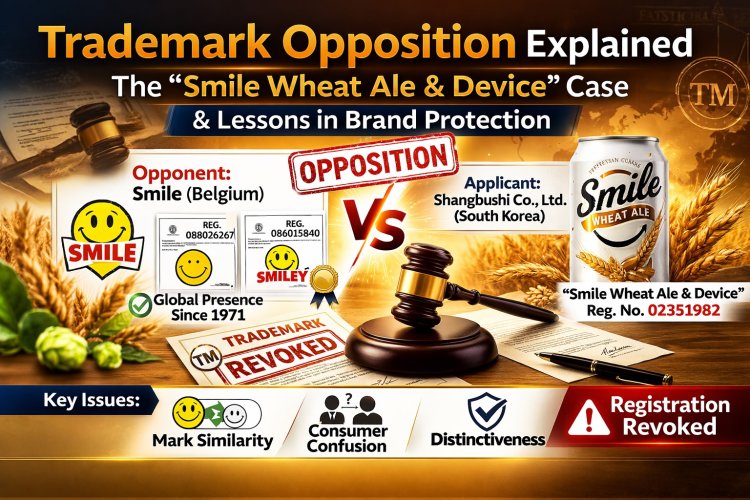
Trademark Opposition Explained: The “Smile Wheat Ale & Device” Case and Lessons in Brand Protection
Explore the trademark opposition case of “Smile Wheat Ale & Device,” examining trademark similarity, consumer confusion, and key legal principles shaping brand protection and trademark revocation in global markets.
Introduction
In a world driven by branding and marketing, trademarks play a crucial role in distinguishing products and services in the marketplace. However, not all trademark registrations go unchallenged. One such case that has garnered attention is the opposition to the trademark “Smile wheat ale & Device” owned by South Korean Shangbushi Co., Ltd. This blog delves into the intricacies of trademark opposition, exploring the main arguments, legal implications, and what this case signifies for businesses and consumers alike.
The Context of Trademark Opposition
Trademark opposition is a legal procedure that allows third parties to contest the registration of a trademark they believe would cause confusion with their existing brand or trademark. The basis for opposition typically rests on claims of similarity in the marks and the potential for consumer confusion. In this case, the opponent, a Belgian company named Smile, filed an opposition against Shangbushi's trademark on the grounds of significant similarities that could mislead consumers.
The Overview of the Case
On October 31, 2025, a decision was made regarding the opposed trademark “Smile wheat ale & Device.” The registration was revoked based on a comprehensive analysis of both the facts and legal frameworks surrounding trademark laws. Let’s break down this process further.
The Parties Involved
- Trademark Owner: South Korean Shangbushi Co., Ltd, claimed the trademark for its application in Class 32, specifically for goods including beer and non-alcoholic beverages.
- Opponent: The Belgian company Smile, argued that the registration of the opposed mark infringed upon their own well-established trademarks related to the concept of ‘smile.’
Details of the Mark of the trademark owner are below.
|
Mark |
Application No. |
Class |
|
|
112048302 |
Class 032: Beer; cocktail drinks based on beer; non-alcoholic beer; non-alcoholic cocktail drinks based on beer. |

Details of the Marks of the Opponent are below.
|
Mark |
Application No. |
Class |
|
|
088026267 |
Class 032: Beer; mineral water and soda and other non-alcoholic beverages; fruit drinks and juices; syrup preparations for beverages and other concentrated preparations for beverages. |
|
|
086015840 |
Class 032: Beer, mineral water, soda, mineral water for meals, distilled water, lemonade, soda, tomato juice, lozenges and powders for non-alcoholic beverages, fruit drinks, fruit juices, syrups for beverages, vegetable juices (beverages). |


The Grounds for Opposition
The opponent presented a strong case based on the premise that their existing trademarks were recognized globally, dating back to 1971. Key arguments included:
· Similarity of Marks: The opponent contended that “Smile wheat ale & Device” bore a striking resemblance to their own registered trademarks, specifically “SMILE & Device” and “SMILEY.” Both entities had similar connotations, which could create confusion amongst consumers.
· Commonality of Goods: The similarity in the nature of the products was significant. Both the opposed mark and the opponent's marks focused on beverage goods, primarily in the beer category.
· Established Brand Identity: The opponent highlighted their long-standing presence in the market, showcasing established recognition among consumers globally and the extensive use of related trademarks across various sectors like food and beverages.
Analysing Trademark Similarity
One of the primary legal considerations in trademark opposition is the likelihood of confusion between the marks. According to Article 30, paragraph 10 of the relevant Trademark Act, a trademark shall not be registered if it is identical or similar to another’s registered trademark when it could mislead consumers regarding the origin or quality of the goods.
Evaluating the Marks
The registration “Smile wheat ale & Device” is built around the word “Smile” combined with “wheat ale” and complemented by a graphic element—a smiling face. Notably, the term “wheat ale” is descriptive and does not contribute to the uniqueness of the mark. In contrast, the opponent’s existing trademarks feature distinctive elements, most notably the smiling face design which is highly recognizable. The crux of the opposition relied on the premise that the visual and conceptual similarities could lead consumers to mistakenly believe the goods from Shangbushi were associated with or endorsed by Smile.
To know more about this, please check the link below.
The Legal Framework
The legalities surrounding trademark opposition hinge on several factors, including:
· Similarity of Trademarks: The degree of resemblance between the opposed mark and existing trademarks. In this case, the review illustrated significant overlapping characteristics both visually and conceptually.
· Similarity of Goods: The nature of the goods in question must also be assessed. Since both trademarks were primarily associated with beverages, this engaged consumers' associations directly.
· Consumer Perception: Ultimately, it is the impact on consumer perception that can uphold or dismantle a trademark opposition. The evaluation of how typical consumers engage with and interpret the trademarks is paramount.
The Decision
Following the comprehensive analysis, the review officer Lu Jiaying decided to revoke the registration of Trademark No. 02351982. The decision underscores the importance of trademark distinctiveness and the protection of established brand identities from potential consumer confusion.
Implications for Businesses
The outcome of this case serves as a crucial reminder for businesses regarding the significance of trademark registration. It highlights several essential best practices:
· Conduct Thorough Trademark Searches: Before applying for a trademark, businesses should perform thorough searches to ensure their proposed mark doesn’t infringe on existing trademarks.
· Understand Your Brand’s Unique Elements: Identifying distinctive features in branding that can encapsulate a product's identity is critical for building a recognizable mark.
· Anticipate Opposition: The landscape of trademarks is competitive and often filled with disputes. Businesses should be prepared for potential legal challenges regarding their trademarks.
· Consumer Awareness: Brands must foster an awareness of their trademarks within the public domain to strengthen their identity against potential confusion.
Conclusion
The case of “Smile wheat ale & Device” is a significant example of trademark opposition processes and the legal frameworks governing them. It elucidates the complexity of trademark law, specifically how two entities can conflict over shared concepts, and the rigorous analysis needed to protect intellectual property. As industries continue to evolve with branding at their core, understanding these legal nuances becomes increasingly critical for businesses looking to carve their niche in the market while safeguarding their identity and consumer trust. By learning from such oppositions and maintaining vigilance over trademark rights, companies can better navigate the challenging waters of brand protection and recognition in a globally interconnected marketplace.