+91 7297051181
Understanding Trademark Conflicts: Rada Perfumery SRL v. EUIPO & Prada SA | EU General Court Analysis
This blog explores the EU General Court’s ruling in Rada Perfumery SRL v. EUIPO and Prada SA (Case T-439/22), examining trademark similarities, the likelihood of consumer confusion, and the protection of established brands in the perfumery and cosmetics sectors. Discover the key legal principles and practical implications for brand identity and trademark registration in the EU.
Introduction
In the intricate world of trademark law, the protection of brand identity often leads to disputes that can shape market dynamics and consumer perceptions. One such case that stands out is, Rada Perfumery SRL v. EUIPO and Prada SA, decided by the General Court of the European Union on 26 July 2023. This case, designated as Case T-439/22, encapsulates the complexities surrounding trademark registration, opposition, and the likelihood of consumer confusion. Below, we explore the background, core issues, and implications of this decision. On 22 January 2020, Rada Perfumery SRL applied to register a figurative EU trademark for the term "RADA PERFUMES," geared towards perfumery and cosmetics under Class 3, and retail and wholesale services under Class 35. Soon after, Prada SA, a recognized luxury fashion brand, opposed this application, citing its earlier EU figurative trademark registrations for various PRADA marks. These earlier marks cover identical goods and services, and Prada argued that Rada's mark could confuse consumers due to the similarities in visual and phonetic representations. The Opposition Division of EUIPO partially upheld Prada's opposition, especially for Class 3 goods and specified retail services. Following an appeal by Rada that was ultimately dismissed by the EUIPO Board of Appeal, Rada Perfumery sought annulment of this decision from the General Court, leading to the current analysis.
The Disputed Marks
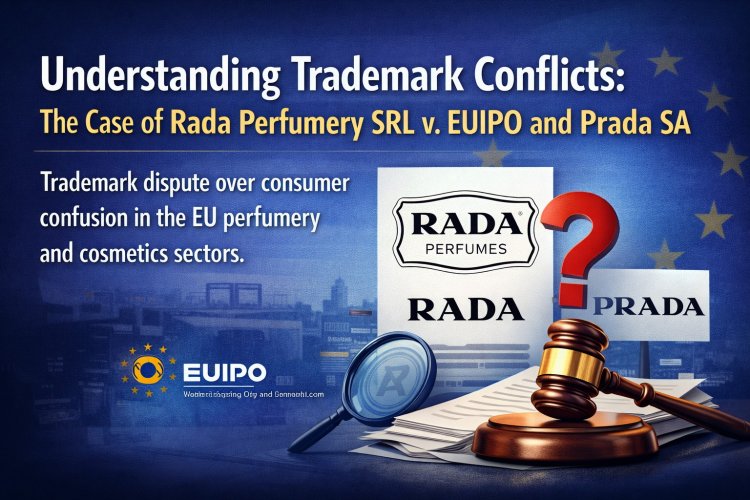
At the heart of this dispute are the marks “RADA PERFUMES” and “PRADA”, which, while sufficiently distinct in certain aspects, raised reasonable concerns about consumer confusion. The Class 3 goods concerned include perfumery and cosmetics, both industries characterized by creativity and branding where names play a significant role in consumer choice. Class 35 services encompass retail and wholesale operations in these fields, areas where confusion can lead not only to consumer harm but also to dilution of brand reputation.
Details of the mark of the Rada Perfumery.
|
Mark |
Application No. |

|
018186386 |
Details of the mark of the Prada.
|
Mark |
Application No. |
Class |

|
011918331 |
Class: 3 |

|
012443362 |
Class: 35 |

|
013400635 |
Class: 3 |
Core Legal Principles
The court's evaluation hinged upon Article 8(1)(b) of Regulation 2017/1001, which pertains to the protection against the registration of trademarks that may be confused with earlier marks. The established legal framework requires consideration of various elements.
· Similarity of Goods and Services: The court found that the goods and services in question were identical. The comparative assessment is typically based on the specifications in the trademark applications rather than the actual market use.
· Similarity of Signs: The visual and phonetic comparison of “RADA” with “PRADA” showed a high to average degree of similarity. The court acknowledged that while “PRADA” is the more dominant element in its marks, “RADA” assumed a significant presence among competing brands with similar offerings.
· Conceptual Comparison: While there were conceptual differences, “RADA” and “PRADA” lack clear meanings, and terms like “PERFUMES” contribute less to individual distinctiveness. The court deemed these differences insufficient to dispel potential consumer confusion.
Detailed Analysis of Court Decision
Throughout the proceedings, both parties presented various arguments regarding trademark rights and market identity. The court addressed several key points raised by Rada Perfumery:
· Differences in Product Style and Market Presentation: Rada asserted that the distinct styles would mitigate confusion. However, the court stated that comparisons are grounded in the trademark specifications, rather than the market nuances.
· Fonts and Descriptive Elements: Rada emphasized that added elements and specific fonts could alleviate confusion; the court found these differences marginal. Descriptive or decorative additions like “PERFUMES” did little to create distinctiveness in the minds of consumers.
· Personal Name Rights: Rada argued it had the right to use its personal name. The court clarified that while individuals can use their names in commerce, this does not guarantee trademark registration, particularly when distinctiveness and confusion standards are not met.
· Coexistence of Registered Trademarks: The applicant pointed to national trademark registrations for “RADA”. The court highlighted that the EU trademark system operates independently of national registrations unless it can be proven that the coexistence alleviates consumer confusion, a burden that Rada did not fulfil.
· Reputation of Prada: Rada claimed that the existing reputation of “PRADA” contributed to understanding its distinctiveness and should mitigate confusion. The court ruled that without concrete proof that “PRADA” conveys a clear, specific meaning, this argument could not sufficiently counter the established similarities.
Practical Implications of the Decision
This case emphasizes several practical takeaways for enterprises seeking trademark protections.
· Minor Differences May Not Suffice: Businesses should be aware that slight variations in spelling or additional descriptive terms will likely not prevent confusion if the goods are identical and the consumer base is comparable.
· Descriptive Additions Offer Limited Protection: Adding descriptive phrases or elements will rarely suffice to establish distinctiveness. Companies must focus on developing a mark that stands out.
· Personal Name Rights: The right to use personal names is not absolute in the realm of trademarks. Companies must balance personal rights with the need for distinctiveness in their brands.
· The Weight of Coexisting Registrations: Previous national registrations or claimed coexistences hold limited weight without substantive evidence proving that consumers are not likely to be confused.
Conclusion
The case of Rada Perfumery SRL v. EUIPO and Prada SA serves as a profound lesson in trademark law, illustrating how courts navigate the complex landscape of brand identity and consumer perception. The decision underscores the importance of maintaining distinctiveness in trademarks and highlights the scrutiny under which applications are placed. As trademark disputes continue to shape the landscape of consumer goods, businesses must be vigilant in crafting brands that can withstand scrutiny, ensuring that their identities remain clear and distinguishable in the competitive marketplace. The balance of protecting one's brand while respecting others' rights is a delicate dance that, if navigated properly, can lead to a thriving business landscape.