+91 7297051181
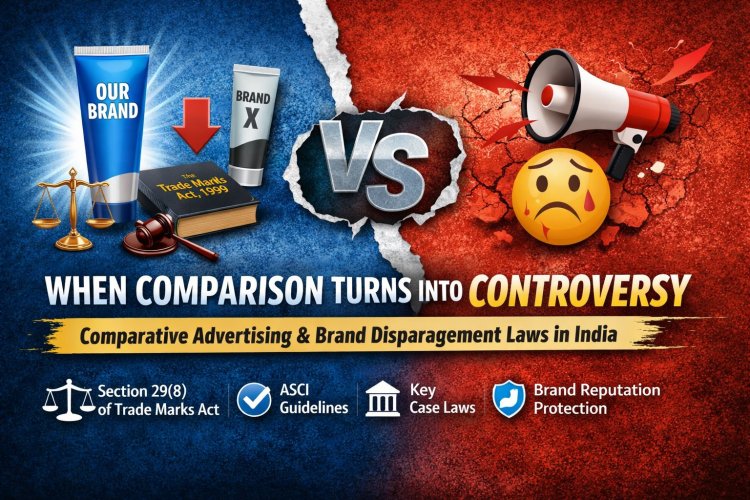
When Comparison Turns into Controversy: Comparative Advertising & Brand Disparagement Laws in India
Explore how comparative advertising can cross into brand disparagement under Indian law. This blog explains legal boundaries, Section 29(8) of the Trade Marks Act, ASCI guidelines, key case laws, and best practices for protecting brand reputation in advertisements.
Introduction
In today’s competitive market, advertising is more than just a tool for promotion; it is a fundamental aspect of brand identity that influences consumer decisions. Among various advertising techniques, comparative advertising has emerged as a powerful but controversial strategy. This method not only invites consumers to evaluate products side by side but also often leads to contentious debates about fairness and ethics. When executed properly, comparative advertising can effectively boost brand visibility and market share. However, it can quickly transform into a battleground for legal disputes if it crosses the line from a legitimate comparison to disparagement of a competitor. In India, where the legal landscape for advertising is evolving, understanding the boundaries of comparative advertising is essential for brands seeking to protect their reputations while navigating this intricate terrain.
Understanding Comparative Advertising
Comparative advertising explicitly or implicitly compares a brand's products or services with those of a competitor. The goal is to showcase superior features, better prices, or enhanced quality. For instance, an advertisement might claim, “Our toothpaste fights cavities two times better than Brand X,” which illustrates permissible comparative advertising.
Permissible vs. Impermissible Comparisons
In the realm of advertising, distinguishing between acceptable claims and disparagement is crucial.
· Permissible Comparison: Highlighting one’s own merits without denigrating a competitor (e.g., “Our shampoo provides double the shine compared to Brand Y”).
· Impermissible Disparagement: Making negative statements about a competitor that could harm their reputation (e.g., suggesting that Brand Y's shampoo causes scalp damage).
While puffery exaggerated claims that cannot be objectively verified is often accepted, the same cannot be said for false representations and disparagement that mislead consumers.
The Legal Framework
In India, comparative advertising is governed by a combination of statutes and judicial interpretations that seek to strike a balance between promoting fair competition and protecting brand reputation.
Key Legal Provisions
1. The Trade Marks Act, 1999 (Section 29(8)): This provision serves as a primary mechanism against trademark infringement. It prohibits advertisements that unfairly benefit from a competitor's trademark, undermine its distinctive character, or harm its reputation.
2. Judicial Precedents: Indian courts have consistently clarified the boundaries of permissible advertising. They differentiate between puffery and disparagement, stipulating that while ads can tout a product as the “best,” they cannot degrade a competitor’s product in any way that could be construed as slanderous.
Three Core Principles
Reflecting on various legal rulings, courts have established three key principles that shape the boundaries of comparative advertising:
· Promotion vs. Defamation: Brands can promote their products but cannot engage in acts intended to tarnish or defame competitors.
· No Derogatory Remarks: Advertisements should refrain from making derogatory comments about competitors or their products.
· Fact-based Comparisons: Comparisons must be grounded in material, relevant, verifiable, and representative features.
Protecting Brand Reputation
In an environment where brands compete fiercely, ensuring a favorable reputation is vital. Here are several strategies that brands can employ to effectively safeguard their reputations amidst comparative advertising:
1. Legal Action: When faced with unfair claims, brands often resort to legal avenues. Filing for trademark infringement or disparagement allows them to seek injunctions that halt the airing of misleading or harmful advertisements.
2. ASCI Complaints: Brands can also lodge complaints with the Advertising Standards Council of India (ASCI), an autonomous self-regulating body that manages advertising standards. ASCI's guidelines prohibit ads that unfairly undermine a competitor. If a violation is found, ASCI can mandate modifications or withdrawal of the contentious ad.
3. Counter-Advertising: An alternative proactive measure is counter-advertising. Brands can launch their own campaigns emphasizing their strengths without attacking rivals. This method maintains the brand's integrity while also responding to potentially damaging messages.
4. Public Relations: Effective public relations strategies, such as press releases or social media updates, can promptly address potential misunderstandings or misrepresentations resulting from a competitor's ad.
Key Case Laws and Controversies
The development of comparative advertising law in India is illustrated through notable landmark cases that have tested legal boundaries.
Reckitt Benckiser vs. Hindustan Unilever Limited
One prominent case is the ongoing rivalry between Reckitt Benckiser and Hindustan Unilever Limited (HUL). A significant incident involved a Lifebuoy advertisement that Reckitt Benckiser claimed disparaged its Dettol antiseptic liquid. The Delhi High Court ruled that while Lifebuoy could promote its product as superior, it couldn’t imply that Dettol was detrimental. This case underscored the critical distinction between healthy competition and harmful disparagement.
Other Controversies
Other noteworthy disputes have involved various household brands, showcasing the volatile nature of comparative advertising. Cases often reflect a pattern of brands pushing boundaries to highlight superiority while risking legal entanglements.
Conclusion
In conclusion, comparative advertising serves as a double-edged sword. While it offers brands a method to assert superiority in a competitive market, it simultaneously poses risks with potential legal repercussions and reputational damage. The legal framework in India seeks to protect brands from unfair practices, but navigating through the intricate regulations remains a delicate balancing act.Brands must employ a combination of legal strategies, ethical advertising practices, and innovative marketing approaches to maintain their reputations. Understanding the fine line between comparison and disparagement is essential for brands aiming to thrive in an increasingly competitive environment. The key lies in comparing without condemning, stating facts truthfully, and respecting the integrity of rival brands. In the end, the most successful brands will be those that champion transparency and fairness while promoting their products.