+91 7297051181
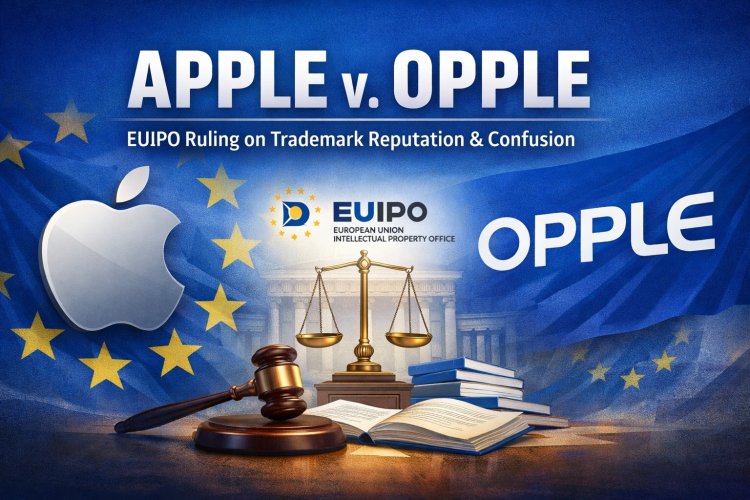
APPLE v. OPPLE: EUIPO Ruling on Trademark Reputation & Confusion
Analysis of the EUIPO Fourth Board decision in APPLE v. OPPLE examining trademark similarity, reputation, unfair advantage, and consumer confusion under EU law.
Introduction
The recent decision by the Fourth Board of Appeal of the European Union Intellectual Property Office (EUIPO) in the case of APPLE v. OPPLE, R 40/2025-4, has drawn significant attention within legal and business circles. This case sheds light on key issues surrounding trademark rights, reputation, and the complex nature of brand identity in today's marketplace. In this blog, we will delve into the details of the case, explore the implications for branding and trademark law, and consider the broader context of intellectual property rights. The dispute originated when Opple Lighting Co., Ltd. (the defendant) sought to register the international trademark “OPPLE”, covering a variety of services in Class 35, specifically tailored to business, marketing, and advertising services related to lighting solutions. Apple Inc. (the opponent) opposed this application, citing its established word marks for “APPLE”, arguing that the proposed “OPPLE” trademark could create a likelihood of confusion among consumers due to the similar nature of the two brands. The Opposition Division, however, rejected Apple's opposition in full. The decision acknowledged that while “APPLE” held a reputation for specific products in Class 9 (such as electronic devices) and Class 42 (software services), there was no established link between the two marks, nor was there a likelihood of confusion. Thus, the case was initially resolved in favour of Opple Lighting. However, Apple Inc. was not satisfied with this decision, prompting an appeal that eventually led to the recent decision by the Fourth Board of Appeal.
Details of the marks of Opple.
|
Mark |
Application No. |
Class |
|
|
1698480 |
35 |

Details of the marks of Apple.
|
Mark |
Application No. |
Class |
|
|
2592855 |
35, 36, 37, 40 |
|
|
6313316 |
9, 16, 35, 38, 41, 42, |

Key Details from the Decision
The EUIPO's Fourth Board of Appeal made its decision on 14 October 2025, profoundly affecting the OPPLE trademark application. Here are some critical elements of the decision:
· Similarity of Marks: The Board highlighted that the common sequence "PPLE" in both brands created at least an average visual and aural similarity. This finding was crucial. The minor difference in the initial letters, 'O' in OPPLE and 'A' in APPLE, did not negate the notable similarities when viewed as a whole.
· Conceptual Identity: The Board also found that a significant segment of the public might perceive OPPLE as a deliberate misspelling of APPLE. This perspective contributed to a conceptual link between the two marks, reinforcing Apple's argument regarding consumer confusion.
· Reputation: One of the key turnarounds in the appeal was the confirmation of a high degree of reputation for Apple’s marks, especially for selected Class 9 goods (like tech gadgets) and Class 42 services (such as software). The Board criticized the first-instance decision for failing to recognize this broader reputation adequately.
· Established Link: The decision recognized a link between the brands, even though they operate in different segments of the market. The smart technology landscape, particularly smart lighting that integrates with smartphone technology, facilitated this connection, as consumers may associate OPPLE with APPLE given the nature of the products and services involved.
· Unfair Advantage: The Board concluded that Opple Lighting was likely to derive an unfair advantage from Apple's reputation, effectively riding on the coattails of Apple's marketing investment. Notably, the Board indicated that the likelihood of such injury does not require proof of actual harm to Apple.
Consequently, the Fourth Board of Appeal annulled the earlier decision, rejecting the EU designation for OPPLE, and ordered that the legal costs be borne by the IR holder (Opple Lighting).
Broader Implications
This decision has profound implications for businesses, especially those in technology-driven sectors. Here are several key takeaways that businesses and brand owners should consider:
· Trademarks and Similarity: The decision underscored that slight variations in spelling or design elements may not sufficiently distinguish one brand from another, particularly when a dominant sequence of letters is shared. Companies should carefully consider their branding strategies to avoid potential conflicts.
· Ecosystem Impact: The connection between diverse products and services in what is becoming an increasingly interconnected landscape cannot be understated. Brands that operate in adjacent markets or integrate into the wider technology ecosystem must be aware of potential trademark issues that may arise.
· Reputation Leverage: Established reputations can significantly influence trademark disputes. Companies should proactively safeguard their brand’s reputation and ensure that they can demonstrate this if needed in opposition proceedings.
· Legal Preparedness: Businesses seeking to register new trademarks should be prepared for opposition from established brands. Conducting thorough trademark searches and assessments of existing marks can help to mitigate risks and fuel successful registrations.
· EUIPO's Duty to State Reasons: The case reinforces the importance of adherence to EUIPO’s duty to consider and explain decisions with reference to prior cases. This aspect is vital, as one of the criticisms directed towards the earlier decision was its lack of reference and reasoning regarding previous decisions.
Conclusion
The EUIPO's decision in the case of OPPLE vs. APPLE highlights critical aspects of trademark law concerning similarity, reputation, and the potential for unfair advantage. As companies continue to innovate and develop new brands and services, they must remain vigilant in protecting intellectual property while navigating the complexities of the marketplace. This decision serves as a poignant reminder of the intricate dance between brand identity and trademark rights, an ever-evolving landscape filled with opportunities and challenges. For brand owners, understanding these dynamics can not only help safeguard their market position but also foster a culture of respect for intellectual property rights in a competitive environment. As we forge ahead in an era defined by digital interaction and integration, the lessons from this case will undoubtedly resonate, serving as a crucial reference point for trademark considerations for years to come.