+91 7297051181
Stanley Tumbler Lawsuit Explained: Pacific Market International v. Five Below Design Patent & Trade Dress Dispute
An in-depth analysis of the Pacific Market International v. Five Below lawsuit examining allegations of design patent, trade dress, and trademark infringement involving Stanley tumblers. The case highlights key intellectual property issues shaping brand protection and competition in the consumer drinkware industry.
Introduction
In the world of consumer goods, few items have achieved as much popularity as tumblers. These versatile drinkware pieces have transcended mere functionality to become a lifestyle statement. However, the immense market potential has also sparked controversies surrounding design patents, trade dress, and trademark rights. A particularly compelling case currently unfolding in the Northern District of California involves Pacific Market International, LLC (PMI) and its registered brands against Five Below, Inc., highlighting the intricacies of intellectual property law in the consumer goods sector.
Case Overview
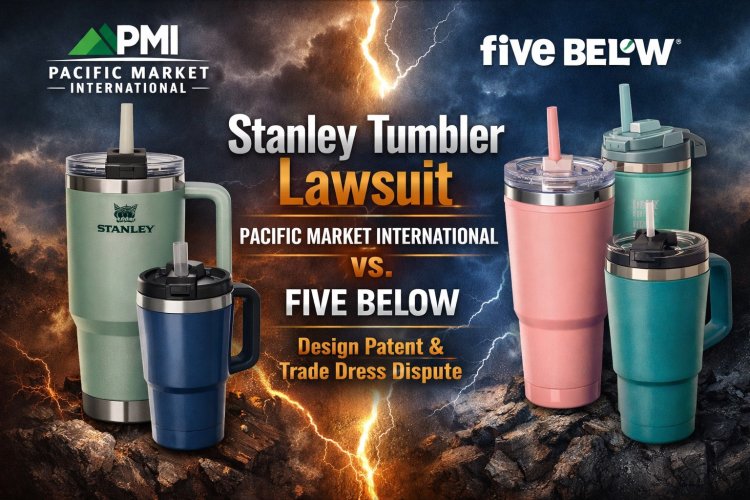
On November 6, 2025, Pacific Market International, LLC, and PMI WW Brands, LLC filed a lawsuit against Five Below, Inc. (Case No.3:25-cv-09604). As one of the largest discount retailers in the United States, Five Below targets a youthful demographic with a focus on trendy, affordable items. PMI is known for its Stanley brand, particularly the QUENCHER and ICEFLOW tumbler lines recognized for their durability and distinctive designs. The plaintiffs allege that Five Below is infringing upon their design patents, trade dress rights, and trademark rights by selling tumblers marketed as Hyperquench, Hydraquench, HydraSip, and Hydrachug, which they claim are directly copied from their product lines.
Representation of PMI tumblers are below.
|
QUENCHER Tumbler |
ICEFLOW Tumbler |
 ,
, 

|
U.S. Patent No. |
Patent design |
|
D805,838 |
|
|
D955,173 |
|


|
Hydraquench Tumblers |
|
|
 ;
; ;
; 

Intellectual Property Claims
· Design Patent Infringement
The crux of the plaintiffs’ case relies on two design patents, D805,838 and D955,173. Design patents protect the ornamental design of a functional item, and to establish infringement, the ordinary observer test is employed. This test examines whether an ordinary person would perceive a substantial similarity in the overall ornamental appearance of the accused products (Five Below’s tumblers) compared to the patented designs (PMI's tumblers). Given the similarities in appearance, PMI asserts that Five Below’s products unfairly exploit the reputation and distinctiveness of their designs.
· Trade Dress Infringement
Trade dress refers to the visual appearance of a product that signifies the source of the product to consumers. PMI claims that the overall look and feel of its QUENCHER and ICEFLOW tumblers characterized by specific design elements, such as a squared-off handle and a distinctive flip-straw feature, constitute protectable trade dress. A successful trade dress infringement claim will require PMI to demonstrate that its trade dress is non-functional, distinctive, and likely to cause confusion among consumers.
· Trademark Infringement
PMI further alleges that Five Below's use of the term “QUENCH” in their product names confuses consumers as to the source of the products and appropriates PMI’s trademark rights. Trademark infringement involves assessing whether consumers are likely to confuse the defendant's product with that of the plaintiff due to similarities in branding. The incorporation of “QUENCH” into the names of Five Below’s tumblers is particularly troubling for PMI, as it dilutes the brand’s identity and market presence.
· False Designation of Origin and Unfair Competition
Additionally, PMI asserts claims under the Lanham Act for false designation of origin and unfair competition. These claims focus on the misrepresentation of a product’s source and the resultant confusion among consumers. PMI argues that Five Below’s tumblers create a misleading impression of affiliation or endorsement, further complicating the marketplace.
· California State Law Claims
PMI has also invoked various California state law theories, including unfair competition and violations of California’s Unfair Competition Law (UCL). This adds another layer of protections to their claims, showcasing a multi-faceted approach to seeking redress in this intellectual property conflict.
To know more about this, please check the link below.
Background of Pacific Market International
Pacific Market International operates under the Stanley brand and has become synonymous with high-quality tumblers and drinkware. The company emphasizes both aesthetic appeal and practicality in its products, garnering a loyal consumer base and a significant presence in retail and online markets. The QUENCHER and ICEFLOW lines, in particular, have received much attention for their design elements and reliability.
Market Presence and Consumer Recognition
PMI’s marketing strategy involves combining traditional retail channels with a robust online presence. The company leverages social media and other online platforms to highlight the distinct features of their products. This Omni channel approach has led to widespread recognition, positioning PMI’s tumblers as market leaders. They maintain that Five Below’s imitative products dilute their brand, causing irreparable harm.
Key Facts Supporting Wilfulness
In the litigation brief, PMI claims that their wilfulness argument is grounded in Five Below’s alleged refusal to cease selling the copycat tumblers after receiving a demand letter dated October 31, 2024. This refusal has led to an expansion of Five Below’s product line, which is indicative of a knowing infringement. Willful infringement can significantly impact the damages awarded in intellectual property cases, potentially leading to enhanced damages.
Anticipated Defences by Five Below
While PMI has built a strong case, Five Below is expected to mount a robust defence against these claims. Potential defenses may include:
· Noninfringement: Claiming that there are distinguishable differences in design or features of their products compared to PMI’s registered designs.
· Invalidity: Arguing the design patents lack novelty or non-obviousness, or asserting that the alleged trade dress lacks distinctiveness or is functional.
· No Likelihood of Confusion: Asserting that differences in branding, pricing, and marketing channels mitigate any confusion among consumers.
· Fair Competition: Highlighting the availability of alternative designs in the market and emphasizing the use of commonplace features in the tumbler design.
Implications for the Industry
This ongoing litigation holds broader implications for the consumer goods industry, particularly in a market where design and branding play pivotal roles. The outcome may establish precedents concerning how design patents and trade dress rights are interpreted, especially in the context of price-sensitive retailers like Five Below.
The Importance of Protecting Intellectual Property
For brands like PMI, that have invested considerable resources into developing their product designs and marketing strategies, protecting intellectual property becomes critical. This case underscores the importance of vigilance and preparedness in the face of potential infringement, particularly within a crowded marketplace.
Consumer Awareness and Brand Distinctiveness
Ultimately, the case may also impact consumer behaviour. As consumers become aware of the nuances of intellectual property and the implications of purchasing copycat products, their loyalty may shift towards brands that demonstrate authenticity and uniqueness. This could reshape consumer expectations and demand for originality in product design.
Conclusion
The litigation between Pacific Market International and Five Below is more than just a legal battle; it represents a clash of ideals around creativity, branding, and consumer protection. As the trial continues to unfold, it will not only affect the involved parties but also resonate throughout the consumer goods landscape. The outcome will have ramifications for how brands protect their intellectual property and navigate the complexities of a rapidly evolving market. The stakes are high, and the resolution may redefine industry standards for years to come.