+91 7297051181
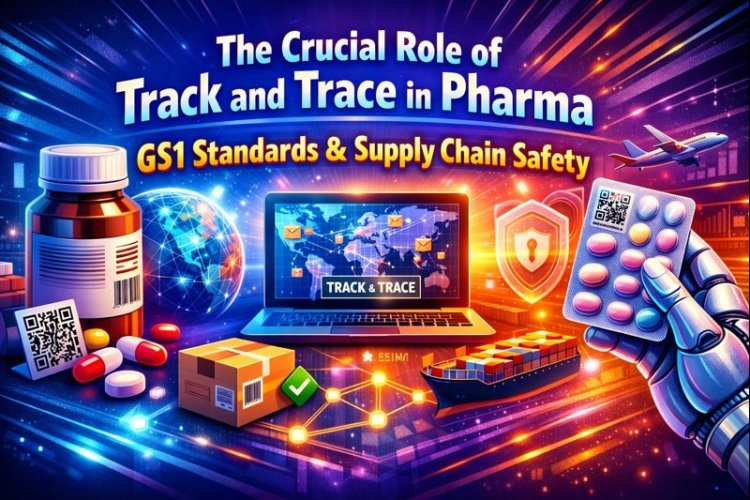
The Crucial Role of Track and Trace in Pharma | GS1 Standards & Supply Chain Safety
Discover how track and trace systems powered by GS1 standards enhance transparency, safety, and regulatory compliance in the pharmaceutical supply chain. Learn about GTIN, SSCC, GLN, DataMatrix, and EPCIS for combating counterfeit drugs and ensuring operational efficiency.
Introduction
In today’s interconnected world, pharmaceutical products traverse multiple continents before reaching the end user, the patient. This intricate journey, however, comes with significant risks. One weak link in the supply chain can lead to the introduction of falsified or sub-standard drugs, which endangers patient safety and undermines brand credibility. This is a risk that pharmaceutical companies can ill afford. Therefore, the necessity of transparency in the medical supply chain has never been more critical, especially for manufacturers in countries like India, which have a substantial volume of production and exports.
As global regulatory requirements intensify, the demand for complete supply chain visibility becomes an urgent priority. Medical supply chain transparency mitigates risks associated with counterfeit drugs and ensures that patients receive high-quality products. In this blog, we will delve into the importance of an efficient traceability solution in the pharmaceutical industry and investigate how GS1 standards contribute to bolster this essential need.
Understanding the Rising Need for Track and Trace in Pharma
When discussing pharmaceuticals, the term "counterfeit" holds serious implications. According to the World Health Organization (WHO), a counterfeit medicine is one that has been mislabeled either in terms of identity or source. This can apply to both branded and generic products, potentially containing the right ingredients in incorrect quantities, harmful substances, or even packaging that is completely fake. The consequences of consuming counterfeit or sub-standard drugs can be dire, ranging from poisoning to treatment failures and worsening diseases.
To combat this pernicious issue, regulatory bodies around the world are placing greater emphasis on serialized unique identification and effective traceability measures within the pharma supply chain. A clear demonstration of medical supply chain transparency not only aids companies in complying with stringent regulations but also provides a myriad of additional benefits, including:
- Avoiding Penalties: Companies that fail to comply with regulations face significant fines and penalties that can impact their bottom line.
- Cutting Losses: Effective traceability can significantly reduce losses due to product recalls, theft, and grey-market sales.
- Protecting Reputation: A transparent supply chain bolsters a company’s reputation, fostering trust among consumers.
Without robust systems for traceability, the pharmaceutical supply chain remains opaque and vulnerable, necessitating timely intervention from regulatory authorities when issues arise.
Contact our barcode experts at +91 729705118 and +91 8949793519.
Defining Track and Trace in the Pharmaceutical Sector
In the context of pharmaceuticals, “Track and Trace” refers to the processes that empower companies, regulators, and patients with confidence in the journey of their medical products. The "track" aspect involves capturing each critical point as a product moves through the supply chain, from manufacturers and distributors to wholesalers and dispensers. This process allows stakeholders to see who handled the product at each stage of its journey.
Conversely, the "trace" capability enables organizations to look backwards and quickly pinpoint where a specific product originated and how it moved through the supply chain. This capability is paramount when addressing issues such as product recalls, ensuring swift and targeted actions to safeguard public health and maintain product integrity.
Both tracking and tracing rely heavily on consistent and unique product identification standards. This means using standardized codes like Global Trade Item Numbers (GTINs), which can be encoded in either 1D barcodes or 2D DataMatrix codes affixed to every unit of medical product. The use of these codes enhances interoperability among systems throughout the supply chain, making data exchange more efficient while reducing the need for manual checks. Such standardization supports regulatory compliance initiatives and strengthens patient safety, as it ensures that every participant in the supply chain references the same product information in a uniform manner.
Contact our barcode experts at +91 729705118 and +91 8949793519.
How GS1 Standards Facilitate Pharmaceutical Traceability
GS1 has emerged as a key player in establishing identification keys for various entities within the supply chain. Among these, the most widely utilized identification keys for traceability include:
- GTIN (Global Trade Item Number): This provides a unique identifier for each trade item.
- SSCC (Serial Shipping Container Code): This is used to identify logistics units at the shipping level.
- GLN (Global Location Number): This identifies locations within the supply chain.
The implementation of these GS1 standards ensures that every product and component is accurately identified, from the manufacturing stage through to the final delivery to caregivers and patients. However, the traceability narrative extends beyond just ID keys; they work synergistically with other GS1 standards, such as EPCIS (Electronic Product Code Information Services) and data capture techniques.
To know more about this, please follow the below link.
The Mechanisms Behind Object Tracing
1. Serialized Identification: At various packaging levels, primary, secondary, and tertiary products are assigned serialized GTINs or SSCCs. This allows for unique identification of each medical drug or device across the supply chain.
2. Data Capture: The healthcare sector utilizes GS1 DataMatrix barcodes for unique identification and data capture of medical products. These two-dimensional barcodes can store critical information, such as the GTIN, batch number, lot number, serial number, and expiry date, in accordance with both regulatory and business requirements.
3. EPCIS: This GS1 standard captures and shares data related to events throughout the supply chain, equipping stakeholders with necessary visibility into "what," "when," "where," and "how" products move. With serialized GTINs or SSCCs encoded into 2D barcodes, EPCIS empowers organizations to trace medical products comprehensively.
Benefits of GS1-Enabled Track and Trace for Pharma Companies
Implementing GS1 standards for track and trace not only supports regulatory compliance but also offers various benefits such as:
- Enhanced Patient Safety: With clear visibility and identification, the likelihood of distributing counterfeit or sub-standard products dramatically decreases, thereby protecting patient health.
- Operational Efficiency: Streamlined processes with standardized practices reduce administrative workload and resource allocation, leading to cost savings.
- Increased Trust: Companies demonstrating robust traceability can build stronger relationships with customers and stakeholders, as transparency breeds trust.
- Rapid Response to Issues: In the event of a product recall, traceability facilitates timely action by ensuring that companies can quickly locate affected products, thereby minimizing potential harm.
Conclusion
The stakes are high in the pharmaceutical supply chain. As drugs travel across the globe, ensuring their authenticity and safety is paramount. Track and trace mechanisms, powered by GS1 standards, empower companies to enhance transparency in their operations, thereby minimizing risks associated with counterfeit products. The benefits of robust traceability systems extend beyond compliance, they engender trust, operational efficiency, and ultimately, healthier outcomes for patients. As the pharmaceutical landscape continues to evolve, embracing these standards will be critical for all stakeholders involved in the supply chain, paving the way for safer healthcare solutions worldwide.
Contact our barcode experts at +91 729705118 and +91 8949793519.